 |
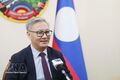
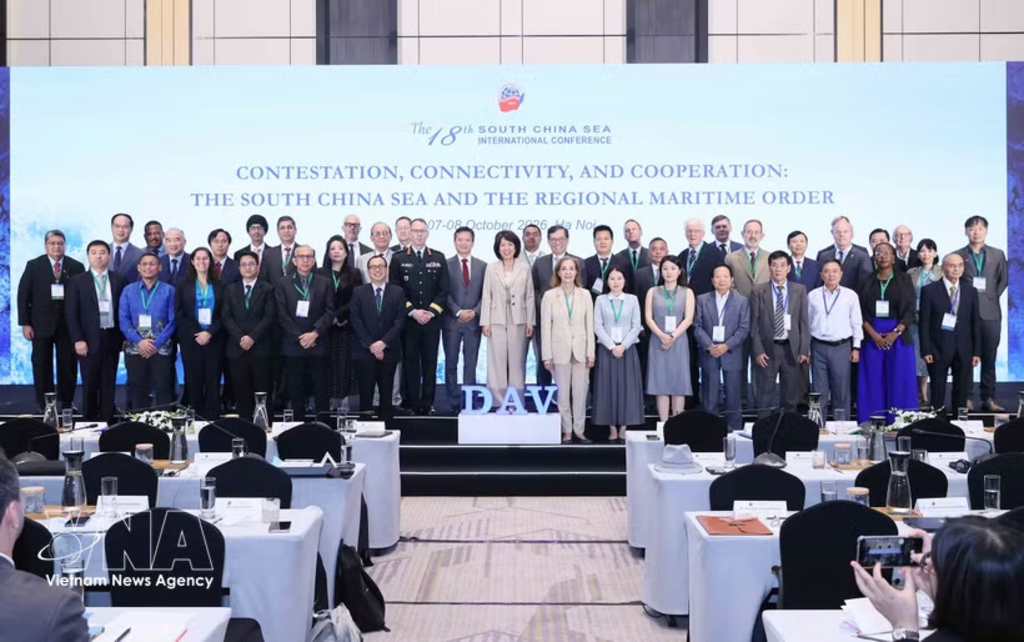
| Delegates at the conference__Photo: VNA |
The 18th international conference on the East Sea opened in Hanoi on October 7, bringing together nearly 50 speakers and around 300 delegates, including policymakers, diplomats, experts and scholars from more than 30 countries and territories.
In his opening remarks, Dr. Nguyen Hung Son, Director of the Diplomatic Academy of Vietnam, said that after 17 years, the conference has developed into one of the region’s most reputable forums on maritime issues, with the East Sea as a common concern.
According to Son, the three concepts in this year’s theme – Contestation, Connectivity and Cooperation - are closely interconnected amid rapid changes in maritime security, driven by risks of disruption to transport routes, climate change and the rapid development of artificial intelligence, automation and undersea cable infrastructure.
Competition reflects conflicting interests over sovereignty, jurisdiction and strategic presence, while connectivity highlights the role of the sea in linking countries and the importance of shipping routes, ports, logistics networks, undersea cables and offshore energy infrastructure to regional prosperity.
Cooperation, meanwhile, is essential to managing risks, preventing incidents, protecting critical infrastructure, safeguarding the marine environment and building a more resilient maritime future, he said.
The academy leader called on delegates to focus discussions on four key questions concerning the management of competition, protection of connectivity, promotion and expansion of cooperation amid uncertainty, and efforts to make the East Sea a foundation for a stable regional maritime order.
The conference will feature the launch of the fourth edition of the annual East Sea report and warmly welcome the active involvement of young leaders and delegates from Pacific island nations.
Speaking at the event, Deputy Foreign Minister Nguyen Thi Hoang Van said oceans have long connected economies, trade and energy and shaped the strategic destinies of nations.
She said what’s changing is how security, economy technology, and geopolitics are coming together at sea with greater scale and intensity. Global maritime security is seeing major shifts, moving away from controlling maritime spaces to focusing on protecting systems, rules, and connectivity.
 |
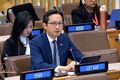
| Deputy Foreign Minister Nguyen Thi Hoang Van speaks at the conference__Photo: VNA |
The East Sea remains one of the world’s most important maritime spaces, linking the Pacific and Indian oceans, carrying vital flows of trade and energy and supporting the livelihoods of millions of people.
However, the growing presence of activities at sea, together with new capabilities and technologies, is narrowing the gap between incidents and crises, requiring countries to manage competition while maintaining conditions for cooperation, the Deputy FM said.
She reaffirmed that the 1982 United Nations Convention on the Law of the Sea (UNCLOS 1982) remains the comprehensive legal framework governing all activities at sea.
She also highlighted ASEAN and China's commitment to fully implement the Declaration on the Conduct of Parties in the East Sea (DOC) and work towards the early conclusion of an effective and substantive Code of Conduct in the East Sea (COC) consistent with UNCLOS 1982.
Noting that the Communist Party of Vietnam Central Committee issued Resolution 20-NQ/TW on July 28, 2026 on orientations for building Vietnam into a strong maritime nation, Van said the resolution reflects a vision of sustainable, self-reliant and resilient development combined with international cooperation.
She identified four key priorities: upholding UNCLOS 1982 as the foundation for the peaceful settlement of disputes; safeguarding vital international maritime routes; strengthening the resilience of critical maritime infrastructure; and managing risks while expanding areas of cooperation where interests converge.
At a special session for international guests, Philippine Undersecretary for Foreign Affairs and ASEAN SOM Leader Leo M. Herrera-Lim affirmed that UNCLOS 1982 and the 2016 South China Sea (East Sea) Arbitration Award provide the legal foundation for protecting the sovereign rights and freedom of navigation of coastal states.
Welcoming the elevation of Vietnam-Philippines relations to an Enhanced Strategic Partnership, as well as humanitarian search and rescue activities between the two countries at sea, the official stressed the need to strengthen the resilience of critical maritime infrastructure and affirmed the Philippines’ commitment to working with ASEAN to conclude COC negotiations this year.
Representing Canada, Lieutenant General Derek A. Macaulay, Senior Military Representative to the Indo-Pacific region, said that as a Pacific coastal state, Canada supports the peaceful settlement of disputes based on UNCLOS 1982 and the application of the DOC to unexpected incidents at sea to minimise the risk of collisions arising from misunderstandings.
Speaking virtually at the event, Australian Deputy Secretary for Foreign Affairs and Trade Michelle Chan affirmed the final and binding nature of the 2016 Arbitration Award and said Australia is implementing the Southeast Asia Maritime Partnerships programme to help countries strengthen maritime security capacity and ocean awareness.
The conference, held on October 7-8, features a series of thematic sessions covering maritime security, legal and economic issues.
On the first day, delegates discussed the East Sea's strategic environment, including shifts in the balance of power, management of the modernisation of maritime forces and unmanned systems, and the spillover impacts of disruptions in the Strait of Hormuz on regional energy security and shipping costs.
The conference also examined maritime cybersecurity risks facing ports, shipping, navigation systems and maritime data platforms, as well as requirements for protecting undersea cable systems in the digital environment.
On the second day, discussions will focus on the role of UNCLOS 1982 in ensuring legitimacy at sea, ASEAN-led mechanisms to advance COC negotiations, and implementation of the Agreement on the Conservation and Sustainable Use of Marine Biological Diversity of Areas Beyond National Jurisdiction (BBNJ Agreement), also known as the High Seas Treaty.
The sessions will also address efforts to conserve biodiversity beyond national jurisdiction and strengthen the resilience of seaports and coastal communities.
The event will also feature a Young Leaders’ Session, where participants are expected to put forward practical policy recommendations for a maritime order that places sustainable cooperation at its core.- (VNA/VLLF)