 |
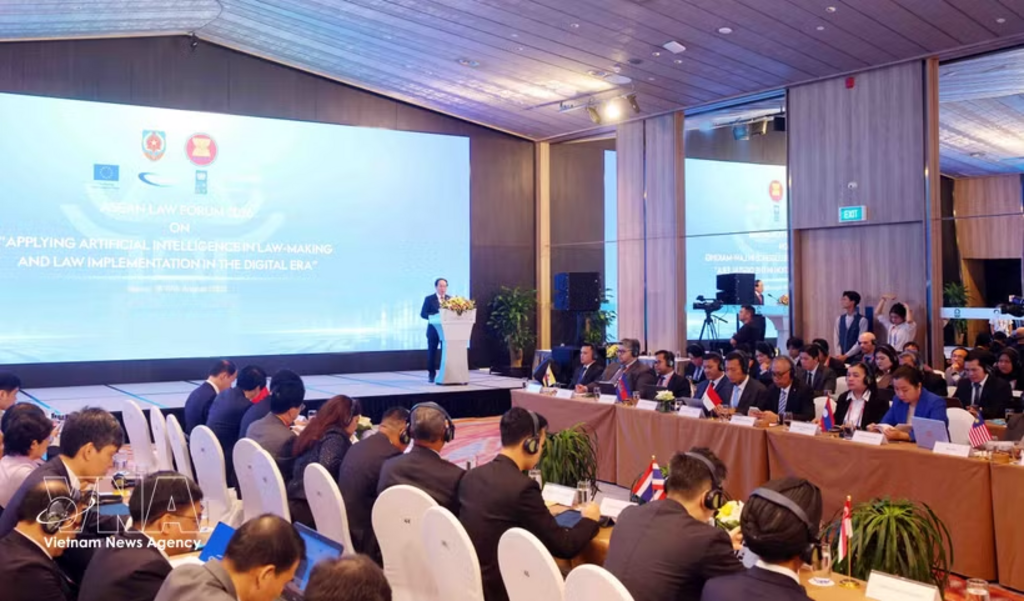
| An overview of the ASEAN Law Forum 2026 in Hanoi__Photo: VNA |
The Vietnamese Ministry of Justice is hosting the ASEAN Law Forum 2026 in Hanoi on August 18-19, under the theme “Applying Artificial Intelligence in Lawmaking and Law Implementation in the Digital Era”.
In his opening remarks, Vietnamese Deputy Prime Minister Le Tien Chau said the world is undergoing a transformative period as rapid advances in science and technology, artificial intelligence (AI) and big data open up new horizons while widening the gap between frontrunners and countries that are slower to adapt.
Vietnam has made initial progress in this field. The National Assembly has adopted the Law on Artificial Intelligence, making Vietnam one of the first countries to introduce a dedicated law on AI. The Prime Minister has also approved a project to develop the national law portal for 2026-2030, establishing a unified platform for accessing legal data.
Chau told participants that Vietnam is shifting from a “governance-oriented” approach to lawmaking toward an “adaptive” and development-enabling approach, ensuring sufficient flexibility to harness new technologies while upholding core principles and values as well as system security and safety.
Affirming Vietnam’s consistent support for ASEAN’s central role in regional cooperation on digital law, he said principles and standards governing AI application in the legal and judicial sectors should first be developed within ASEAN and led by ASEAN, based on consensus and respect for the sovereignty of each member state.
ASEAN is well positioned to become a global pioneer in the responsible use of AI in the legal and judicial sectors, he said, noting the bloc’s young population, rapid digital transformation and diverse legal systems. Such diversity, if effectively connected, could create one of the world’s richest policy laboratories.
The Deputy PM proposed four major areas of cooperation: developing common principles for AI application in lawmaking and enforcement; sharing standards for legal data and experience in digitising and reviewing legal documents; developing high-quality human resources combining legal expertise with technological skills; and maintaining dialogue mechanisms and expert networks to promote experience sharing.
Vietnam will continue to be a responsible, proactive member of ASEAN, supporting regional and international cooperation initiatives and sharing its experience and learning from effective and innovative practices of other members and international partners, Chau affirmed.
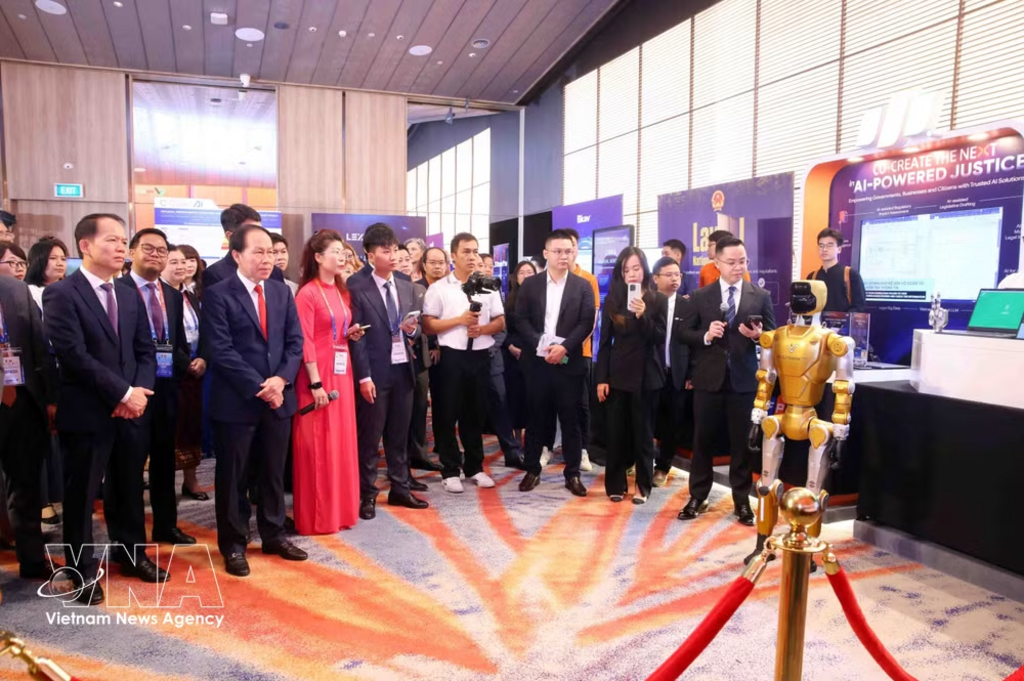 |
| Delegates visit an exhibition showcasing AI-powered products at the forum__Photo: VNA |
AI offers significant prospects but also poses common challenges, including personal data protection, cybersecurity, accountability of AI systems and algorithmic transparency. As AI transcends borders, legal and judicial authorities need stronger international cooperation, experience sharing and compatible approaches that respect differences and pursue common values.
At the forum’s plenary and thematic sessions, delegates discussed AI application in lawmaking and the development of the national law portal, ASEAN legal and policy frameworks for digital transformation, responsible AI practices, smart governance, national AI sovereignty and people-centred approaches to AI application.- (VNA/VLLF)