 |
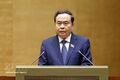
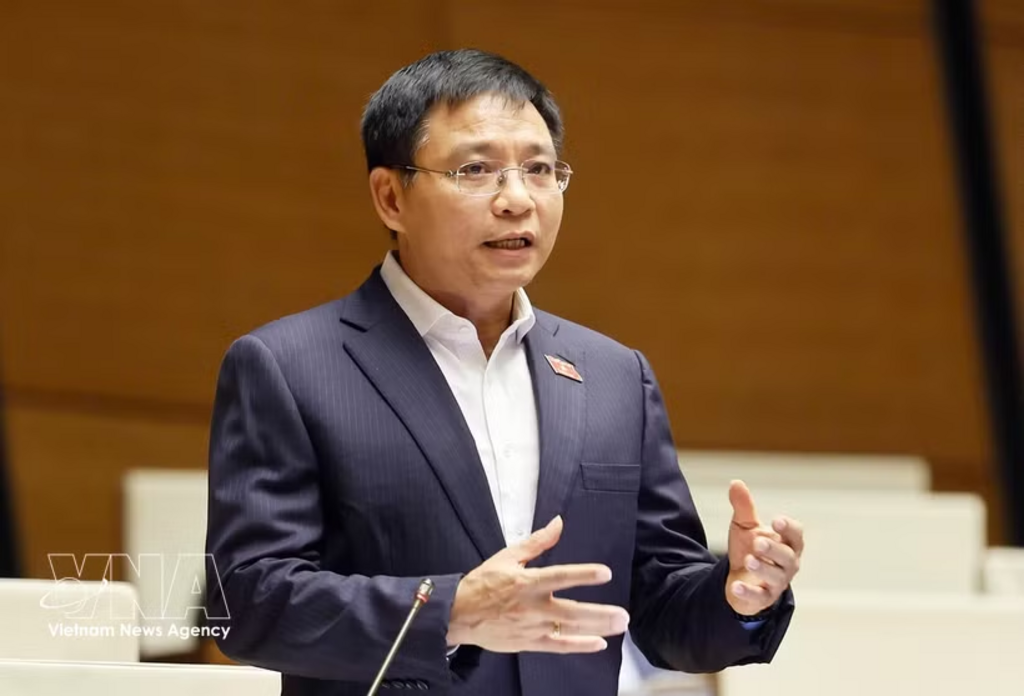
| Deputy Prime Minister Nguyen Van Thang answers questions about financial affairs at the second session of the 16th National Assembly on November 12, 2026__Photo: VNA |
Deputy Prime Minister Nguyen Van Thang, during a question-and-answer (Q&A) session on financial affairs at the second session of the 16th National Assembly on November 12, stressed the need to ensure the effectiveness of official development assistance (ODA) loans and concentrate funding on projects with clear economic and social benefits, while avoiding scattered investment.
The Deputy PM said Vietnam's public debt, foreign borrowing and government debt levels remained well below the ceilings permitted by the NA, leaving room to mobilise ODA alongside other funding sources for economic development.
However, he stressed the need to carefully assess the efficiency of ODA use, as Vietnam is no longer eligible for low-cost loans. Borrowing costs, construction conditions and contractor selection must be thoroughly reviewed to ensure funds are used effectively and safely.
ODA should be prioritised for major projects with clear socio-economic and financial benefits rather than spread thinly across multiple projects, he added.
Regarding the mobilisation of private investment through public-private partnerships (PPP), particularly in infrastructure and transport, Thang said developed countries effectively adopted models in which businesses either invest in construction and recoup their capital through user fees with a reasonable return, or take over State-built infrastructure for operation and maintenance (O&M).
Vietnam has also adopted both models and enacted the 2020 Law on Public-Private Partnership Investment, with policies encouraging businesses to participate in such projects, he noted.
Vietnam mainly applies the model in which businesses finance construction and recover their investment through user fees. Under the Law on Public-Private Partnership Investment, the State can contribute around 50 per cent of a project’s total investment, rising to 70 per cent in special cases, depending on its nature and efficiency.
Thang said many earlier PPP projects encountered financial difficulties because businesses had to bear the full investment costs. State participation in risk-sharing has since made most newly assessed projects financially viable.
For the O&M model, he said the Ministry of Finance and the Ministry of Construction are working on a pilot scheme to auction or tender the rights to collect tolls on several projects, particularly sections of the North-South Expressway.
This model can attract businesses by reducing risks related to site clearance, construction and price fluctuations. PPP-related regulations also provide for risk-sharing when actual revenue falls below projections and allow the State to buy back projects in certain special circumstances.
For public investment disbursement, Thang said the Government is taking strong measures to achieve a 100 per cent disbursement rate, which was expected to contribute an additional 1.7 percentage points to economic growth and help achieve the target of growth exceeding 10 per cent in 2026.
In his remarks at the session, NA President Tran Thanh Man acknowledged progress in financial and budget management, public investment and business support, but pointed to persistent problems, including slow disbursement, unallocated capital, and ODA and PPP bottlenecks, along with issues regarding tax management for e-commerce activities, businesses operating on digital platforms, and firms’ access to finance and global value chains.
He urged the Government and relevant agencies to improve public investment regulations, speed up disbursement, reallocate funds from stalled projects to those with better performance, and strengthen control over advance payments and their recovery. He also called for better ODA project preparation and closer coordination with donors.
Other priorities include consolidating the PPP legal framework, resolving outstanding transitional Build-Transfer (BT) projects by December 31, 2027, studying the establishment of a PPP project development fund, improving tax administration of digital businesses and foreign providers, and maintaining tax, fee, and land-rent relief alongside appropriate business support in 2027.- (VNA/VLLF)