 |
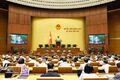
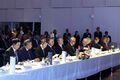
| At the group discussion on the draft Law amending and supplementing several articles of the Law on Children, the Law on People with Disabilities, the Law on Medical Examination and Treatment, the Law on Pharmacy, the Law on the Elderly, and the Law on Health Insurance as part of the second session of the 16th National Assembly__Photo: VNA |
Prime Minister Le Minh Hung stressed on October 21 that the ultimate goal of amendments to several healthcare-related laws is to eliminate unnecessary intermediaries and ensure that patients and hospitals can access medicines and medical equipment at reasonable prices.
Speaking during a group discussion on the draft Law on amendments and supplements to several articles of the Law on Children, the Law on People with Disabilities, the Law on Medical Examination and Treatment, the Law on Pharmacy, the Law on the Elderly, and the Law on Health Insurance as part of the second session of the 16th National Assembly (NA), PM Hung said the Government urgently submitted the proposed amendments to address loopholes in legal regulations and implementation practices that have driven up costs.
Inspections and investigations by the Ministry of Public Security and the Government Inspectorate have uncovered shortcomings in legislation, guiding documents and circulars of the Ministry of Health, as well as in implementation, allowing excessive intermediaries and costs, he noted.
Many medicines, particularly branded drugs, and medical devices are imported. Even when manufacturers expand domestic production, Vietnam remains dependent on imported raw materials, with local capacity meeting only a small proportion of demand.
The PM cited an investigation into a case involving Viet My company, in which goods were reportedly traded through multiple overseas companies before reaching Vietnamese importers at significantly inflated prices. Such practices increase healthcare costs, burden patients and place additional pressure on the state budget and the Health Insurance Fund.
Costs have been pushed to excessively high and unreasonable levels, he said, calling on NA deputies, particularly those working in healthcare and hospitals, to help refine the proposed legislation.
While businesses should be allowed to earn profits, these must remain reasonable, he stressed. Medicines and medical equipment serve essential healthcare needs and should not be left entirely to market forces. The State must ensure prices remain affordable, especially given the substantial out-of-pocket expenses currently borne by patients.
The Government is determined to work with relevant agencies to amend the Law on Pharmacy and the Law on Medical Examination and Treatment, ensuring greater transparency in medical equipment procurement and drug pricing. Possible solutions include centralised procurement for commonly used products and direct negotiations between hospitals and suppliers for specialised items.
The PM also questioned why private hospitals could obtain medicines and equipment at reasonable prices while public hospitals struggled to do so, urging a thorough review of procurement and bidding mechanisms. He warned against foreign pharmaceutical and medical equipment companies colluding to control the market.
Contributing to the discussion, deputy Duong Minh Tuan from Ho Chi Minh City proposed regulations requiring procurement decisions to account for the full lifecycle costs of medical equipment, including proprietary chemicals, biological products and spare parts.
He urged the drafting agency to ensure that procurement assessments consider both initial purchase prices and long-term operating expenses, while stressing the need to strengthen suppliers’ compliance with relevant laws and maintain effective State management of medical equipment.- (VNA/VLLF)