 |
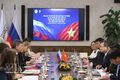
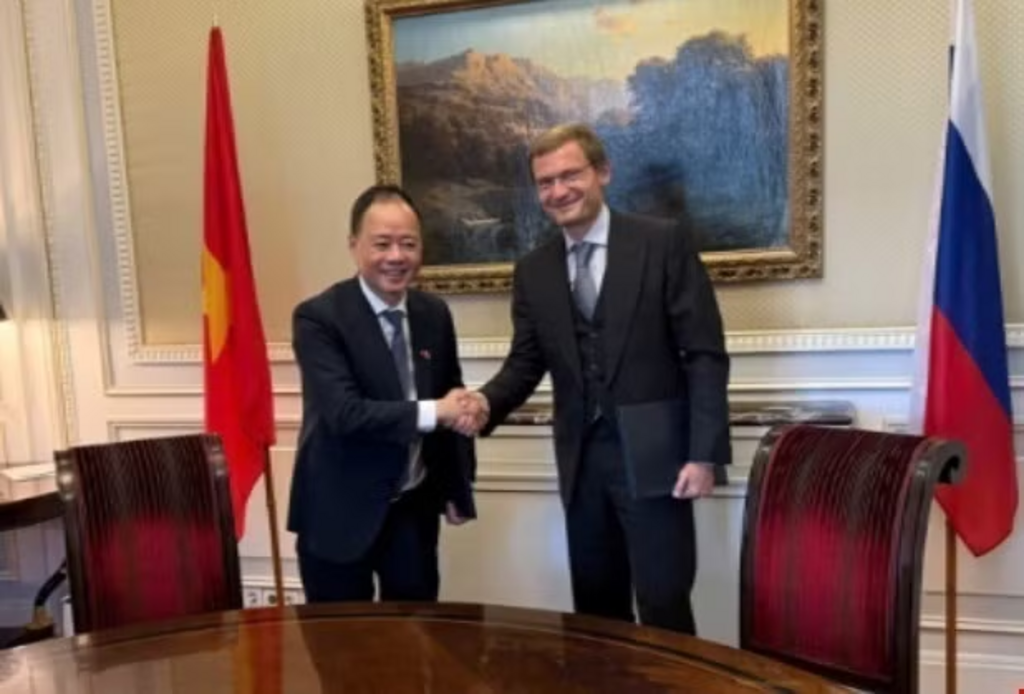
| Prof. Dr Tran Hong Thai (L), President of the Vietnam Academy of Science and Technology, and Artyom Zassourky, Vice President at Russian conglomerate AFK Sistema, at their meeting__Photo: VNA |
Prof. Dr Tran Hong Thai, President of the Vietnam Academy of Science and Technology (VAST), has held a working session with Artyom Zassourky, Vice President at Russian conglomerate AFK Sistema, to promote cooperation in several strategic technology fields.
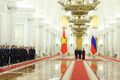
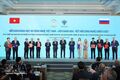
As part of bilateral activities within the framework of General Secretary of the Communist Party of Vietnam Central Committee and President To Lam’s state visit to Russia, the meeting built on a cooperation framework established by the two sides earlier this year.
Following the signing of a framework memorandum of understanding in January, VAST and AFK Sistema have gradually connected Vietnamese research institutes with technology enterprises within the Sistema ecosystem. In June, a VAST delegation directly met with and surveyed the technological capabilities of enterprises under the group, identifying areas with potential to move from discussions to concrete cooperation.
On that basis, at the meeting, Thai and Zassourky agreed to promote cooperation in three priority strategic technology areas, namely green hydrogen, small satellites, and unmanned aerial vehicle (UAV) systems. Specific joint work has been developed into an agreement on the cooperation implementation programme, with the signed document expected to be exchanged during the state visit.
In green hydrogen, bilateral engagements will focus on hydrogen production and storage technologies, fuel cells and related equipment systems, with a view to jointly conducting research, adapting technologies, implementing pilot and demonstration models, and gradually localising the technologies in Vietnam. One specific area will be research into fuel-cell systems for UAVs, creating a link between different technology fields under the cooperation programme.
In small satellite technology, VAST and Sputnix are expected to jointly study satellite mission concepts and develop subsystems, payloads and ground segments. The cooperation will also aim to train engineers and enhance Vietnam’s capacity in satellite design, manufacturing, assembly, integration and testing, thereby gradually increasing Vietnamese participation throughout the development process of a satellite system.
In the UAV field, VAST and Aeromax will jointly develop systems for civil surveillance missions, covering design, manufacturing, integration, control, sensors and data processing, while also studying the integration of data collected by UAVs with Earth observation data from satellites.
Thai emphasised his expectations for a breakthrough cooperation model that goes beyond simply accessing existing technologies. The new approach will focus on establishing joint projects between the two sides, creating a basis for inviting leading Sistema experts to directly work, participate in and manage projects in Vietnam. This is regarded as a key factor in accelerating the technology transfer process.- (VNA/VLLF)