 |
| National Assembly (NA) Vice Chairman Nguyen Hong Dien speaks at the meeting__Photo: Portal of the National Assembly |
National Assembly (NA) Vice Chairman Nguyen Hong Dien, who heads the legislature’s Steering Committee on science, technology, innovation and national digital transformation, chaired a meeting on April 13 to consolidate the body and set out key tasks for 2026, focusing on building a digital legislature and improving the institutional framework for science and technology.
In his conclusion remarks, Dien commended the Steering Committee’s standing body and its task force for closely coordinating with relevant agencies to implement Resolution 57-NQ/TW of the Politburo on breakthroughs in science and technology development, innovation and national digital transformation. He noted that key assignments set by the central steering body for 2025 had been successfully fulfilled.
The committee agreed to propose a restructuring plan to the Standing Board of the NA Party Committee and the NA Standing Committee, while identifying priority tasks for 2026 and clarifying mandates and responsibilities of each member.
Reporting on progress, Head of the Steering Committee’s assisting task force and Vice Chairman of the NA’s Committee on Science, Technology and Environment, Tran Van Khai, said the NA Standing Committee had issued important resolutions in August 2025 establishing the Steering Committee and defining its functions, followed by further consolidation in November 2025. Despite not holding a formal session earlier due to a heavy legislative workload and preparations for the 16th-tenure NA elections, the committee’s standing agencies and task force had proactively advanced tasks through flexible coordination, meeting all requirements set for 2025.
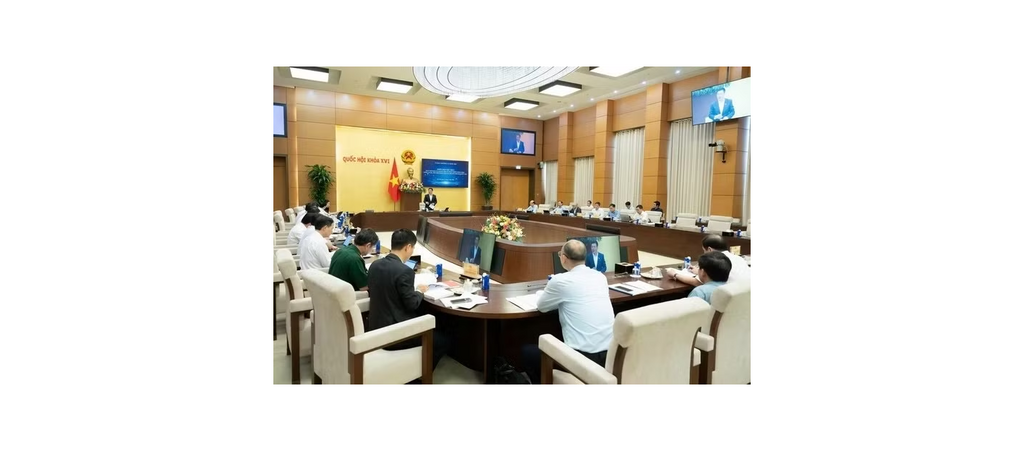 |
| Delegates at the meeting__Photo: Portal of the National Assembly |
A key outcome was the development of a comprehensive set of guiding documents to implement Resolution 57, including regulations on organisational structure, operational rules and the 2026 work plan. These documents outline clear roadmaps and assign specific responsibilities, particularly in reviewing draft laws related to science, technology, innovation and digital transformation, Khai said.
Digital transformation efforts have also gained traction, notably through the “Digital Literacy for All – Digital National Assembly” initiative. The NA’s Party Committee has been among the pioneers in promoting this movement. By late February 2026, 4,826 deputies and staff had joined online training courses, with more than 4,000 completing the full programme, surpassing the target completion rate. A standardised framework on digital competencies and artificial intelligence (AI) applications has also been approved and widely deployed.
At its first session, the task force presented five major proposals, including a draft resolution to restructure the Steering Committee for the new term, ensuring broad participation from NA bodies, ministries, sectors and technology enterprises, while clearly defining responsibilities and coordination mechanisms.
Another draft sets out eight groups of tasks and four groups of powers for the committee and task force, establishing a governance model based on democratic centralism, with clear delegation and accountability.
The 2026 work programme is identified as an “acceleration year,” featuring 36 task groups linked to key performance indicators and deliverables. Priorities include improving the legal framework, advancing digital transformation in NA operations, applying AI and big data in lawmaking, digitising records, developing digital infrastructure, ensuring information security and moving toward a paperless office model.
Targets include equipping all deputies and staff with digital signatures, digitising all non-classified documents and completing a digital NA architecture compatible with e-government systems. Integrated software platforms will be deployed to support legislative, supervisory and decision-making functions.
The “Digital Literacy for All – Digital National Assembly” initiative will be further expanded through e-learning platforms, certification systems and a network of “digital ambassadors” to promote digital skills across the system.
According to the task force, implementation will follow the “six clarities” approach, backed by data-driven monitoring and evaluation, with clear inspection and accountability mechanisms, towards enhancing the effectiveness of the NA while fostering science, technology, innovation and national digital transformation in the time to come.- (VNA/VLLF)