 |
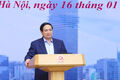
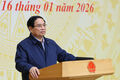
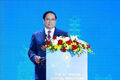
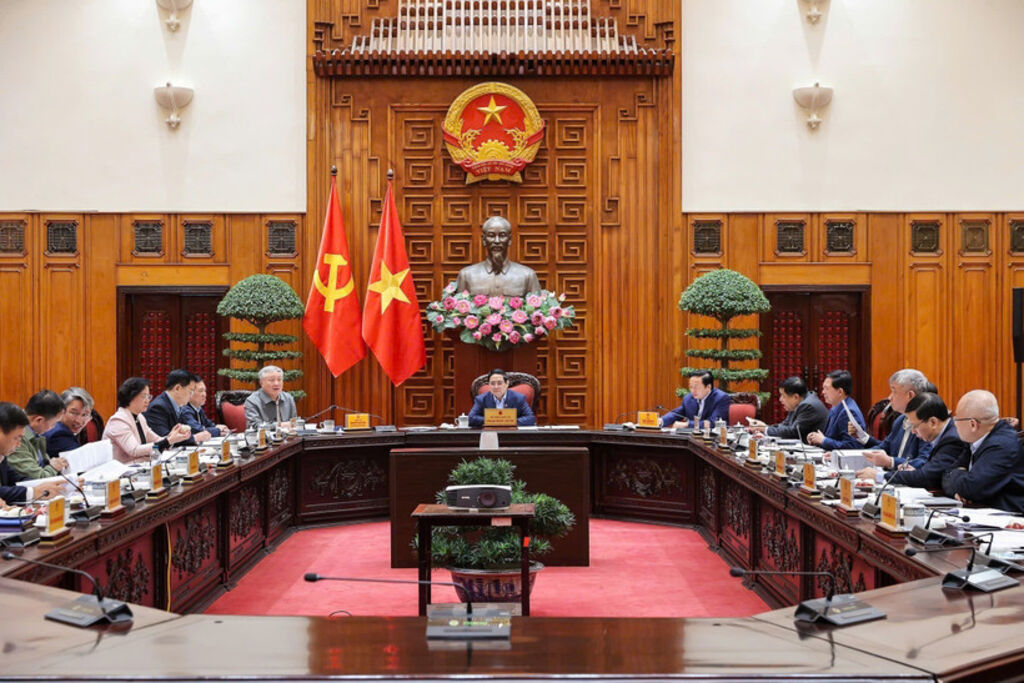
| Prime Minister Pham Minh Chinh chairs a meeting of standing Government members in Hanoi on January 17 to discuss the development of a National Strategy on Rare Earths__Photo: VNA |
Prime Minister Pham Minh Chinh chaired a meeting of standing Government members in Hanoi on January 17 to discuss the development of a National Strategy on Rare Earths.
The standing cabinet members also looked into a draft Government resolution on mechanisms to remove difficulties and obstacles for transitional BT (build-transfer) projects, a draft decree detailing the handling of obstacles related to BT transport projects, and several other issues.
Regarding the development of the National Strategy on Rare Earths, PM Chinh emphasised the need to strengthen state management in this field and to develop the rare earth industry, contributing to strategic autonomy.
He highlighted tasks and solutions including building and improving institutions, mechanisms, and policies, with priority given to deep processing; financial investment and mobilisation of state resources, public-private partnership resources, and investor capital; infrastructure construction and development; transfer and mastery of advanced and appropriate technologies; promotion of public-private cooperation; and smart governance based on digital transformation.
The Prime Minister requested the Ministry of Agriculture and Environment, together with relevant agencies, coordinate, absorb the opinions raised at the meeting, and finalise the drafts, reports, and proposals for submission to the competent authorities for consideration and feedback.
About mechanisms to address difficulties and obstacles for transitional BT projects, the Prime Minister instructed the Ministry of Finance and relevant agencies to incorporate feedback, finalise and submit the Government resolution for issuance under expedited procedures.
He stressed the requirement to comply with and properly apply regulations, laws, and authorities; and to harmonize interests and share risks among the State, businesses, and the people; and, on that basis, to review and handle projects that have already received inspection conclusions.
For projects without inspection conclusions, provincial-level People’s Committees are tasked with conducting inspections and handling them within their authority, in the spirit of “localities decide, implement and take responsibility.”
Ministries and sectors are to carry out their tasks within their mandates; if issues exceed their authority, they should report to the Government and the Prime Minister, he noted.- (VNA/VLLF)