 |
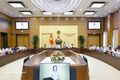
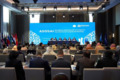
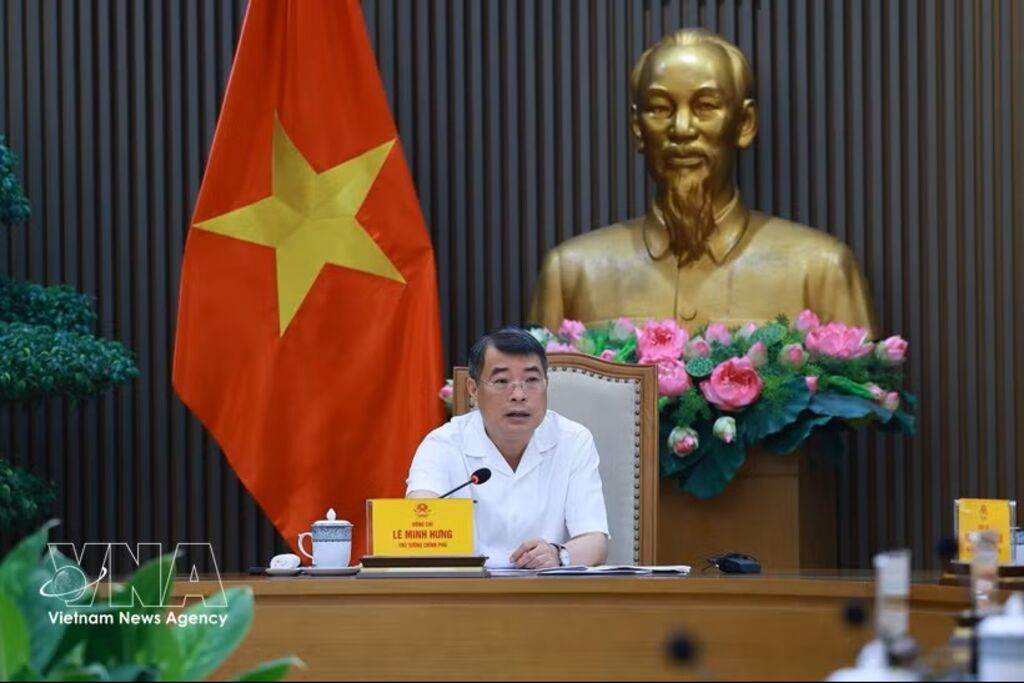
| Prime Minister Le Minh Hung speaks at the September 21 meeting on textbook supply, the review of general education curricula and textbooks, and preparations for a thematic supervision delegation on the implementation of Politburo Resolution 71-NQ/TW __Photo: VNA |
Prime Minister Le Minh Hung on September 21 called for urgent measures to solve textbook shortages for the 2026-27 academic year, stressing that no student should attend school without the textbooks needed for learning.
Speaking at a Hanoi meeting on textbook supply, the review of general education curricula and textbooks, and preparations for a thematic supervision delegation on the implementation of Politburo Resolution 71-NQ/TW on breakthroughs in education and training development, PM Hung noted that the 2026-2027 academic year marks the first year of nationwide use of a unified set of textbooks in line with the resolution.
Despite repeated instructions from the Party and State leadership, shortages remained in some localities at the start of the new academic year, which began on September 5. The education system lacks some 776,000 copies, or around 0.31 per cent of the total demand.
Shortcomings in demand forecasting, ordering, publishing, stockpiling, coordination, and distribution have both objective and subjective causes. He emphasised that the main issue lies in subjective causes, especially the Ministry of Education and Training’s (MOET)'s undecisive, untimely and ineffective direction and management of textbook supply.
He instructed the Minister of Education and Training to take direct responsibility before the Government and the Prime Minister for adopting stronger and more urgent measures to address the shortages by September 25.
Where necessary, the ministry should invite other publishers and printing establishments to produce and supply textbooks, rather than relying solely on Vietnam Education Publishing House, he said. In the coming years, textbook printing and distribution should also be diversified, with more than one supplier involved.
PM Hung called on the ministry to coordinate with each locality to check textbook supplies right down to individual schools and educational institutions, making sure every student gets the learning materials they need. He stressed that shortages must not continue, especially in areas still facing big gaps like Lam Dong, Dong Nai, Ninh Binh, Phu Tho, Khanh Hoa, Can Tho, and Dak Lak.
He also requested a serious review to clarify the responsibility of organisations, units, and individuals involved in the inadequate supply of textbooks at the beginning of the school year, with violations to be handled in accordance with regulations. The MOET must report the situation and results to the Prime Minister by October 10.
Another urgent priority, the ministry must coordinate with local authorities and educational institutions to immediately implement measures to ensure the quality and safety of school meals and prevent any negative practices.
Regarding the longer-term reform of curricula and textbooks, the Government leader called for a thorough review of the 2018 General Education Programme and existing textbooks, with a focus on reducing academic pressure and ensuring that students receive essential knowledge, skills and qualities. Greater attention should be paid to moral education, character building, and education on patriotism, a sense of responsibility and the aspiration to contribute to society.
The ministry was asked to develop a specific roadmap for completing a new unified set of general education textbooks for nationwide use from the 2028-29 academic year, with a report to the Government leadership in October.
The Prime Minister emphasised the need for major reforms in textbook management, especially regarding copyright, stating that these rights should be held by the State. He also highlighted the importance of accurately assessing textbook demand using data, while speeding up the development of the education sector’s database.
He set the goal of providing free textbooks to all students nationwide from the 2029-30 academic year, or earlier if conditions permit. The MOIT and the Ministry of Finance were asked to assess annual budget requirements and strengthen cost controls, as textbooks are an essential educational commodity requiring State regulation and management.
PM Hung further stressed the need to continue reforming examinations to ensure fairness and genuine assessment of learning outcomes. Any changes must be carefully assessed for their impact and introduced according to a clear roadmap, while the education sector must listen to local authorities, experts, scientists and teachers directly involved in teaching.
Extra efforts should be taken to urgently complete all remaining facilities at the 108 inter-level boarding schools in border communes already inaugurated and to accelerate construction on the remaining 121 schools, with all projects to be finished before August 30, 2027, he said, adding that preparations should also continue for investment in new schools in disadvantaged areas, particularly in coastal areas.
He also requested proactive planning based on student data to ensure sufficient schools, classes, and teachers in the coming years, while improving policy response and communication. At the same time, the Ministry of Education and Training was tasked with thoroughly preparing reports and documents for the thematic supervision of the implementation of Resolution 71-NQ/TW, including a comprehensive assessment of the Government’s action programme and proposals for addressing outstanding difficulties and shortcomings.- (VNA/VLLF)