|
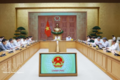
| At the meeting to discuss the restructuring and reorganisation of the fuel distribution system__Photo: VNA |
Prime Minister Le Minh Hung chaired a meeting on September 11 with the Ministry of Industry and Trade and relevant ministries and agencies to discuss the restructuring and reorganisation of the fuel distribution system.
PM Hung stressed that firmly ensuring national energy security is the foundation and prerequisite for stability and double-digit economic growth, making the restructuring and reorganisation of the fuel distribution system a key priority. Implementing Politburo Resolution No. 70-NQ/TW dated August 20, 2025, on ensuring national energy security through 2030 with a vision to 2045, Vietnam has carried out numerous tasks and achieved positive results, but must continue with stronger reforms in several areas, he noted.
The PM stressed the need to ensure adequate fuel supplies in all circumstances, describing fuel as the “lifeblood” of the economy and an important component of national security, as highlighted in Politburo Resolution No. 70. He pointed out shortcomings in the fuel supply system, including heavy dependence on international markets and their fluctuations, bottlenecks in legal regulations and a management mechanism that can lead to supply disruptions and localised shortages when markets fluctuate, and an inappropriate fuel distribution structure.
PM Hung recognised the efforts of the Ministry of Industry and Trade and relevant agencies, as well as proposals contained in the draft amendments to Government Decree No. 83/2014/ND-CP on fuel trading.
However, he said a number of issues need further review before the draft is finalised, particularly the need for substantive reform of the fuel distribution system.
The PM asked Standing Deputy Prime Minister Pham Gia Tuc to continue directing the work and the Ministry of Industry and Trade to further study and finalise the draft revised decree based on the overall requirement that the new regulations on fuel trading must fundamentally address shortcomings in the existing mechanism.
The aim is to build a fuel market and distribution system that operates smoothly, efficiently, stably, transparently and competitively under market mechanisms with State management, while enhancing the domestic system's capacity to adapt and withstand external shocks; and ensure energy security and supply in all circumstances.
It must also comprehensively address existing shortcomings and prevent vested interests, fraud and profiteering, the PM stressed.
Regarding the organisation of the fuel distribution system, the Ministry of Industry and Trade was asked to redesign it to substantively reduce intermediary layers, clearly distinguish the functions of the supply and downstream segments, and address circuitous transactions among traders that raise costs and make it difficult to determine responsibility when supply shortages occur.
The ministry must clearly define the responsibilities of each market participant in ensuring supplies reach retail outlets, particularly when the market is volatile, to prevent disruptions and localised shortages.
 |
| Prime Minister Le Minh Hung speaks at the meeting__Photo: VNA |
PM Hung also asked for a review of conditions applicable to wholesalers, and stronger restructuring of the number of fuel wholesalers and reorganising distributors and retailers. Regarding the fuel pricing mechanism, PM Hung agreed on continuing to reform price management based on market principles under State regulation and intervention, particularly during periods of volatility.
Over supply security, reserves and the Fuel Price Stabilisation Fund, the PM asked the Ministry of Industry and Trade to coordinate with the Ministry of Finance and relevant ministries and agencies to finalise mechanisms for ensuring supply, maintaining circulation reserves and using market-stabilisation tools in accordance with the law on prices. The mechanisms must ensure that the State has sufficient tools to intervene when the market experiences abnormal fluctuations, he stated.
The Ministry of Industry and Trade, in coordination with the Ministry of Finance, was also asked to review and develop comprehensive transitional provisions and an appropriate implementation roadmap, ensuring no legal gaps arise, particularly concerning the Fuel Price Stabilisation Fund.
PM Hung requested the Ministry of Industry and Trade to urgently finalise the draft decree, continue consultations with businesses and associations, and seek opinions from the public, businesses and experts in an open and receptive manner, with a view to submitting the decree for promulgation as soon as possible, no later than early October 2026.- (VNA/VLLF)