 |
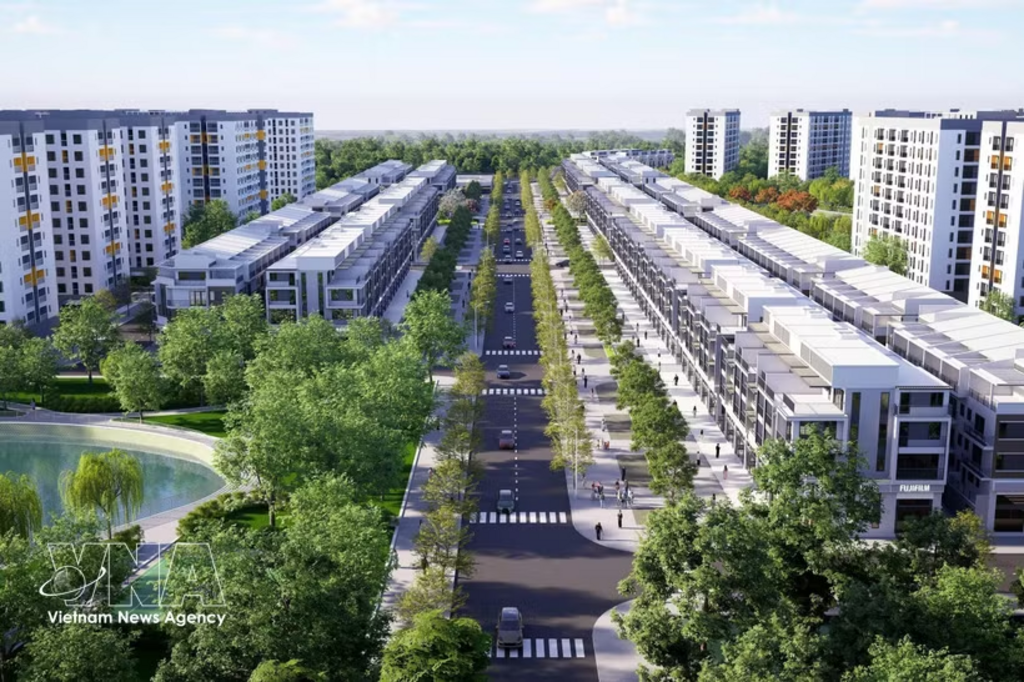
| Design of the Yen My II Industrial Park workers' housing and social housing project__Photo: VNA |
The Government is set to make rental housing a strategic pillar of its housing market as the Government shifts from an ownership-focused approach toward a model centred on housing access and use, according to Minister of Construction Tran Hong Minh.
Speaking at the 14th Vietnam Trade Union Congress for the 2026–2031 term, Minh said future housing development will focus on commercial housing, social housing and, in particular, rental housing, which is expected to meet the needs of millions of workers.
He noted that Party General Secretary and State President To Lam, along with the Government and the Prime Minister, have issued strong directives to accelerate the development of social housing, worker housing and rental accommodation, reflecting growing demand among working people.
Minh said the policy framework supporting social and worker housing has become relatively comprehensive. Developers benefit from incentives including land-use fee exemptions, tax reductions, infrastructure support and access to preferential loans.
As a result, 781 social housing projects are currently under development nationwide, providing more than 720,000 apartments, equivalent to 72 per cent of the target under the programme to build one million social housing units. Of these, 231 projects have been completed, delivering over 180,800 homes.
In 2025 alone, more than 103,700 social housing units were completed, surpassing the assigned target by 3.5 per cent, while 20 localities met or exceeded their annual goals.
Despite the progress, the minister acknowledged persistent market imbalances, particularly an oversupply of high-end housing alongside a shortage of affordable homes. The market also remains heavily focused on housing for sale, while long-term rental supply is limited.
Housing prices in major cities have risen much faster than incomes, making home ownership increasingly difficult, while existing incentives have not been sufficient to attract large-scale private investment in rental housing.
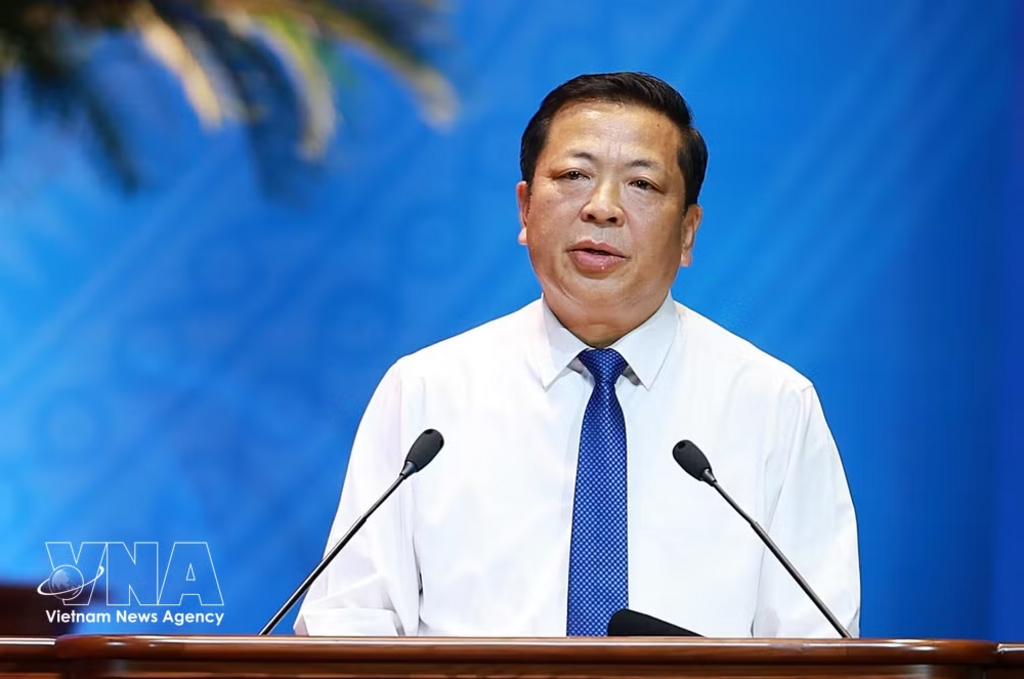 |
| Minister of Construction Tran Hong Minh__Photo: VNA |
According to the minister, a key policy shift is the move from a predominantly commercial housing model toward the parallel development of commercial, social and rental housing. Rental housing is expected to serve workers, labourers, civil servants, public employees and members of the armed forces.
Housing development will continue to follow market principles while being guided by State policies, planning, credit mechanisms and financial tools.
Future projects will be closely linked with urban planning, land-use plans, industrial zones and public transport systems, with priority given to areas with integrated infrastructure, key economic corridors and transit-oriented urban development.
The Government also plans to diversify funding sources, using public resources to guide the market and mobilise greater private-sector participation.
Alongside housing for sale, authorities will prioritise rental housing, particularly apartment projects in major cities, industrial parks, economic zones and key growth corridors.
To support these goals, the Ministry of Construction is coordinating with ministries and localities to review the implementation of Secretariat Directive 34 on social housing and prepare amendments to the Housing Law, the Law on Real Estate Business and related regulations for submission to the National Assembly in this October.
For rental housing, local authorities have been urged to assess demand, develop investment plans and allocate resources for different target groups. They have also been instructed to accelerate social housing projects to meet future targets.
Under Government Resolution 7/NQ-CP, Vietnam aims to develop 158,723 social housing units in 2026. By mid-May, construction had begun on 34 additional projects with nearly 30,000 apartments, while more than 11,200 units had been completed. Total completions this year are projected at around 91,300 units, equivalent to 58 per cent of the annual target.
A total of 26 localities have already launched enough projects to meet or exceed their assigned 2026 targets, reflecting continued momentum in the nationwide social housing programme.
Minh called on local authorities to maintain efforts to meet housing targets in 2026 and beyond, while urging trade unions and local governments to continue providing feedback so policies can be refined and housing programmes better meet the growing needs of the population.- (VNA/VLLF)