 |
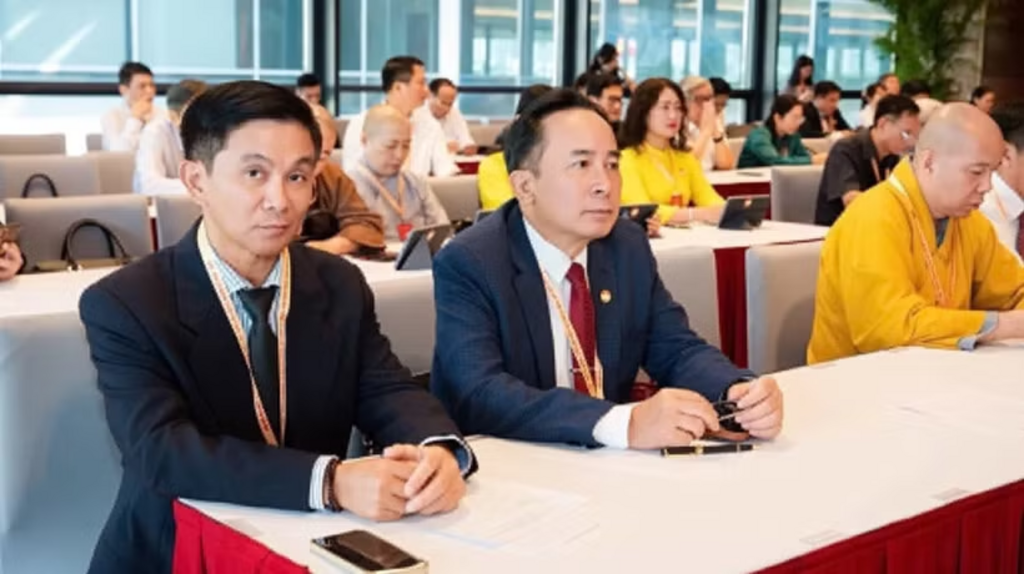
| Aerospace engineer Tran Thang (first, left) attends the Congress of the Vietnam Fatherland Front Central Committee in January 2026__Photo: VNA |
The Politburo's Resolution 23-NQ/TW on overseas Vietnamese affairs will generate new momentum and inspire confidence among more than 6.5 million Vietnamese living and working abroad in the country’s development prospects, said aerospace mechanical engineer Tran Thang, an overseas Vietnamese (OV) in the US.
In an interview with a Vietnam News Agency (VNA) correspondent in New York, Thang, who has spent years working in culture, education and cooperation-connecting, said Resolution 23 emphasises the need to accompany OV and create mechanisms enabling them to participate more deeply in the cause of national construction, development and defence.
After more than 20 years of implementing Resolution 36, the Party and State’s policies have been translated into numerous effective policies and actions, helping strengthen the group’ attachment to their homeland and creating favourable conditions for increasing numbers of them to return to Vietnam to visit relatives, invest, do business, work and engage in exchanges.
According to Thang, a notable aspect of Resolution 23 is that it is not confined to the political system and State agencies but has also been widely disseminated through the mass media, enabling Vietnamese communities around the world to directly access, study and embrace the resolution. This reflects a spirit of openness and transparency, as well as recognition of the importance of OV participation.
Thang said that translating a resolution on contributions into concrete programmes would not be easy and suggested that thinking about how OV can contribute should be renewed: they do not necessarily have to return to Vietnam in order to contribute to their homeland. With the development of digital technologies, experts can work remotely, provide consultancy, teach, supervise research, support businesses, share management expertise and connect international partners while maintaining high levels of effectiveness. This approach is in line with Resolution 23’s emphasis on building networks of Vietnamese intellectuals and experts overseas.
Connecting experts in science and technology, innovation, digital transformation, strategic technologies, education, healthcare, finance and governance will be particularly meaningful as Vietnam seeks to pursue knowledge- and technology-driven development, Thang noted.
However, to ensure such networks do not remain merely contact lists or symbolic meetings, there must be two-way mechanisms linking domestic needs with OV capabilities. The expert said the Government is responsible for policymaking, but businesses and educational institutions are also key pillars of society, as they are where jobs, research, products and innovation are directly created.
In practice, many OV have returned to Vietnam to invest, do business, manufacture products or work for foreign companies operating in the country. This is a positive trend, reflecting their confidence in Vietnam’s development prospects.
However, Thang said the implementation of Resolution 23 should focus on creating a space for contribution for OV. Such a space should not merely consist of a forum or a programme of meetings, but encompass an open institutional framework, transparent procedures, clearly defined coordination mechanisms, a working environment that respects professional expertise and fair opportunities to contribute.
In particular, administrative difficulties faced by the group should be listened to and addressed appropriately. When someone brings capital, knowledge, international connections and a genuine desire to contribute to their homeland, what they need is clear guidance, respect and consistent administrative procedures. Removing such bottlenecks is precisely how the spirit of accompanying and creating opportunities can be translated into concrete action.
Vietnam is at an important turning point on its development path, making the resolution all the more significant as it raises expectations for a closer and more substantive relationship between the homeland and the Vietnamese community overseas, Thang stressed.- (VNA/VLLF)