 |
| Nguyen Duy Tinh, Director of the Transaction and Asset Registration Centre in Ho Chi Minh City, works with his staff__Photo: MOJ |
Data at the center of operations
The registration of secured transactions plays an important role in ensuring transparency and legal certainty, particularly in credit activities. As the number of dossiers received and processed electronically continues to increase, conventional periodic reporting may no longer provide sufficiently timely information for operational management.
To address this, the Centre has developed the ROSIAI IOC Dashboard, which brings together key operational, administrative and personnel data on a single platform.
The system has three main display spaces.
A wide-format LED screen presents selected aggregate indicators to citizens, businesses and organisations visiting the Centre, improving access to information and transparency.
Smart TV management screens installed in the Director’s office, meeting room and professional teams display key performance indicators (KPIs), weekly trends and work completion rates, supporting meetings and day-to-day monitoring.
An integrated management dashboard also consolidates selected administrative and personnel information, giving managers a broader overview of operations and staffing.
Monitoring workload in real time
A key feature of the dashboard is its professional KPI block, which uses data generated during dossier processing.
Indicators show the number of dossiers to be processed each day, those already completed, those still outstanding and the opening backlog. Dossiers are also separated into online and in-person/email streams, while charts track the numbers received, processed and pending throughout the week.
This enables the Centre to identify periods of heavy workload and adjust staffing accordingly, helping ensure dossiers are processed within prescribed time limits.
The dashboard also shows the daily completion rate against the ROSIAI system’s target, which has regularly been maintained at 100 per cent. A colour-coded alert system makes processing status easy to identify: green indicates work ahead of schedule, yellow signals the need to accelerate processing, and red warns of overdue cases.
The system also analyses dossier volumes at different times of the day. Online dossiers submitted overnight, from 5pm to 7am, are aggregated at the start of the morning shift so officials can identify the backlog and prioritise work.
Hourly data then helps pinpoint peak periods, including around 9.30am-11.30am and 2pm-4pm, allowing staffing to be adjusted to actual demand.
Outstanding dossiers are further classified by reason, such as awaiting assignment, undergoing checks for blocking information, or temporarily suspended pending additional information or documents from applicants.
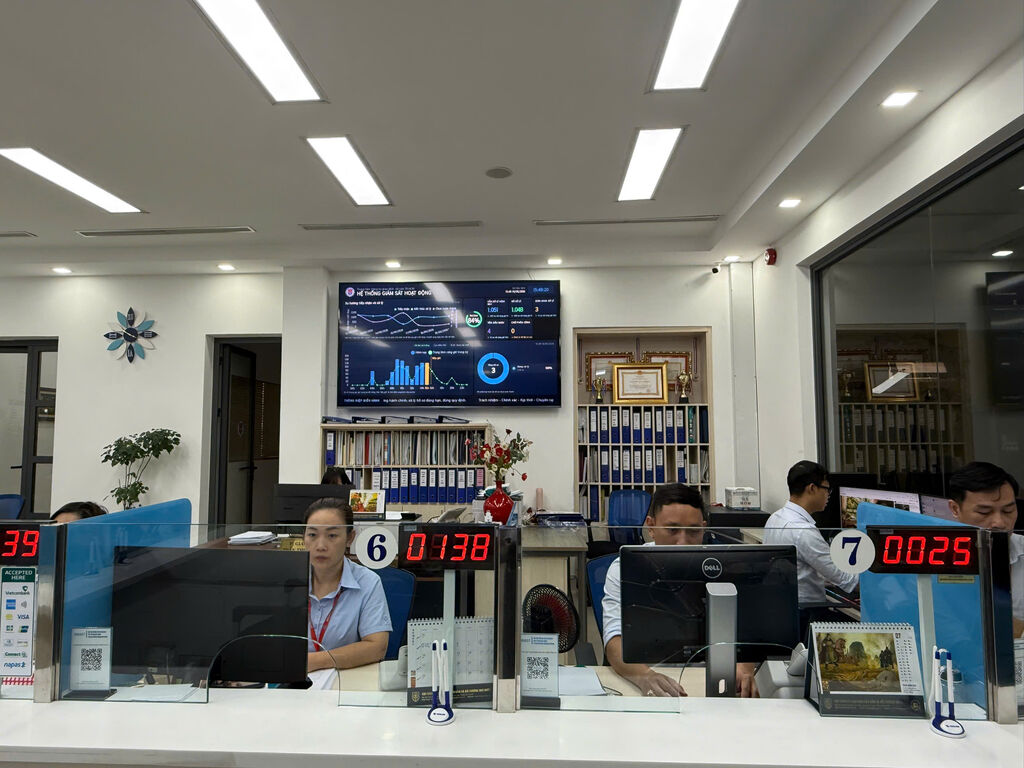 |
| At the Transaction and Asset Registration Centre in Ho Chi Minh City__Photo: MOJ |
Supporting internal administration
Beyond professional operations, version IOC V2 incorporates document and personnel management modules.
The document management module supports the monitoring of incoming and outgoing official documents and urgent instructions, while the personnel module provides information on attendance, lateness, leave and official duties.
A scrolling message bar displays working principles, reminders on official discipline and instructions from the Department’s leadership and the Centre’s management, helping strengthen internal communication.
Toward smarter registration services
The ROSIAI IOC Dashboard provides different benefits for different groups of users.
For managers, the ROSIAI IOC Dashboard provides a data-based tool for decision-making, helping identify areas requiring attention and facilitating reporting and operational coordination.
For registration officers, it improves visibility over work progress and reduces the time needed to compile statistics and reports.
For citizens, businesses and banks, better use of operational data is expected to contribute to faster, more convenient and more transparent processing of secured transaction registration dossiers.
The Centre plans to continue studying the use of artificial intelligence and data analytics to forecast dossier volumes and identify potential risks of overload. It will also explore connections with national and specialised databases in accordance with regulations and approved roadmaps.
Based on its practical effectiveness, appropriate functions of the dashboard may also be standardised and replicated at other registration centres under the Department.- (VLLF)