 |
| Nguyen My Linh, Deputy Director of the Department of Culture, Sports and Tourism of Thai Nguyen province addresses the event__Photo: https://daibieunhandan.vn/ |
A training conference on anti-drug communication has been recently organised by the Department of Culture, Sports and Tourism of Thai Nguyen province with the participation of 250 journalists, news editors and communications officers across the province.
Held on November 5 as part of efforts to implement the National Target Programme on Drug Prevention and Control through 2030 (the Programme), the conference focused on improving communication methods to strengthen drug prevention.
Addressing the event, Nguyen My Linh, Deputy Director of the Department of Culture, Sports and Tourism of Thai Nguyen province, emphasised that drug prevention and control is of strategic importance to the stability and development of the country and Thai Nguyen province in particular. She highlighted media outreach and education as vital measures to raise public awareness, shape public understanding and mobilise people from all walks of life, especially young generations, to actively participate in drug prevention and control.
Linh also underscored that the successful implementation of the Programme depends on developing a professional, committed communications workforce with strong practical skills, thereby improving the overall quality of long-term communication activities across Thai Nguyen.
Drug abuse and drug-related crimes continue to pose serious, multifaceted threats to public health, family stability, socio-economic development and social order. As criminal networks increasingly exploit cyberspace and online platforms to target vulnerable groups, conventional communication approaches require reform. Under National Assembly Resolution No. 163/2024/QH15, the Programme calls for a comprehensive, coordinated strategy to reduce drug supply, reduce demand and mitigate drug-related harm by mobilising combined efforts of the political system and the public, with grassroots communities at the centre of implementation.
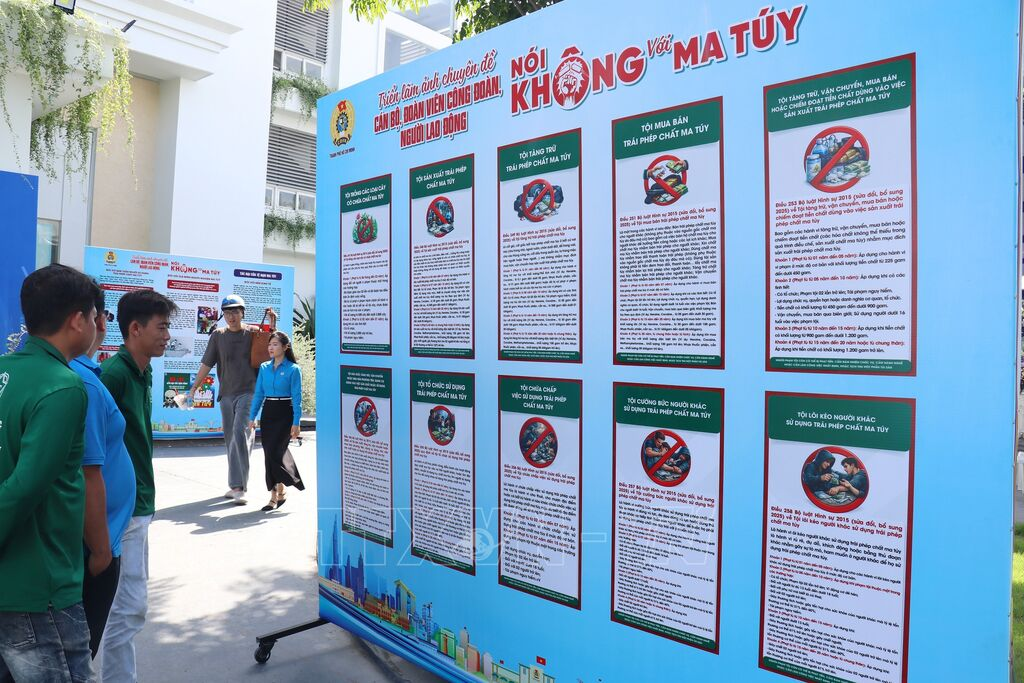 |
| Workers visit exhibition titled Drug Prevention and Control among Workers__Photo: Thanh Vu/VNA |
Effective public communication can no longer rely solely on quoting abstract legal provisions or issuing rigid, generic warnings about addictive substances. Instead, communication strategies must be tailored to specific target audiences, most notably teenagers, students, industrial park workers and high-risk groups. Outreach initiatives must equip citizens with practical skills to recognise risks, resist peer pressure and identify where to seek official legal advice and drug rehabilitation services. Furthermore, public education must actively foster a supportive community environment that encourages voluntary drug rehabilitation while reducing the stigma associated with people who are undergoing or have undergone drug rehabilitation.
For Thai Nguyen province, improving the knowledge and skills of communications officers across communes and wards is of practical significance. The province focused its training curriculum on developing a professional, technologically skilled communications workforce. Participants received hands-on instruction in modern communication methods, including topic selection, digital content development, infographic design, short-form video production and the distribution of verified information across official social media channels and local electronic information portals.
A key highlight of the conference was the detailed guidance on the Code of Conduct in the Digital Environment. Given the speed at which unverified rumours and covert drug promotion spread online, media practitioners were urged to strengthen their professional commitment to fact-checking, disseminating official information and countering harmful online content. By combining national policy with practical digital skills, Thai Nguyen province aims to ensure that timely, accessible and persuasive drug prevention information reaches every household and school, strengthening grassroots prevention efforts to safeguard a healthy social environment.- (VLLF)