 |
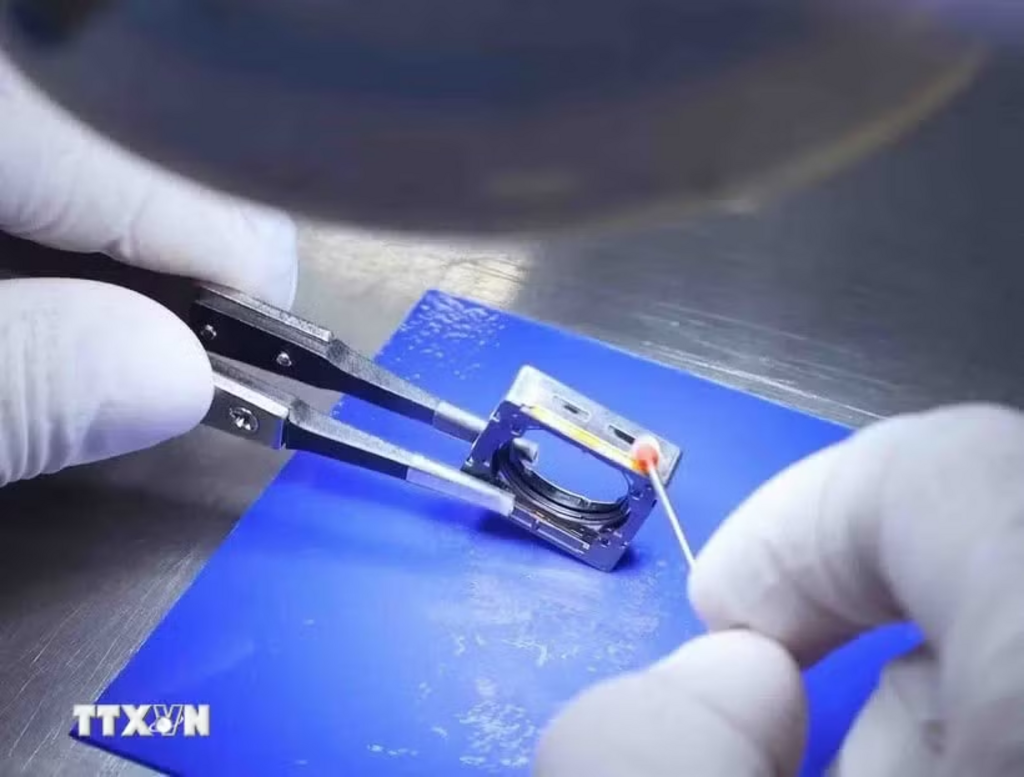
| Vietnam is stepping up the development of the semiconductor industry__Illustrative photo: VNA |
Vietnam should draw on the European Union (EU)’s experience to build national capacity in quantum technology, with priorities including skilled personnel, research infrastructure, industrial applications and international cooperation, according to Prof. Nguyen Luong Quang, a member of the Vietnam Quantum Technology Network (VNQuantum).
In an interview with the Vietnam News Agency (VNA)’s resident correspondent in Brussels, Quang said Vietnam should first develop high-quality human resources through interdisciplinary training programmes in quantum technology, photonics, microchips and artificial intelligence at leading universities. Scholarships, internships at European quantum labs, and strategies to bring Vietnamese experts from abroad could help speed up progress.
He also recommended developing domestic research and testing facilities, particularly in photonics and quantum simulation, while connecting them with Europe’s remote quantum computing infrastructure to reduce initial investment costs.
Vietnam's technology, electronics, telecommunications and software companies should be encouraged to join global quantum value chains, including through quantum software development, industrial optimisation algorithms, precision optical components and specialised integrated circuits. Government support could include tax incentives, innovation funds and public procurement programmes.
Quang called for deeper cooperation with EU members such as France, Germany, the Netherlands, Finland and Spain through joint research, postgraduate training and pilot applications in banking, energy, smart cities and cybersecurity.
In the longer term, he proposed a phased national roadmap. From 2025 to 2030, Vietnam should focus on workforce development, quantum software, applications in AI and trials of quantum communications. From 2030 to 2035, it could expand into optical component design, small-scale quantum modules and a national quantum simulation centre. After 2035, depending on its accumulated capabilities, Vietnam could consider a deeper role in the quantum hardware supply chain.
Hanoi, Ho Chi Minh City and Da Nang could become major research and industrial hubs, linking universities with technology businesses. Quang also recommended a specialised deep-tech venture capital fund combining public and private resources to support early-stage quantum research and commercial applications.
He urged the Government to develop a National Quantum Technology Strategy through 2045, supported by coordination among ministries and technical standards compatible with international requirements.
According to the expert, quantum technology also has implications for national security. The Ministry of National Defence could plan a transition to post-quantum cryptography, while investing in quantum sensing, precision measurement and secure communications. The Ministry of Public Security could explore quantum security research, including quantum key distribution and post-quantum algorithms, and cooperate with European partners on pilot projects.
Quang recommended the Ministry of Science and Technology to lead a national quantum technology programme, while the Ministry of Education and Training develop specialised university and postgraduate courses and scholarships.
Vietnamese companies in telecommunications, software, electronics and energy could also work with European firms to explore quantum applications in finance, healthcare, energy and transport logistics, helping strengthen domestic technological capacity.- (VNA/VLLF)