 |
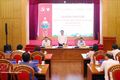
| Party General Secretary and President To Lam delivers the opening remarks at the third plenum of the 14th Party Central Committee on July 20__Photo: VNA |
The third plenum of the 14th Party Central Committee has marked a significant evolution in Vietnam’s strategic thinking on national security, placing security at the heart of sustainable development and shifting the focus from responding to threats to preventing them before they emerge.
Opening the event on July 20, Party General Secretary and President To Lam stressed that security is a prerequisite for development and called for a fundamental shift in the national security strategy. Instead of dealing with individual risks after they arise, Vietnam must strengthen resilience, improve preparedness and proactively safeguard the country.
At the closing session of the sitting, the Party Central Committee endorsed the National Security Strategy, which broadens the concept of national security by integrating it with the country's long-term development goals. The strategy calls for early identification, forecasting and prevention of traditional and non-traditional threats while safeguarding the Party, the State, national independence, sovereignty, territorial integrity and the people's security, and protecting data, energy, water resources, food security and critical infrastructure.
A key innovation of the newly adopted resolution on the National Security Strategy is the concept of “protecting the nation and ensuring sustainable development.” This reflects a more comprehensive understanding of security, linking national defence and public order with economic, social and environmental development. This is what is meant by "comprehensive security."
Under this approach, national security extends beyond military and territorial concerns to include environmental protection, disaster prevention and climate resilience. In line with this thinking, the third session also adopted a conclusion on environmental protection and proactive climate change response, reaffirming the need to shift from disaster recovery towards prevention, adaptation and resilience while promoting green development and safeguarding future generations.
 |
| The opening session of the third plenum of the 14th Party Central Committee__Photo: VNA |
To strengthen strategic autonomy, the new National Security Strategy identifies five major priorities: proactively detecting and preventing security risks at an early stage; improving national preparedness and mobilisation capacity; enhancing self-reliance in technology and high-quality human resources; developing a modern, self-reliant and dual-use security industry; and reinforcing the people-based national security posture while expanding international integration and cooperation.
Technology is expected to play an increasingly important role in implementing this vision. Advanced digital tools, including artificial intelligence (AI), big data analytics, satellite systems and geographic information technologies, are expected to enhance risk forecasting, early warning capabilities and real-time monitoring of critical areas.
The strategy also places emphasis on building a stronger domestic security industry capable of supporting both law enforcement and broader socio-economic needs. Greater self-reliance in security technologies is seen as essential to reducing dependence on external suppliers and enabling authorities to prevent rather than merely respond to emerging threats.
According to Politburo member and Minister of Public Security General Luong Tam Quang, national security in the new era is no longer confined to border and territorial security. It also covers the security of the political system and governance, cultural and ideological security, economic and financial security, data security, environmental security, energy security, water resources, food security, human security, digital security, nuclear security, the security of transmission and fiber-optic infrastructure, satellite security, and the security of the low-altitude economic space.- (VNA/VLLF)