 |
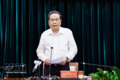
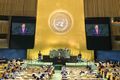
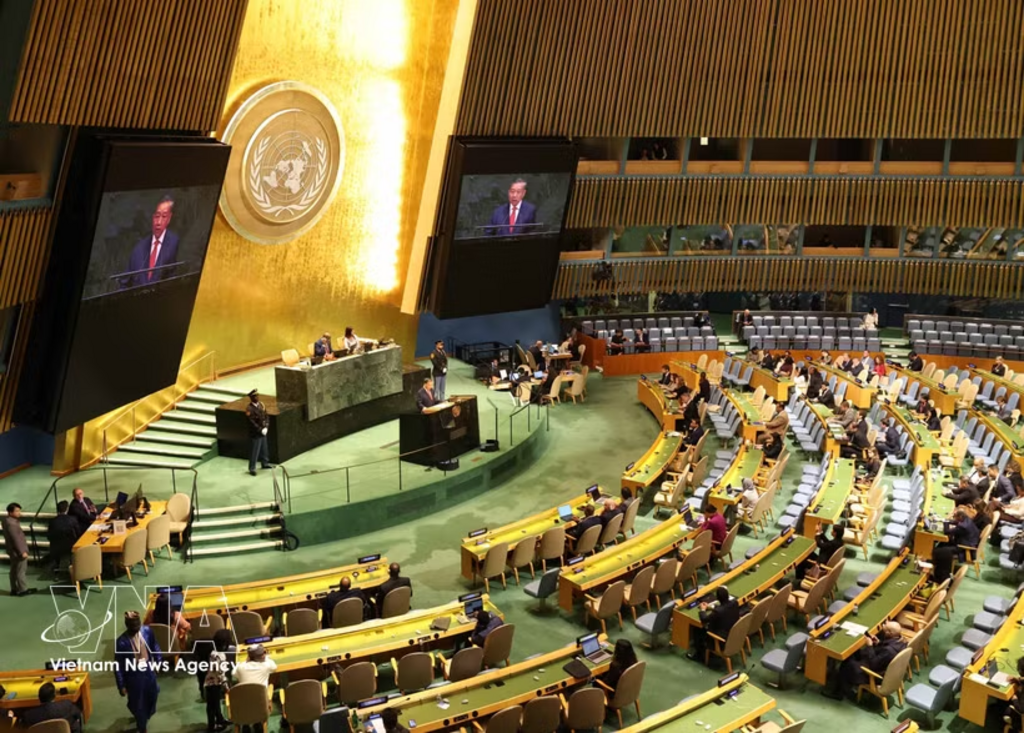
| General Secretary of the Communist Party of Vietnam Central Committee and President To Lam delivers remarks at the high-level general debate of the 81st session of the United Nations General Assembly__Photo: VNA |
The message delivered by General Secretary of the Communist Party of Vietnam Central Committee and President To Lam at the United Nations General Assembly (UNGA) on restoring trust, upholding international law and promoting multilateral cooperation shares many similarities with Canada’s foreign policy priorities, opening up new room for the two countries to expand cooperation.
In an interview with Vietnam News Agency correspondents in Canada, Vina Nadjibulla, co-founder and CEO of the Centre for Strategic Statecraft of Canada, said a notable aspect of the Vietnamese leader’s speech was the convergence between the country’s message and the positions Canada is promoting at the UN.
According to Nadjibulla, General Secretary and President Lam’s emphasis on restoring trust, respecting the UN Charter and international law, responsibly addressing differences and maintaining dialogue amid intensifying geopolitical competition reflects common concerns among many countries over current challenges.
This convergence of interests creates space for Vietnam and Canada to develop broader and deeper relations. Although the two countries do not take exactly the same approach to every international issue, they share an interest in maintaining a rules-based system in which institutions and dialogue help limit the influence of power politics while giving countries greater room to pursue autonomous development choices.
Regarding Vietnam’s role in the multilateral system, Nadjibulla identified three areas where Vietnam could make practical contributions: rules-based trade, regional diplomacy and technology governance.
In trade, Vietnam is deeply integrated into the global economy and is playing an increasingly important role in international production and supply chains. This gives the country a direct interest in maintaining open, predictable markets governed by common rules.
General Secretary and President Lam’s call for strengthening an open, fair and transparent multilateral trading system is particularly significant as the global trading system faces mounting pressure. Vietnam’s role as Chair of the Comprehensive and Progressive Agreement for Trans-Pacific Partnership (CPTPP) in 2026 also provides an opportunity for the country to contribute to strengthening one of the important rules-based trade frameworks in the Indo-Pacific.
In regional diplomacy, Nadjibulla described Vietnam as an influential member of the Association of Southeast Asian Nations (ASEAN), with extensive experience in maintaining dialogue and cooperation with partners holding different interests and positions.
She noted that the nation’s experience in balancing relations with major powers and maintaining strategic autonomy offers valuable lessons for developing and middle countries.
In particular, in the field of technology governance, the Canadian expert welcomed General Secretary and President Lam’s emphasis that developing countries should have a substantive voice in shaping international rules on digital technology and artificial intelligence (AI), rather than merely adapting to standards developed elsewhere.
She said Vietnam could help ensure that international discussions on AI, digital governance and the green transition more fully reflect the development needs and perspectives of emerging economies. This would also help promote a more inclusive technology governance system, in which the benefits of innovation could be shared more widely.
Regarding Vietnam-Canada relations, Nadjibulla said the priority for the next phase should be to expand cooperation beyond trade in goods towards investment, technology partnerships and greater economic resilience.
She said the two countries already had important institutional foundations for advancing this agenda, including the CPTPP, the bilateral cooperation framework on science, technology and innovation, and the Vietnam-Canada joint economic committee.
She also proposed strengthening regular dialogue between the two governments on economic security and resilience, with a focus on critical minerals, energy, supply chains, emerging technologies and investment.
In addition, Vietnam and Canada should make use of the CPTPP and the process of establishing an ASEAN-Canada free trade framework not only to increase trade in goods, but also to promote investment and production cooperation.
According to Nadjibulla, Canada has advantages in energy, critical minerals, capital and research capabilities in AI and advanced technologies, while Vietnam has significant manufacturing capacity, a rapidly growing market and deep integration into production networks in Southeast Asia. These complementary strengths provide opportunities for the two countries to jointly build more diversified and resilient supply chains that are better able to withstand external shocks.
Another area of cooperation she particularly highlighted is strengthening links between businesses, universities and research institutions in the two countries in AI governance, cybersecurity, digital standards, clean technology and human resource development. She said General Secretary and President Lam’s message that technology development should expand opportunities rather than create new forms of dependence has direct relevance to the direction of this cooperation.- (VNA/VLLF)