 |
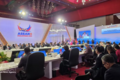
| An overview of the conference__Photo: VNA |
Vietnam has launched a new project to accelerate the phaseout of ozone-depleting substances and climate-warming refrigerants under the Montreal Protocol, thereby supporting the country's transition to greener cooling technologies and its net-zero target.
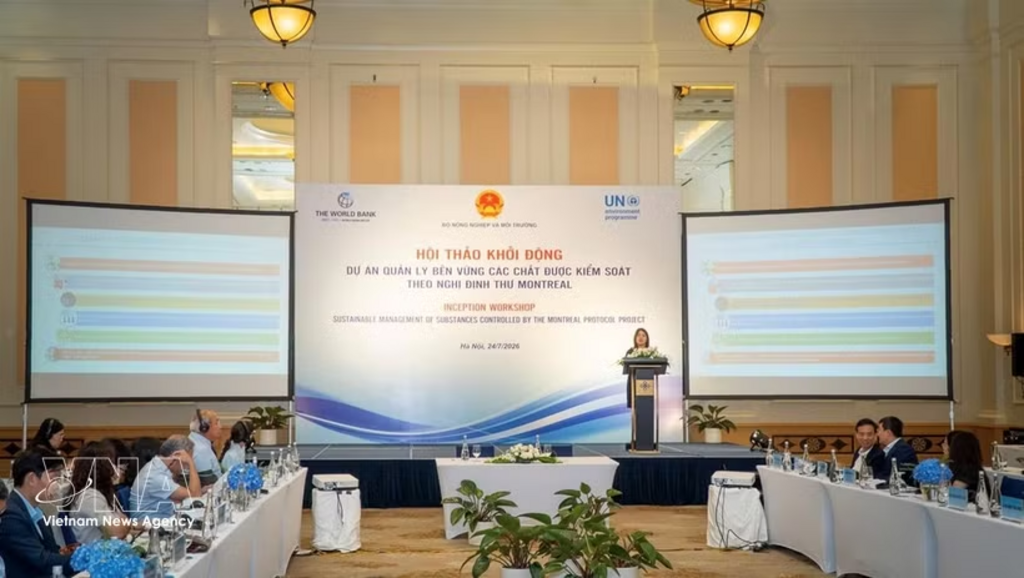
The project, unveiled at a workshop in Hanoi on July 24 by the Ministry of Agriculture and Environment in partnership with the World Bank and the United Nations Environment Programme (UNEP), is funded with grants from the Montreal Protocol's Multilateral Fund.
Nguyen Tuan Quang, Deputy Director of the Department of Climate Change, said Vietnam has fully complied with its Montreal Protocol commitments since joining the Vienna Convention and the protocol in 1994. With support from international partners, the country has strengthened regulations, tightened import-export controls, promoted technology upgrades, trained technicians and raised public awareness on ozone protection.
He noted that the national plan issued in 2024 provides a framework for phasing out hydrofluorocarbons (HFCs), promoting low-global-warming refrigerants and improving energy efficiency, while paving the way for the final elimination of hydrochlorofluorocarbons (HCFCs).
The project aims to eliminate 97.5% of baseline HCFC consumption by 2030 and cut baseline HFC consumption by 10% from 2029. Key activities include expanding technical training in refrigeration and air conditioning, supporting low-emission cooling technologies for railway air-conditioning systems, improving policies to reduce HFC use, and promoting climate-friendly, energy-efficient cooling solutions.
Nguyen Duy Son, Acting Country Operations Manager for the World Bank in Vietnam, said the initiative will help replace high-global-warming refrigerants in both stationary and mobile air-conditioning systems, strengthen efforts to combat illegal trade in controlled substances, and develop a skilled workforce capable of safely servicing modern cooling equipment.
He said the project is expected to reduce annual greenhouse gas emissions by 6.1 million tonnes of CO₂ equivalent by the end of 2031, while creating better employment opportunities through training and certification for thousands of refrigeration technicians.
The Department of Customs said it has completed a cooperation agreement with the Department of Climate Change to strengthen information sharing, customs enforcement, officer training, equipment upgrades, business outreach and international cooperation to improve control of regulated substances.
Officials at the workshop also discussed coordination mechanisms among customs, vocational education authorities, the railway sector and industry partners to support technology transfer, technician training and pilot deployment of low-global-warming refrigerants in railway air-conditioning systems.
The Montreal Protocol is widely regarded as one of the world's most successful environmental treaties. Its Kigali Amendment, which mandates a gradual reduction in HFC production and consumption, is expected to help avoid up to 0.5°C of global warming by the end of the century if fully implemented.- (VNA/VLLF)