 |
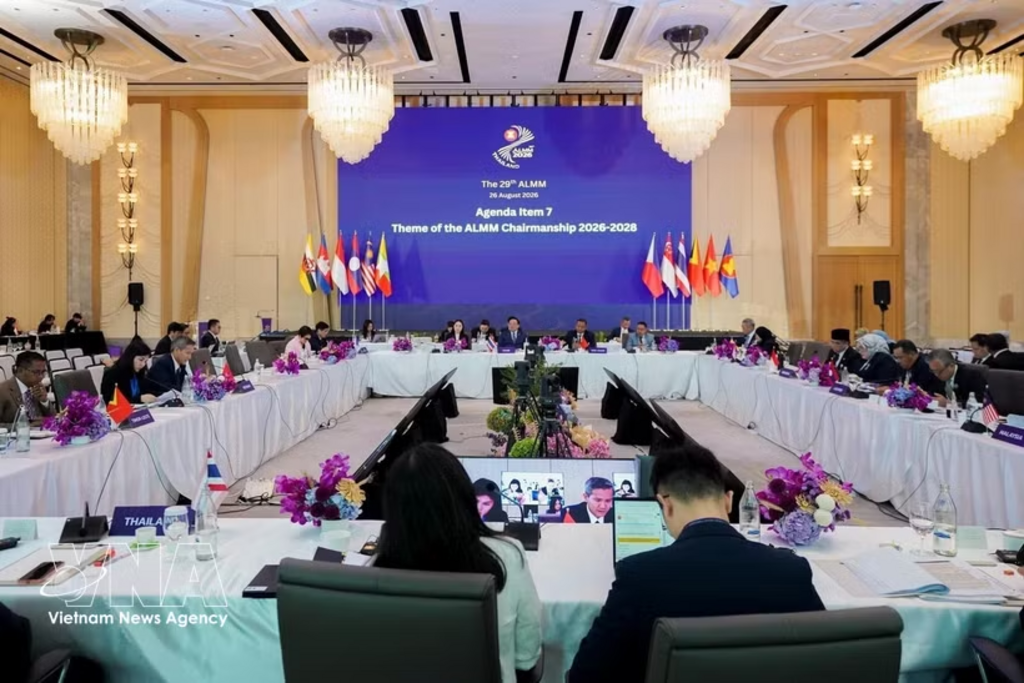
| An overview of the 29th ASEAN Labour Ministers Meeting__Photo: VNA |
Deputy Minister of Home Affairs Cao Huy has reaffirmed Vietnam’s strong commitment to working with ASEAN member states to build a resilient, inclusive and integrated regional labour market, with skills recognition identified as a key driver of sustainable employment and workforce competitiveness.
Huy made the remarks at the 29th ASEAN Labour Ministers Meeting (ALMM) held in Bangkok, Thailand, on August 26 under the theme “Advancing ASEAN Human Capital: Skills Certification towards Global Recognition.”
He spoke highly of Thailand’s organisation of the event and the timeliness of its theme, stressing that establishing internationally recognised skills certification systems and promoting mutual recognition mechanisms are a strategic “key” to opening up sustainable employment opportunities and enhancing the competitiveness of workers across the region.
To this end, Vietnam proposed three strategic priorities for ASEAN cooperation. First, ASEAN should expand and harmonise mutual recognition mechanisms by increasing the scope and number of Mutual Recognition Arrangements (MRAs) in the region; and promote the role of the ASEAN TVET Council (ATC) in connecting national skills certification systems with regional and global standards, based on national occupational skills qualification frameworks and regional references.
Second, digital infrastructure should be developed as a trusted foundation for cross-border skills recognition. Vietnam proposed applying artificial intelligence (AI) and digital technologies to digitise, authenticate and enable the cross-border verification of skills certificates among member states. National skills databases should also be developed based on the principles of accuracy, completeness and interoperability, enabling ASEAN countries to recognise each other’s skills transparently and quickly without requiring workers to undergo assessments from scratch.
Third, skills recognition must deliver tangible benefits to workers. That recognition should be linked to improved working conditions, fairer wage policies and comprehensive social protection, ensuring that a recognised certificate translates into sustainable employment and commensurate income.
Participants focused on measures to strengthen ASEAN human resources in response to rapid technological change, the green transition, digitalisation and evolving labour markets. ASEAN members reaffirmed their commitment to decent and inclusive employment, a more adaptable workforce and lifelong learning opportunities, ensuring that no one is left behind.
They also endorsed the ASEAN Labour Ministers’ Work (ALMM) Programme for 2026-2030 and sectoral plans to guide cooperation over the next five years, and adopted the ASEAN Declaration on Fair, Ethical and Sustainable Recruitment of Migrant Workers and the ASEAN Declaration on Strengthening Labour Market and Social Resilience, which will be submitted to the 49th ASEAN Summit.
The meeting also approved guidelines on occupational safety and health in the informal sector and labour inspection in the fisheries sector, aimed at better protecting vulnerable workers.
The Vietnamese representative reaffirmed that Vietnam will work closely with member states to effectively implement the ALMM Work Programme for 2026-2030, contributing to a labour market that is resilient, inclusive and integrated.- (VNA/VLLF)