|
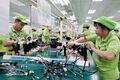
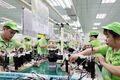
| Clams are processed for export at the factory of Thanh Hoa Seafood Import-Export JSC in Thanh Hoa province__Photo: VNA |
Vietnam is intensifying efforts to sustain export momentum in the second half of 2026 as the country works toward its target of USD 550 billion in export revenue for the year, despite continuing uncertainties in global trade.
Statistics show that exports reached USD 294.34 billion in the first six months, meaning the economy needs to generate roughly USD 255.7 billion more during the remainder of the year to meet the annual goal.
Agriculture continues to provide an important cushion for Vietnam's trade performance. The sector posted a trade surplus of more than USD 9 billion in the first half of the year, supported by strong exports of fruit and vegetables, seafood, coffee, rice, timber products and cashew nuts. Industry associations believe continued market expansion and higher-value processed products will help maintain growth and move the agricultural sector closer to its target of USD 100 billion in export turnover by 2027.
Trade deficit reflects stronger production demand
Although Vietnam recorded a trade deficit of about USD 16.65 billion in the first half of 2026, experts say the figure should be viewed in the context of expanding production rather than weakening exports.
Total import-export turnover climbed 27.1 per cent year on year to nearly USD 550 billion. Exports rose 21 per cent to around USD 266.5 billion, while imports surged 33.4 per cent to USD 283.2 billion, reversing the trade surplus recorded during the same period last year.
 |
| Leather shoes are among Vietnam's export products to the UK market__Photo: VNA |
Import growth has been driven largely by production-related goods rather than consumer products. Electronics, computers and components, together with machinery and equipment, accounted for around 51 per cent of total imports. Other major increases were recorded in steel, chemicals, plastics, textile and footwear materials, reflecting stronger manufacturing activity.
Deputy Director of the Ministry of Industry and Trade's Agency of Foreign Trade Tran Thanh Hai said the current import structure demonstrates that businesses are actively preparing for future production and exports. He noted that higher petroleum import values were also influenced by geopolitical tensions that pushed up global energy prices, making part of the increase a result of external factors rather than higher import volumes.
Economists share the view that the trade deficit is largely an investment in future export capacity. Vo Xuan Vinh, Director of the Institute of Business Research at the University of Economics Ho Chi Minh City, said much of the increase in imports came from foreign-invested manufacturers whose export orders are generally secured in advance.
He also pointed to rising imports of electronic components amid booming global demand for AI-related technologies, as well as greater imports of raw materials for biofuel production. Having sufficient inputs available, he said, will enable manufacturers to respond quickly to international demand in the coming months.
Many analysts have therefore described the first-half trade deficit as "working capital" for export production. The second half of the year traditionally marks the peak purchasing season in major markets such as the US, the EU, Japan and the Republic of Korea. With total trade already approaching USD 550 billion after six months, Vietnam is widely expected to surpass USD 1 trillion in combined import-export turnover for the first time in 2026.
Government and businesses expand export markets
Against a backdrop of persistent uncertainty in global commerce, the Government is implementing a broad range of measures to strengthen export growth during the remainder of the year.
These include expanding overseas markets through economic diplomacy, maximising the benefits of free trade agreements (FTAs), streamlining administrative procedures, reducing logistics costs, improving access to credit and helping businesses overcome trade barriers. Authorities are also encouraging deeper processing, official cross-border exports and greater market diversification to improve the competitiveness of Vietnamese products.
According to the Ministry of Industry and Trade, one priority is helping enterprises make fuller use of existing FTAs while accelerating the conclusion of new agreements. Vietnam has recently completed negotiations on a free trade agreement with the European Free Trade Association (EFTA), which will become the country's 18th FTA once signed, opening additional opportunities for exporters.
Vietnamese businesses are also actively adjusting their market strategies. Dang Quy Nhan, General Director of Nam Mekong Agricultural Products JSC (Somekco), said the company, which exports bananas and fresh coconuts, has shifted more shipments to China after exports to the Middle East encountered difficulties earlier this year.
While acknowledging that profit margins in China are relatively low because of price competition, he said the market's strong consumption helps maintain stable demand for farmers' produce. The company is now seeking to expand exports to Russia to diversify markets and improve returns.
Industry associations also remain optimistic. Dang Phuc Nguyen, General Secretary of the Vietnam Fruit and Vegetable Association (Vinafruit), said fruit and vegetable exports are well positioned to approach the historic USD-10-billion milestone this year, driven by robust durian shipments and rapid growth in processed products such as canned juices and dried fruit.
He credited government efforts to resolve issues related to growing area codes, packaging standards and customs clearance, enabling exporters to better meet China's import requirements while continuing to expand sales to premium markets including the US, the EU, Japan, the Republic of Korea and Australia.
The cashew industry is also expecting a strong finish to the year. Bach Khanh Nhut, Vice Chairman of the Vietnam Cashew Association, said exports to the US rose more than 33 per cent in the first half of the year, while Europe and other markets together accounted for about 62 per cent of export turnover, providing a balanced market structure that reduces dependence on any single destination.
If current demand continues through the year-end consumption season in the US, Europe and China, he said Vietnam remains on track to achieve its USD-5-billion cashew export target, reinforcing its position as the world's leading exporter of cashew kernels while creating further momentum for higher-value agricultural processing and broader international market expansion.- (VNA/VLLF)