|
| Cao Dai followers practice their rituals at the Cao Dai Tay Ninh Church__Photo: VNA |
As the digital space dramatically expands public access to and participation in religious activities, it also presents new challenges for safeguarding freedom of religion and belief and state management. Against this backdrop, Vietnam’s revised Law on Belief and Religion has established a legal framework governing religious activities in the digital ecosystem for the first time, marking a significant policy milestone.
Digital transformation broadens religious practice
According to the Ministry of Ethnic and Religious Affairs, more than 95 per cent of Vietnam’s population engages in religious or belief practices. The country officially recognises 43 organisations representing 16 religions, with nearly 28 million followers. Buddhism, Catholicism, Hoa Hao Buddhism, Protestantism and Caodaism each have more than one million adherents.
These figures reflect the continued expansion of religious life in recent years. Religious organisations have strengthened pastoral activities, clergy training and the construction and restoration of places of worship, many of which now serve as important cultural and spiritual centres.
As digital technologies advance, religious organisations and state authorities are increasingly applying artificial intelligence (AI) and online platforms to disseminate teachings, organise activities and engage followers. Digital platforms have become effective tools for both religious practice and administration.
In late 2025, the Vietnam Buddhist Sangha (VBS) officially launched the VBSeID application, an electronic identification platform for monks and nuns designed to digitise and centralise the management of Buddhist administrative data, thus modernising management, authentication and connectivity across the Sangha.
Technology has also transformed access to religious teachings. Buddhists can now listen to Dharma talks online anytime and anywhere, while churches increasingly use livestreams, online Bible study and social media to provide pastoral care and connect with congregations.
Minister of Ethnic and Religious Affairs Nguyen Dinh Khang said digital technologies and AI are reshaping religious practice by making online participation more accessible while supporting the preservation of religious heritage and the promotion of cultural and moral values.
From the perspective of religious organisations, Most Venerable Thich Nhat Tu, Standing member of the VBS's Executive Council and standing deputy head of the VBS's International Department, said cyberspace has become an "online monastery" in the era of digital transformation. Supported by an open legal framework, religious organisations, particularly Buddhist institutions, have established a strong presence on major platforms such as YouTube, Facebook and TikTok.
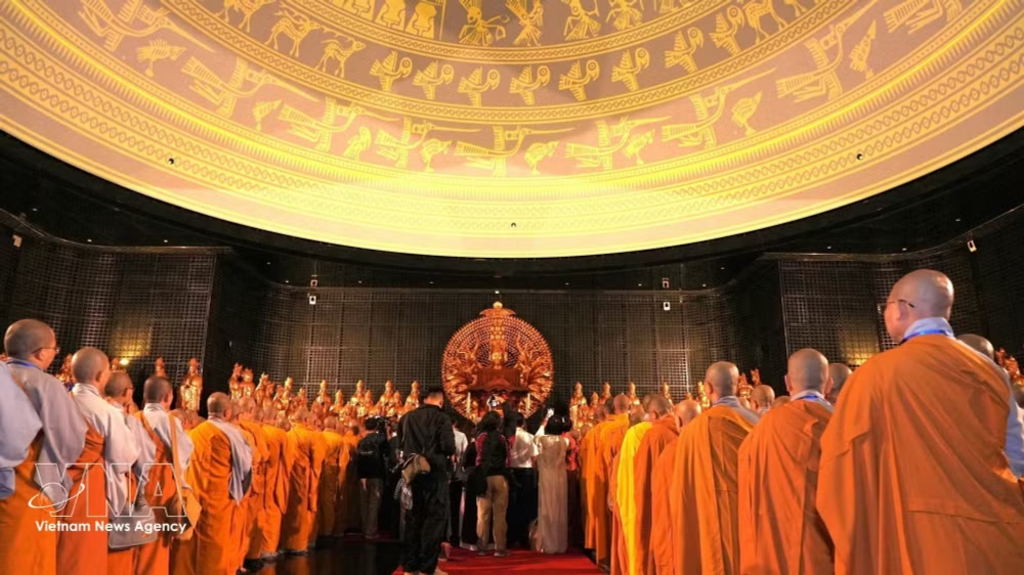 |
| A ceremony honoring the relics of the Buddha at Ba Den Mountain in Tay Ninh__Photo: VNA |
He noted that digital media has erased geographical barriers, enabling more than 100 million people in Vietnam and some 5.5 million overseas Vietnamese to simultaneously access Buddhist activities, opening a new chapter in cross-border religious practice and spiritual connection.
Digital transformation has therefore expanded opportunities for people to exercise their right to freedom of religion and belief. Online platforms have made religious teachings and activities more accessible, particularly for people in remote areas, older adults, persons with disabilities and overseas Vietnamese, helping translate legal guarantees into everyday practice.
Strengthening state management in digital age
The rapid growth of online religious activities has made participation more convenient for millions of believers. Religious ceremonies, sermons and community events streamed online often attract thousands or even tens of thousands of viewers, making cyberspace an extension of the country's cultural and spiritual life.
At the same time, the online environment has created new regulatory challenges, including the spread of misinformation, superstition and the misuse of religion for personal gain or to incite ethnic and religious division. Authorities have dealt with several illegal religious groups, including the Church of God the Mother, Ba Dien sect, Dua religion, Ba Co Do and De Ga Protestantism, that have exploited online platforms to recruit followers and disrupt public order.
The speed, reach and anonymity of digital platforms make it easier for misleading content and illegal religious activities to spread, complicating efforts to detect, verify and address violations.
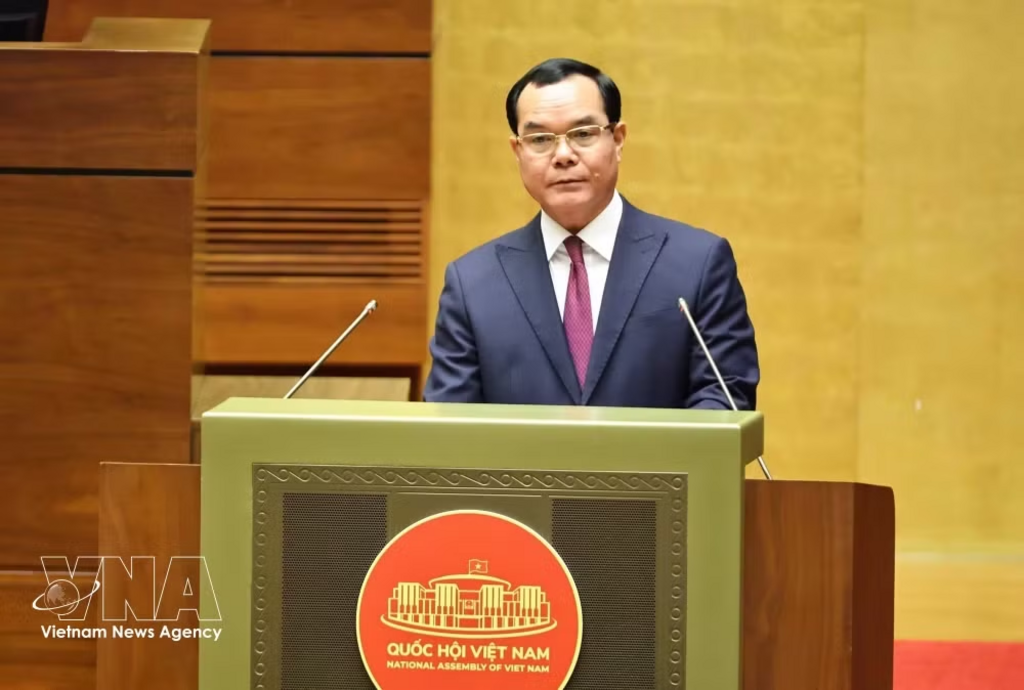 |
| Minister of Ethnic and Religious Affairs Nguyen Dinh Khang delivers a report at a National Assembly's session__Photo: VNA |
Minister of Ethnic and Religious Affairs Nguyen Dinh Khang said authorities are implementing a range of measures, including strengthening legal awareness campaigns, improving digital literacy among religious organisations, clergy and followers, and intensifying efforts to detect and handle online violations.
Looking ahead, the ministry will prioritise digital transformation by completing a specialised religious database, expanding the use of AI to identify online risks, strengthening coordination with relevant agencies to tackle false information, further improving the legal framework and supporting religious organisations in developing official online communication channels.
Simplified administrative procedures and digital transformation are also enabling religious organisations to build online platforms that provide followers with easier access to official information and religious activities.
A legal safeguard for religious freedom online
On April 23, 2026, the National Assembly passed the revised Law on Belief and Religion. For the first time, Vietnam has established a legal framework governing religious activities in cyberspace. Extending legal provisions to the digital environment creates a unified basis for online religious activities while ensuring that citizens' freedom of religion and belief is protected consistently in both physical and digital spaces.
Tran Minh Thu, head of the General Affairs Division under the Government Committee for Religious Affairs, said the revised law requires organisations and individuals conducting religious activities online to follow the same notification, registration and approval procedures that apply to corresponding offline activities.
The revised law, which takes effect on January 1, 2027, is expected to further strengthen the legal foundation for protecting freedom of religion and belief in the digital era.
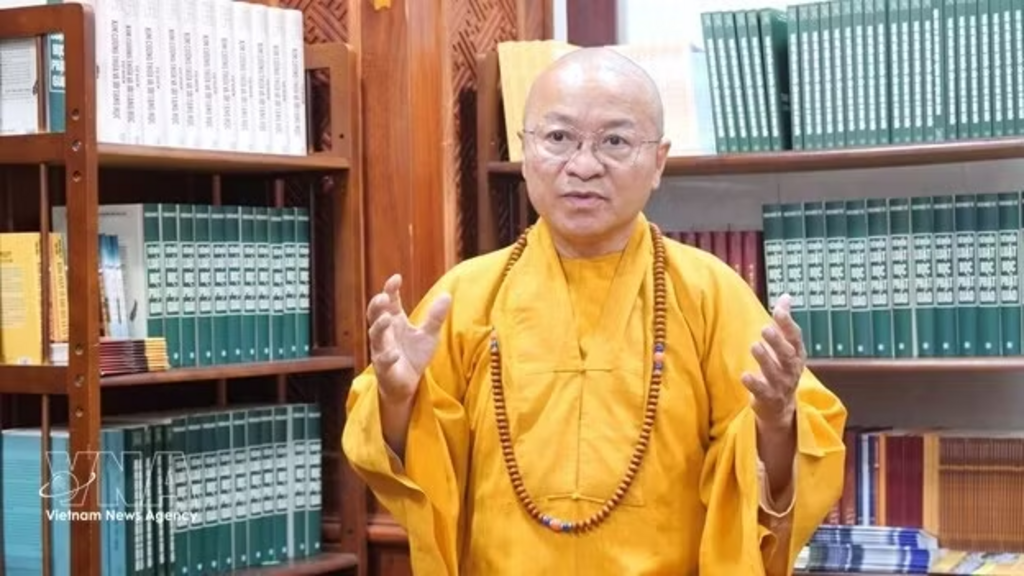 |
| Most Venerable Thich Nhat Tu, Standing member of the VBS's Executive Council and standing deputy head of the VBS's International Department speaks to the Vietnam News Agency__Photo: VNA |
Alongside legislative reforms, the Government Committee for Religious Affairs has partnered with FPT IS to pilot a religious database information system. The platform digitises, standardises and centralises data for state management while being designed with an open architecture that can connect with the ministry's information systems and the National Population Database under Project 06.
The integrated database is expected to improve administrative efficiency, shorten processing times, enhance data consistency, and strengthen transparency and public oversight.
Beyond legislative provisions, the reforms also convey a broader message from the National Assembly and the State to the Vietnamese people and the international community: Vietnam remains committed to respecting, protecting and guaranteeing human rights, addressing emerging challenges in practice, and continuously improving its legal institutions so that freedom of religion and belief is exercised more fully and effectively.
However, even the most comprehensive legal framework can only provide the foundation. The most effective safeguard in cyberspace ultimately depends on the responsibility and voluntary cooperation of religious organisations and believers themselves.
Emphasising the role of self-governance, Most Venerable Thich Nhat Tu said religious communities have a responsibility to disseminate accurate information, correct falsehoods and report fake news to help safeguard cybersecurity. By spreading authentic Buddhist teachings, he added, positive content can gradually outweigh misinformation.
As digital transformation reshapes religious practice worldwide, Vietnam is embracing the same trend. Ensuring freedom of religion and belief will depend not only on stronger laws and more effective digital governance, but also on the active participation of religious organisations and citizens in fostering a safe, law-abiding online environment that promotes positive values.- (VNA/VLLF)