 |
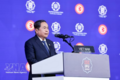
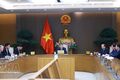
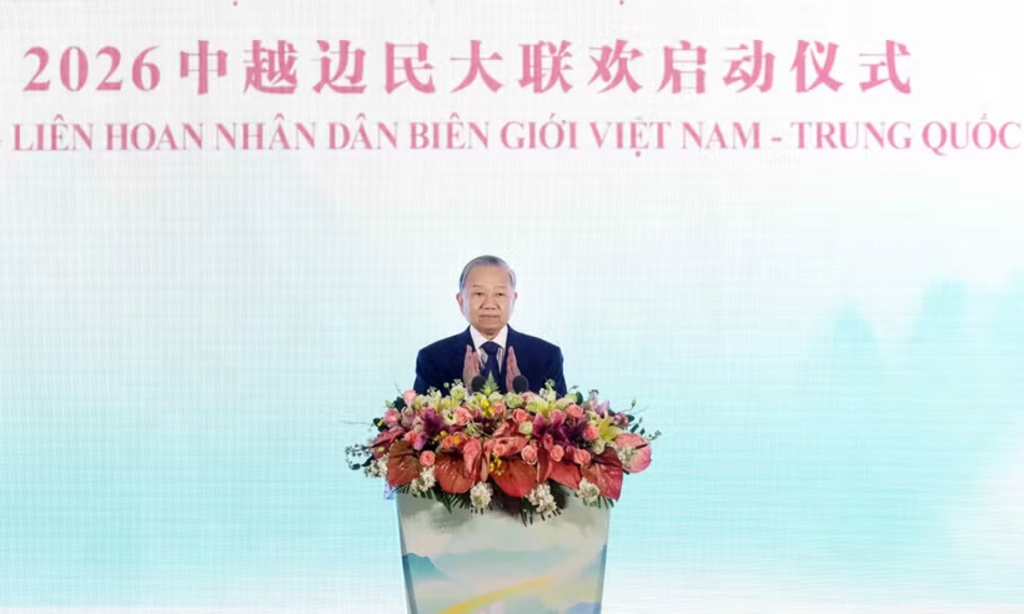
| General Secretary of the Communist Party of Vietnam Central Committee and State President To Lam speaks at the launch ceremony of the Vietnam–China Border People’s Festival 2026 on April 17 in Nanning city of Guangxi as part of his state visit to China__Photo: VNA |
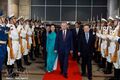
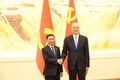
General Secretary of the Communist Party of Vietnam Central Committee and State President To Lam, together with his spouse and a high-ranking Vietnamese delegation, attended the launch ceremony of the Vietnam–China Border People’s Festival 2026 on April 17 in Nanning city of Guangxi as part of his state visit to China.
Themed “Strengthening a solid social foundation, enhancing unity and cooperation for shared development,” the event is co-organised by the Vietnam Union of Friendship Organisations, the Chinese People’s Association for Friendship with Foreign Countries, and the People’s Government of the Guangxi Zhuang Autonomous Region, with the participation of central and local representatives, border residents, and youth from both countries.
Speaking at the ceremony, Chen Gang, member of the Communist Party of China (CPC) Central Committee, Secretary of the CPC Committee and Chairman of the Standing Committee of the People’s Congress of the Guangxi Zhuang Autonomous Region, emphasised that border communities of the two countries have lived harmoniously and supported one another, exemplifying the close bond described as “both comrades and brothers” between Vietnam and China.
He noted that the presence and remarks of General Secretary and President To Lam at the festival launching ceremony demonstrate strong commitment to preserving traditional friendship and promoting a new chapter in 21st-century China–Vietnam relations.
He affirmed that Guangxi, the only Chinese region bordering Vietnam both by land and sea, will continue to work with Vietnamese border provinces, under the guidance of friendship organisations of both countries, to uphold shared aspirations, deepen friendship, solidarity, cooperation, and mutual support, and to together well implement the overarching goal of “six major orientations” from local levels, contributing to building the China–Vietnam community with a shared future that carries strategic significance at a higher level.
In his remarks, General Secretary and President To Lam highlighted that the Vietnam–China Border People’s Festival is held in a region rich in shared historical memories. Historical sites in Guangxi bear witness to solidarity and loyalty between the two nations. These include the former secret office of the Communist Party of Vietnam, where President Ho Chi Minh and revolutionary soldiers lived and worked with the support of the Chinese people in Longzhou; the Nanning Yucai School, which trained thousands of outstanding Vietnamese youth; and Nanxishan Hospital, where Vietnamese wounded soldiers were treated during wartime. These places have become enduring symbols of mutual support and shared hardship.
On behalf of the Party, State, and people of Vietnam, General Secretary and President To Lam expressed sincere gratitude to the Party, State, and people of China, as well as the authorities and people of Guangxi, for preserving sites associated with President Ho Chi Minh, the Vietnamese revolution, and the longstanding friendship between the two nations.
 |
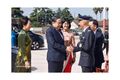
| General Secretary of the Communist Party of Vietnam Central Committee and State President To Lam and his spouse at the launch ceremony of the Vietnam–China Border People’s Festival 2026 on April 17 in Nanning city of Guangxi as part of his state visit to China__Photo: VNA |
Reflecting on more than a century of relations, especially over the 76 years since diplomatic ties were established on January 18, 1950, the leader noted that the comprehensive strategic cooperative partnership between the two Parties and countries has developed under the guiding motto of “friendly neighbourliness, comprehensive cooperation, long-term stability, and looking toward the future,” along with the “four goods” spirit: “good neighbours, good friends, good comrades, and good partners.” This has opened a new chapter toward building the Vietnam–China community with a shared future that carries strategic significance.
He stressed that the strength and sustainability of the Vietnam–China friendship, founded by President Ho Chi Minh, Chairman Mao Zedong, and earlier generations of revolutionary leaders, are rooted in the longstanding friendship between the two peoples, strategic orientations from generations of high-ranking leaders of the two Parties and States, and broad, comprehensive and substantive cooperation across multiple fields, from economy, trade, and investment to culture, education, national defence, and security.
Above all, it bears the strong imprint of the people - the decisive force forming a solid social foundation for bilateral relations. Throughout history, the people have served as a steadfast bridge and a “source stream” that nurtures and sustains the relationship, enabling Vietnam–China ties to continue advancing and expanding, he noted.
He called on relevant agencies, mass organisations, and localities of both countries to continue effectively promoting exchanges among all social strata in the spirit of “the more neighbours interact, the closer they become”; to strengthen education on the traditional friendship, turning historical sites into vibrant cultural and historical spaces for youth; and to translate the traditional friendship into concrete, effective cooperation results. Both sides should work together to make science, technology, and innovation key drivers for improving people’s quality of life.
The top leader of Vietnam also expressed his hope that Guangxi would support Vietnamese localities in implementing digital transformation, artificial intelligence, and smart infrastructure projects so that border residents can easily access modern services; and further promote cultural exchanges, making culture a spiritual foundation and a bridge for development cooperation.
He emphasised the need to innovate cooperation models, not only focusing on traditional festivals and exhibitions, but also advancing cultural industries, heritage preservation linked with sustainable tourism, and training high-quality human resources in culture to meet the demands of the digital age.
Placing deep trust in the younger generations of both countries, General Secretary and President To Lam expressed that they are not only successors but also the true future owners of their nations, taking the lead in pioneering new, critical, and strategic fields of the digital era. He encouraged them to nurture great ambitions, continuously innovate, and dare to think and act in order to build their careers and contribute to society. He also expressed his hope that the youth of both countries will “co-create the future,” becoming a bridge of knowledge and a source of strong vitality, helping Vietnam–China relations move steadily forward into the future.
With joint efforts from authorities, localities, and people of both countries, he said he believes that the Vietnam–China friendship will continue to be strengthened, becoming more sustainable, substantive, and effective, for the benefit of both peoples and for peace, stability, and development in the region and the world.-(VNA/VLLF)