 |
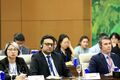
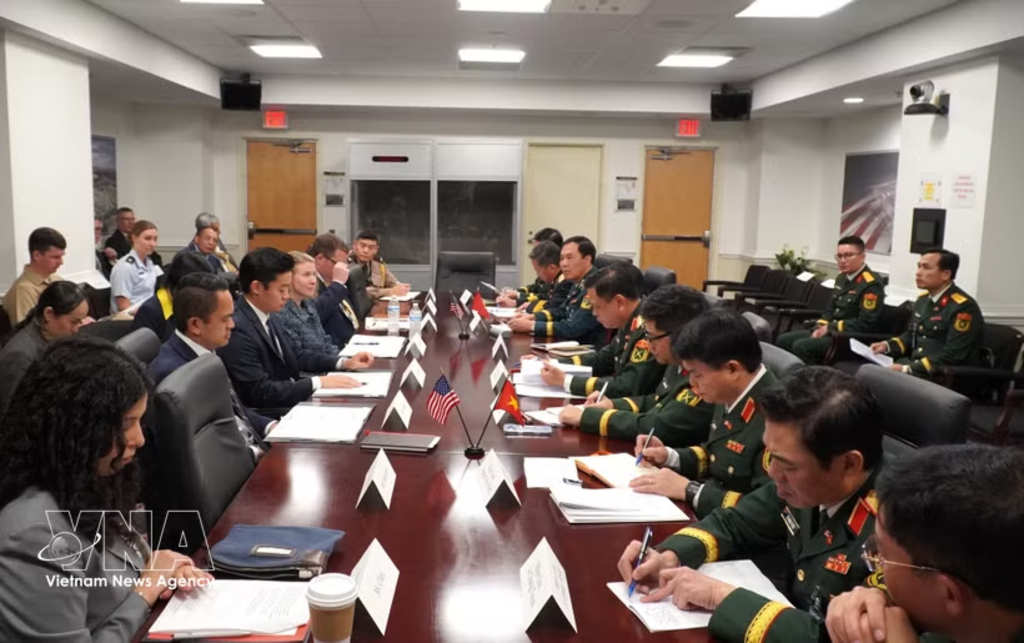
| An overview of the 14th Vietnam–US Defence Policy Dialogue__Photo: VNA |
The 14th Vietnam–US Defence Policy Dialogue took place in Washington DC on November 5 afternoon (local time), co-chaired by Senior Lieutenant General Nguyen Truong Thang, Deputy Minister of National Defence of Vietnam, and John Noh, Assistant Secretary of War of the US.
At the dialogue, both sides acknowledged progress in bilateral defence cooperation and agreed to further deepen the two countries' Comprehensive Strategic Partnership.
Thang highlighted the positive and substantive development of the Vietnam–US Comprehensive Strategic Partnership for Peace, Cooperation and Sustainable Development, including in defence ties.
The two countries have maintained effective collaboration in various areas, including high-level delegation exchanges, dialogue and consultation mechanisms, war legacy remediation, search for Vietnamese and US servicemen missing in action (MIA), defence industry, military medicine, cybersecurity, humanitarian assistance and disaster relief, border management, transnational crime prevention and United Nations peacekeeping operations.
They have also supported and consulted each other at regional and international multilateral forums, particularly the ASEAN Defence Ministers' Meeting Plus (ADMM+).
War legacy remediation remains a highlight of bilateral relations and a priority strongly supported by the two countries' high-ranking leaders. The signing of agreements in Hanoi on September 23 this year, covering a limited-scope project to address dioxin contamination at Bien Hoa Airbase and a project to improve the quality of life for persons with disabilities in heavily Agent Orange-sprayed areas, has paved the way for expanded US assistance.
The agreements also provide a basis for implementing the US commitment to contribute an additional 130 million USD to the Bien Hoa dioxin remediation project, with a view to completing it before 2031 and ensuring a safer living environment for local residents.
Thang expressed his appreciation for the effective support of the US Department of War in this field.
For his part, Noh praised the positive development of bilateral ties and reaffirmed US support for an independent, self-reliant and prosperous Vietnam and its “Four No's” defence policy.
He thanked the Vietnamese Government and people for more than four decades of cooperation in searching for US servicemen missing in action, describing the goodwill and close coordination between the two sides as a solid foundation for bilateral relations and a model of cooperation in setting aside the past and building a future of peace, cooperation and development.
For the coming time, the two sides agreed to continue implementing agreed cooperation programmes, focusing on delegation exchanges, especially high-level ones; dialogue and consultation mechanisms; war legacy remediation; education and training; UN peacekeeping operations; cooperation among military arms and services; search and rescue; cybersecurity; defence industry; military medicine; and humanitarian assistance.
They also agreed to continue consulting and supporting each other at multilateral cooperation mechanisms and forums on defence and security.
Thang called on the US to keep supporting Vietnam to improve the capacity of addressing the consequences of unexploded ordnance and post-war chemical toxics. He also proposed assistance for the Vietnam National Mine Action Centre (VNMAC) in implementing land clearance projects in Quang Ngai province in line with the International Mine Action Standards (IMAS), contributing to Vietnam's goal of basically clearing all land contaminated by mines and explosives by 2045.
The Vietnamese official further urged the effective implementation of the agreements on dioxin remediation at Bien Hoa Airbase and assistance for persons with disabilities in heavily Agent Orange-sprayed areas.
He also called for greater sharing of information, documents and memorabilia concerning Vietnamese servicemen killed or missing in action, as well as support in strengthening DNA identification capacity to accelerate Vietnam's 500-day campaign to intensify the search for, collection and identification of the remains of fallen soldiers.
Vietnam, Thang affirmed, will continue creating the best possible conditions for US MIA recovery operations.
Noh hailed the outcomes of defence cooperation and expressed the US commitment to promoting peaceful and constructive cooperation with Vietnam.
He emphasised the importance of information sharing, archival cooperation, joint research and the application of technology in addressing war legacies.
During the dialogue, the two sides also exchanged views on regional and international developments and issues of mutual concern. The two heads of delegations signed the minutes of the 14th Vietnam–US Defence Policy Dialogue.
Earlier, Thang met with Acting US Secretary of the Navy Hung Cao. Both sides welcomed the progress of bilateral defence ties, particularly in maritime security, cooperation among military arms and services, dialogue and consultations, war legacy remediation, and the search for and identification of Vietnamese and US servicemen missing or killed during the war.
Hung Cao recalled his recent visit to Vietnam and affirmed that defence ties play an important role in promoting peace and prosperity in both countries, as well as security, cooperation and development in the region.
He expressed his hope to expand cooperation in war legacy remediation, maritime security, capacity building, humanitarian assistance and disaster response.
Thang again stressed that war legacy remediation is an area of cooperation to which both countries attach importance and give priority.
He voiced his hope that the US will continue supporting Vietnam in expanding the scope of the project to assist persons with disabilities in localities heavily affected by Agent Orange spraying, and fulfil its commitments to the dioxin remediation project at Bien Hoa Airbase, with a view to completing it before 2031 and providing local residents with a safe living environment.
Vietnam also wishes to work with the US to achieve its national goal of basically clearing all land contaminated by bombs, mines and unexploded ordnance by 2045, Thang said, calling on the two sides to maintain close cooperation in searching for, recovering and identifying the remains of military personnel from both countries who went missing or died during the war.
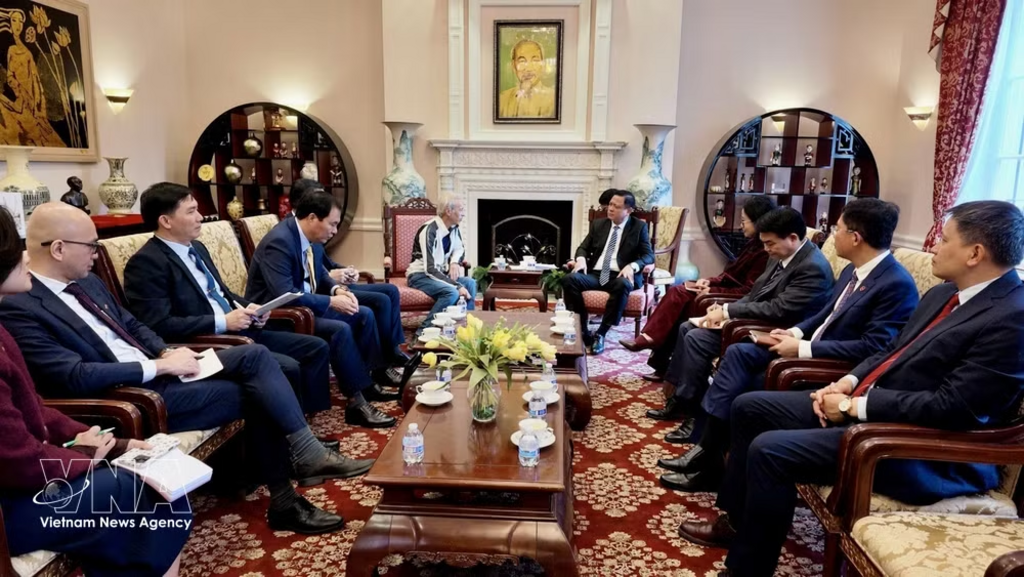 |
| Senior Lieutenant General Nguyen Truong Thang (R) meets with Tim Rieser, a former aide to former US Senator Patrick Leahy__Photo: VNA |
On the same day, the Vietnamese official also met with Tim Rieser, a former aide to former US Senator Patrick Leahy, thanking Rieser and the former senator for their longstanding contributions to Vietnam–US relations.
Thang stressed that addressing war legacies remains a major priority for Vietnam and that effective bilateral cooperation helps heal the wounds of war, build trust and open up new opportunities for cooperation.
He highlighted the significance of the 500-day campaign, which steps up DNA testing, genetic database development and mine clearance, with the US showing support in information, archival materials, memorabilia and genetic identification technology.
Rieser welcomed the progress in bilateral relations, particularly the elevation of ties to a Comprehensive Strategic Partnership, and reaffirmed his commitment to supporting Vietnam in overcoming war consequences, including mine clearance, dioxin remediation and assistance for persons with disabilities.
He said the way Vietnam and the US have worked together to address the legacy of war offers a meaningful model for international relations, demonstrating how dialogue can iron out differences and cooperation can help resolve historical legacies while building a shared future of peace and prosperity.- (VNA/VLLF)