 |
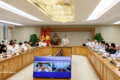
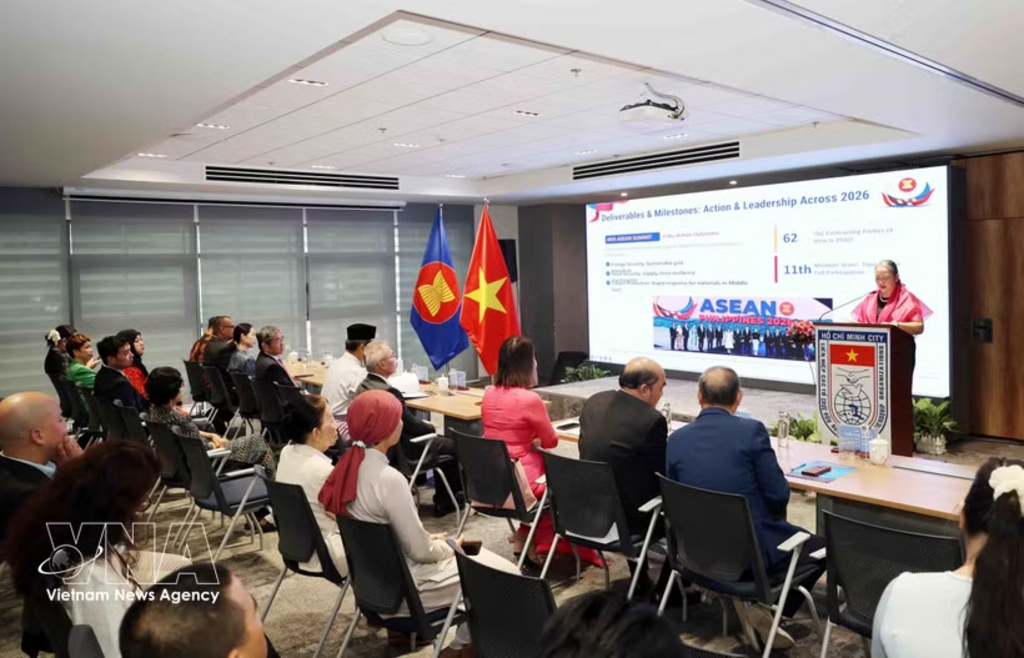
| At an international scientific seminar on culture and people-to-people diplomacy in ASEAN Community building with a vision to 2045__Photo: VNA |
Culture and people-to-people diplomacy should be recognised as strategic resources for building the ASEAN Community, fostering trust, consensus and a social foundation for sustainable cooperation, said Ho Xuan Lam, Vice Chairman of the Ho Chi Minh City Union of Friendship Organisations (HUFO).
He made the remarks at an international scientific seminar on culture and people-to-people diplomacy in ASEAN Community building with a vision to 2045, held in Ho Chi Minh City on October 23.
The event brought together representatives from the Consulates General of ASEAN member countries in Ho Chi Minh City, researchers and students.
Culture goes beyond preserving heritage and organising exchanges to promoting dialogue, connecting diverse communities and reducing prejudice. Meanwhile, people-to-people diplomacy complements official diplomatic efforts by building a strong social foundation for friendship and cooperation, Lam said, describing it as a form of soft power that deserves greater recognition.
“While the vision may be established at summits, the vitality of the ASEAN Community must be built by ASEAN’s own people,” he said.
Lam said the adoption of the ASEAN Community Vision 2045 in Kuala Lumpur in 2025 marked a shift towards building a resilient, dynamic and people-centred ASEAN that embraces diversity and can seize opportunities amid global uncertainty.
However, government-level commitments must translate into tangible benefits in people’s daily lives, he said, stressing that ASEAN’s strength lies not only in its economic scale, international standing and cooperation agreements, but also in trust, mutual understanding and bonds among people across member states.
Dr. Phan Thanh Dinh, Vice Rector of the University of Social Sciences and Humanities (USSH), said ASEAN must strengthen its adaptability and pursue sustainable development while bringing together communities with diverse histories, cultures, languages and religions without compromising their identities.
Culture lays the groundwork for understanding, while people-to-people diplomacy transforms it into connections, trust and cooperation, he said.
The seminar explored how cultural diversity could support ASEAN community-building, how people-to-people diplomacy could strengthen trust and connect communities, and how young people could participate more actively in regional exchange and cooperation networks.
Dr. Phan Thi Hong Xuan, Dean of the Faculty of Oriental Studies at USSH under Vietnam National University-Ho Chi Minh City and President of the Vietnam- ASEAN Friendship Association HCMC, highlighted the importance of connectivity in regional development.
Alongside the three strategic plans corresponding to the ASEAN Community Vision 2045’s pillars, ASEAN has a separate strategic plan on connectivity (ASEAN Connectivity), she noted. Connectivity should extend beyond transport, trade and cooperation mechanisms to include mutual understanding and bonds among people, ensuring everyone feels able to contribute to the region’s shared future.
“Culture helps us recognise one another. People-to-people diplomacy brings us closer, while connections between people help strengthen the resilience of the ASEAN Community,” she said.
Querobine D. Laccay, Consul General of the Philippines in Ho Chi Minh City, and Firdauz Othman, Consul General of Malaysia, outlined key aspects of the ASEAN Community Vision 2045 and the priorities of their countries, which held the bloc’s rotating chairmanship in 2025 and 2026, respectively. They highlighted efforts to build a resilient, dynamic and people-centred ASEAN.
Other participants, including researchers, overseas Vietnamese representatives and businesspeople, stressed that regional integration depends not only on institutions but also on mutual understanding, trust and people-to-people connections.- (VNA/VLLF)