|
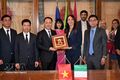
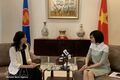
| Deputy PM Nguyen Van Thang (L) meets with WTO Deputy Director-General Jennifer DJ Nordquist__Photo: VNA |
Within the framework of his working visit to Switzerland, Deputy Prime Minister Nguyen Van Thang on July 27 held a working session with Deputy Director-General of the World Trade Organisation (WTO) Jennifer DJ Nordquist, affirming Vietnam's backing for an open, transparent, fair, inclusive, and rules-based multilateral trading system, with the WTO at its core.
As an active WTO member, Vietnam has been making active contributions to the organisation's agenda, including ratifying the first phase of the Agreement on Fisheries Subsidies, negotiating entry into the expanded Information Technology Agreement (ITA2), and preparing for its next Trade Policy Review scheduled for late 2026, he said.
In light of current global challenges, he set out three priorities for the WTO. First, he called for continued reform by updating trade rules to adapt to emerging trends in international trade while taking into account the differing levels of development and execution capacity among developing countries.
Second, he urged full restoration of the WTO dispute settlement mechanism to ensure the predictability, transparency, and enforceability across the multilateral trading system.
Third, he suggested broadening the WTO agenda to cover emerging issues such as digital trade, artificial intelligence, green transition, climate change, and supply chain resilience, alongside stronger capacity-building support so developing countries can seize opportunities arising from these trends.
Outlining the country’s growth strategy, Thang said Vietnam has entered a critical phase, aiming to become a high-income developed nation by 2045. It is targeting annual GDP expansion of at least 10 per cent from 2026 through 2030 and beyond.
To hit those targets, Vietnam is accelerating breakthroughs in institutional reform, infrastructure, sci-tech, and the mobilisation of domestic and international capital. That includes building the Vietnam International Financial Centre under a “one centre, two locations” model in Ho Chi Minh City and Da Nang, paired with free-trade zones, regulatory sandboxes, and a pro-business legal framework.
Against that backdrop, he said Vietnam hopes the WTO will keep delivering capacity-building support, particularly advanced trade policy training, legal advisory services for international dispute settlement, and trade facilitation to help the country deliver on its international commitments, lift exports, attract quality investment, and sharpen global competitiveness.
Nordquist, for her part, praised Vietnam’s socio-economic progress and its reforms to fine-tune institutional framework, improve business climate, and deepen global economic integration.
The WTO Deputy Director-General stressed the importance of ensuring transparency in policymaking and enforcement, encouraging Vietnam to keep the WTO Secretariat informed of legislative and trade-and investment-related policy changes to smooth business operations.
The WTO will continue to accompany Vietnam in its global integration, she said. In the near term, the organisation will work closely with the country on its Trade Policy Review in November and roll out technical assistance programmes, including those tied to the ITA2. She also urged Vietnam to consider joining the Investment Facilitation for Development (IFD) Agreement.
On the occasion, Deputy PM Thang invited the host to visit Vietnam for further cooperation talks.
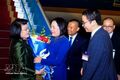
Later the same day, Thang met with Co-Chair of the Board of Trustees of the World Economic Forum (WEF) Andre Hoffmann and visited the Vietnamese Embassy in Switzerland.
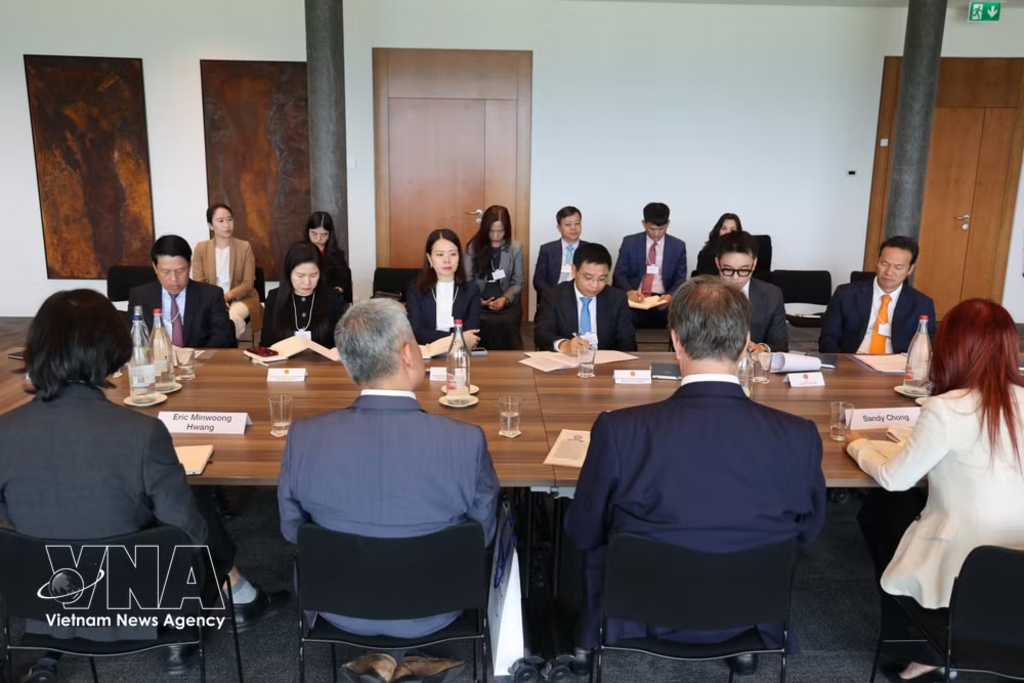 |
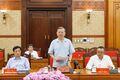
| The meeting at the WEF headquarters__Photo: VNA |
With about 80 per cent of Vietnam’s substantial financing needs for the next development phase seen coming from domestic and foreign enterprises and investors, he urged the WEF to keep driving public-private partnerships and connecting the Vietnamese Government with leading global companies and investors.
Building on the positive outcomes of Vietnam–WEF collaboration, particularly the establishment of the Centre for the Fourth Industrial Revolution (C4IR) in Ho Chi Minh City and the successful Autumn Economic Forum 2025, the Deputy PM proposed elevating bilateral ties.
He suggested crafting a Vietnam–WEF Cooperation Programme for 2026–2030 centred on sci-tech, innovation, and the development of a modern financial ecosystem.
The WEF should make the Autumn Economic Forum an annual fixture, bolster links between Vietnam and international businesses, investors, and financial institutions, and encourage greater corporate participation in APEC 2027 activities, he said.
Andre Hoffmann, for his part, praised Vietnam as one of the region's most dynamic economies with ample potential in digital transformation, innovation, and international financial centre development.
WEF will continue backing Vietnam by building stronger links with leading multinational corporations, financial institutions, and business networks; sharing experience in international financial centres, regulatory sandboxes, public-private partnerships, innovation ecosystems, AI, and quality workforce training, he said.
The WEF is also ready to serve as a bridge to international investors, experts, and top executives seeking opportunities and sharing expertise in Vietnam, he added.
Acknowledging Vietnam’s rising global and regional role, Hoffmann said he is confident the country will host a successful APEC Economic Leaders’ Week in 2027 and looks forward to welcoming senior Vietnamese leaders to the WEF Annual Meeting in Davos that year.
At the Vietnamese Embassy in Switzerland, Thang commended staff for their role in deepening bilateral ties, including the establishment of a Comprehensive Partnership and the conclusion of the Vietnam– European Free Trade Association (EFTA) free trade agreement, expected to be signed in this October.
With 2026 marking 55 years of diplomatic relations, he urged the embassy to double down as a bridge between the two countries, particularly by tapping Switzerland’s status as a top global financial hub.
He called for deeper engagement with Swiss Government agencies, financial institutions, investment funds, companies, research institutes, and expert networks, while leveraging the Vietnam–EFTA deal to expand markets and diversify supply chains.- (VNA/VLLF)