 |
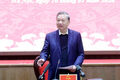
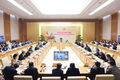
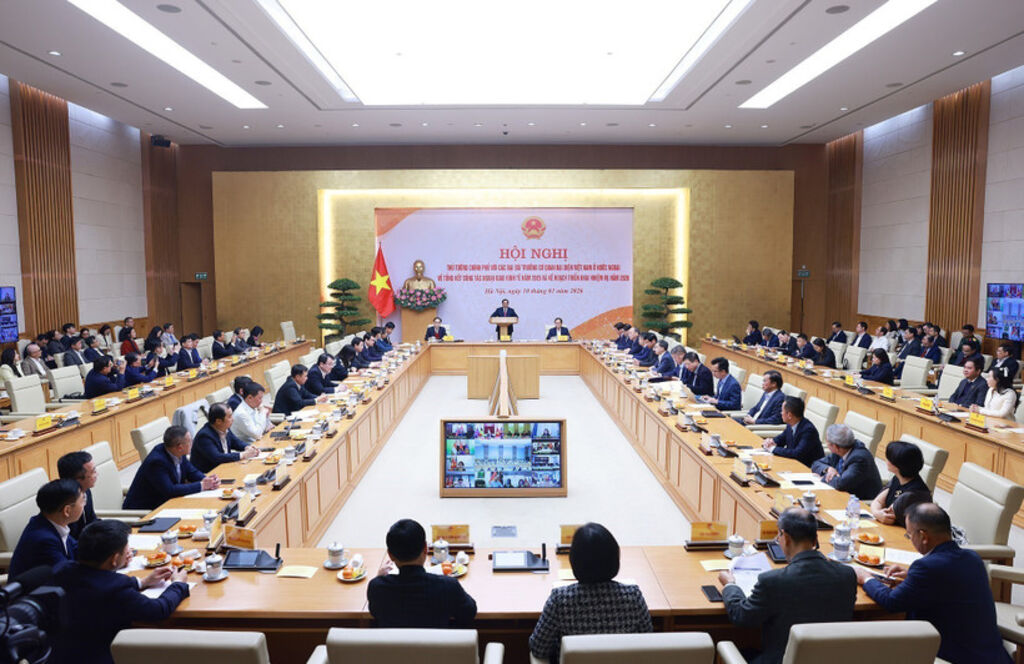
| Prime Minister Pham Minh Chinh chairs an online conference to review economic diplomacy in 2025 and outline tasks for 2026 on January 10 __Photo: VNA |
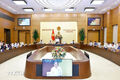
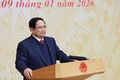
Prime Minister Pham Minh Chinh chaired an online conference on January 10 evening with Vietnamese ambassadors and heads of overseas representative missions to review economic diplomacy in 2025 and outline tasks for 2026, stressing that economic diplomacy must be conducted with sincerity, harmonious interests, and shared risks.
The PM assessed that economic diplomacy in 2025 recorded important, transformative results, helping shift the situation and create new momentum for growth. From 2026 onward, Vietnam must strive for double-digit economic growth, which requires all sectors, levels, and localities to make greater efforts and generate stronger breakthroughs.
He requested ministries, sectors, localities, businesses, and Vietnamese missions abroad to resolutely implement and concretize the Party’s and State’s policies, especially the Resolution of the upcoming 14th National Party Congress and strategic resolutions of the Politburo.
Priority should be given to creating breakthroughs in international cooperation in science and technology, innovation, digital transformation, green transition, and sustainable development in the digital era, which he described as an objective choice and a top priority. He also highlighted the need to promote sustainable energy, smart urban development, tourism, and to attract major technology corporations and overseas Vietnamese scientists, while enabling Vietnamese enterprises to participate more deeply in global value chains.
The government leader called for renewed efforts to revitalize traditional growth drivers while accelerating market, product, and supply-chain diversification. He urged stronger engagement with emerging and potential markets in the Middle East, Africa, and South America, and encouraged the expansion and early conclusion of new free trade agreements, including with Bangladesh, Pakistan, African partners, and the Southern Common Market (Mercosur).
To effectively tap new growth drivers, he stressed the importance of expanding cooperation with major and traditional partners, as well as potential ones in fields of cloud computing, artificial intelligence (AI), and semiconductors. At the same time, Vietnam must firmly protect its legitimate interests in dealings with major partners.
PM Chinh also directed stronger, more decisive support for businesses, especially small- and medium-sized enterprises, to expand investment and access international markets. This includes building a comprehensive ecosystem encompassing banking, logistics, human resources, and legal support, as well as fostering collaboration with leading global technology groups.
He assigned specific tasks to several ambassadors, including efforts to seek early recognition of Vietnam’s market economy status by the US and its removal of Vietnam from the list of countries subject to restrictions on high-tech exports, promote cross-border railway projects with China, advance cooperation on the Ninh Thuan nuclear power project with Russia, and work with the European Commission and regional partners to address illegal, unreported, and unregulated (IUU) fishing.
Calling for stronger promotion and marketing of Vietnamese products and brands overseas, the PM instructed the Ministry of Industry and Trade to soon finalize a program to support Vietnamese enterprises in expanding globally. He also urged enhanced connectivity to attract international business communities and investors for long-term cooperation, support Vietnam in the effective operation of the international financial center and free trade zones as they come into service, and promote cross-border economic activities.
Last year, within the framework of 75 external activities by key leaders, Vietnam upgraded relations with 17 countries and signed 350 cooperation agreements, 2.5 times higher than in 2024. These outcomes helped strengthen international connectivity, mobilize external resources for socio-economic development goals, and enhance the country’s capacity to adapt to fluctuations in the global economy and trade.- (VNA/VLLF)