 |
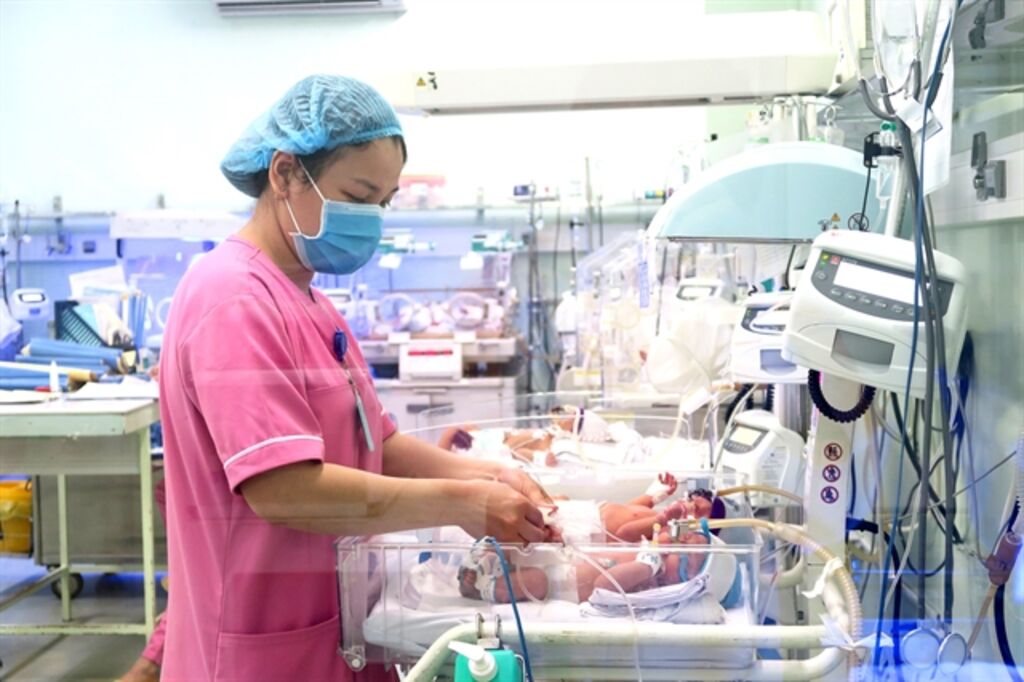
| A medical worker takes care of newborns in the Ho Chi Minh City-based Hung Vuong Hospital __Photo: VNA |
The Ministry of Health (MOH) has unveiled a draft decree guiding the Population Law, proposing a range of financial support policies expected to help maintain replacement-level fertility and improve population quality.
According to the ministry, the national fertility rate has fallen below the replacement fertility level, declining from 2.11 children per woman to 1.93 in 2025, a very slight increase from the record low of 1.91 in 2024. With this trend, the target of maintaining replacement fertility level by 2030 is expected to be difficult to achieve.
It is projected that, if fertility rates continue to decline, Vietnam will end its “golden population” period by 2036, with the working-age population beginning to shirk from 2044. By 2051, the country would enter a phase of negative population growth, with an average annual decline of approximately 461,000 persons for the 2069-74 period.
To address the situation, the MOH proposes a financial support of VND 2 million (approximately US$ 76) per childbirth. Eligible beneficiaries include women from very small ethnic minority groups, women residing in provinces and cities with below-replacement fertility, and women who have two children before the age of 35, covering also cases of multiple births.
The financial support would be funded by local budgets, with provincial-level authorities permitted to set higher support levels depending on their budget capacity. Individuals simultaneously eligible for support under multiple categories would receive all applicable benefits. Women already receiving social assistance would continue to be qualified for this support.
Another notable measure is the extension of maternity leave. Female workers giving birth to a second child (having already had one biological child) would be entitled to seven months of maternity leave. Male workers participating in compulsory social insurance whose wives give birth to a second child would receive 10 working days of leave.
Additionally, individuals with two or more biological children would be entitled to priority to purchase, rent, or rent-to-own social houses in accordance with the housing law.
The draft also proposes financial support for prenatal and newborn screening services, aimed at early detection of congenital conditions. Specifically, the proposed support is VND 900,000 (roughly US$ 34) per prenatal screening and VND 600,000 (around US$ 23) per newborn screening.
Pregnant women would receive financial support for prenatal screening for four conditions: Edwards syndrome, Down syndrome, Patau syndrome and thalassemia. Meanwhile, newborns would be screened for five conditions, including congenital hypothyroidism, G6PD deficiency, congenital adrenal hyperplasia, congenital hearing loss and congenital heart defects.- (VLLF)