|
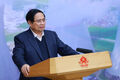
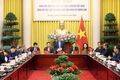
| Prime Minister Pham Minh Chinh speaks at the meeting__Photo: VNA |
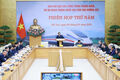
The Government held a hybrid conference on January 8 to review its 2025 performance and set tasks in 2026 for the central and local administrations.
The event saw the participation of top leaders of the Party, the State, the Government, the National Assembly, and representatives from ministries, agencies and localities.
In his opening remarks, Prime Minister Pham Minh Chinh said Vietnam fulfilled its socio-economic development tasks for 2025 and the 2021-25 period amid rising complex global changes.
The country faced unprecedented challenges, from the prolonged impacts of COVID-19 and rising inflation to slowing global growth, disrupted supply chains, military conflicts, and extreme climate events, with difficulties outweighing opportunities, he said.
Domestically, Vietnam contended with these external shocks while remaining a developing economy in transition, with low starting points, growing routine and unexpected tasks, long-standing internal shortcomings, and the need for major administrative restructuring. Natural disasters and floods further caused heavy losses to production, business, and people’s livelihoods, he added.
However, the PM stressed that under the leadership of the Party Central Committee, directly the Politburo and the Secretariat led by General Secretary To Lam, with the support of the NA, and the engagement of the entire political system, people, businesses, and international partners, the Government has decisively directed ministries and localities to implement measures, achieving significant results across all sectors.
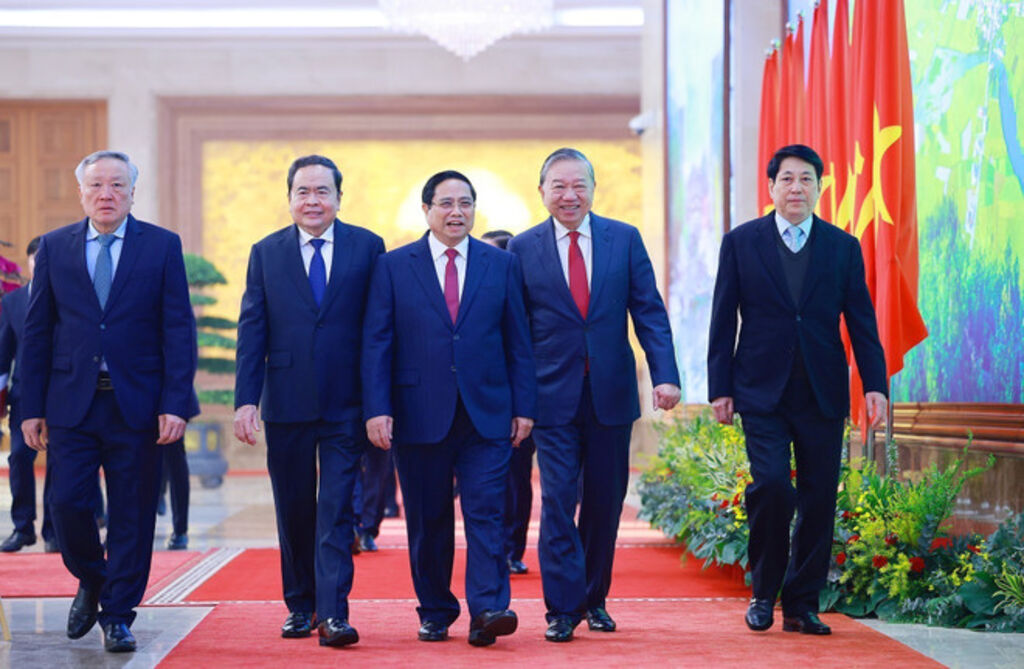 |
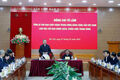
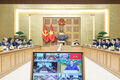
| The meeting sees the participation of top leaders of the Party, the State, the Government, the National Assembly, and representatives from ministries, agencies and localities__Photo: VNA |
Notably, in 2025, Vietnam’s economic growth expanded by 8.02%, ranking among the top performers in the region and the world. It also maintained macroeconomic stability, controlled inflation, kept budget deficits and public debt below limits, ensured social welfare, strengthened defense and security, promoting international integration, contributing to increasing the country’s position in the international arena.
The PM also candidly pointed out several ongoing challenges in economic restructuring; improving growth quality; advancing science and technology; digital transformation and green transition; managing macroeconomic stability, exchange rates and interest rates under external pressures; environmental pollution, traffic congestion, and risks to information security, cybersecurity, and public order in certain areas.
He asked delegates to concentrate on analyzing and evaluating the key developments of 2025 and the 2021–2025 term, with particular attention to negative factors that significantly affected the country.
Regarding leadership and management, the Government leader called for an assessment of whether the Government, ministries, and localities acted with strong determination and decisive measures, implementing solutions to “turn the situation around” and “turn risks into opportunities,” while responding proactively, timely, appropriately, and effectively to evolving circumstances.
Regarding the results of 2025 and the 2021–25 period, the PM demanded clearly analyzing key highlights in growth and macroeconomic stability; notable breakthroughs in strategic infrastructure; progress in culture, social development, and people’s livelihoods; achievements in eliminating temporary and dilapidated houses, and building social housing, and addressing natural disasters and floods; new developments in defense, security, and anti-corruption efforts; standout achievements in foreign affairs and international integration; and challenges in implementing the two-tier local government system and streamlining the central administration.
He asked delegates to discuss and identify bottlenecks and challenges across sectors, examine their objective and subjective causes, explore why some areas performed well while others lagged, and share practical lessons learned. (VNA/VLLF)