 |
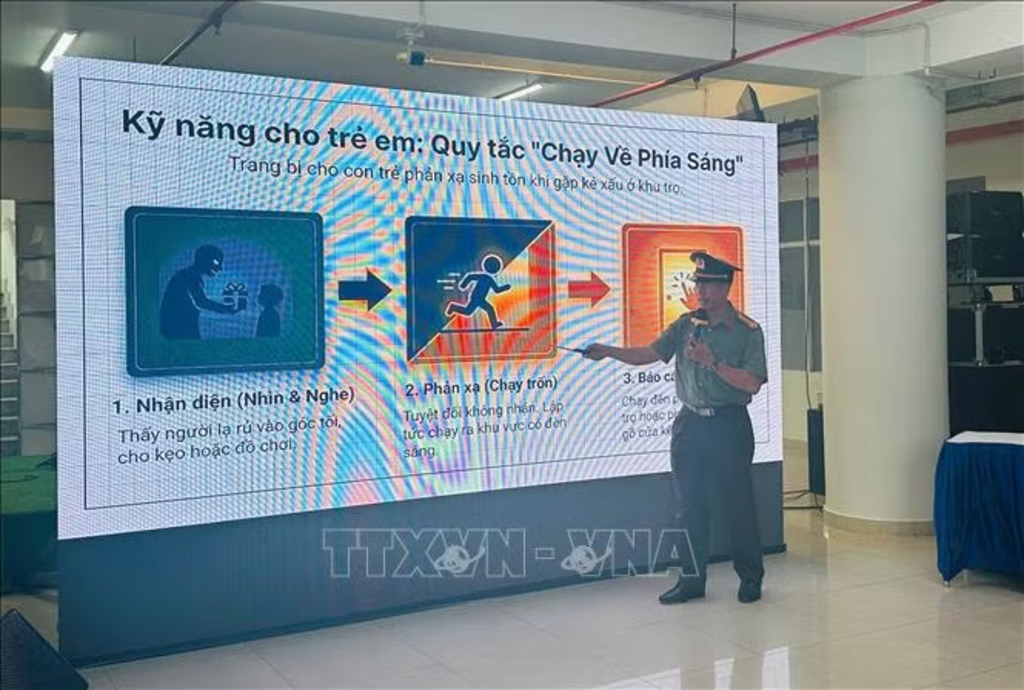
| Lieutenant Colonel Nguyen Dao Minh Huy of the Ho Chi Minh City Department of Public Security shares information on how to identify various types of drugs__Photo: Thanh Vu/VNA |
The Police Department for Drug-Related Crime Investigation and commune-level public security offices of Ho Chi Minh City detected and handled 6,401 drug-related cases involving 17,756 offenders and seizing more than 640 kilogrammes of synthetic drugs, 518 kilogrammes of cannabis and some 15 kilogrammes of heroin in the first 10 months of 2026, according to the Ho Chi Minh City Public Security Department.
Public security officers also dismantled 75 transnational organised drug crime rings comprising 780 offenders and handled 565 cyber-enabled drug-related cases under the scheme on building a drug-free Ho Chi Minh City by 2030.
Because modern drug trafficking activities have grown increasingly sophisticated, frequently involving inter-provincial and transnational operations while exploiting hi-tech communications and digital platforms, relying solely on post-offence crackdowns is no longer sufficient. Illegal narcotic substances are frequently disguised within everyday food and beverage products or electronic cigarettes marketed as “pod chill”, “happy water” and cannabis-laced cakes to entice young people via social media. To counter these evolving threats before they take root, the 2030 scheme mandates mobilising the combined strength of the entire political system, mass organisations, agencies, units and the public, with the public security force serving as the core, to shift from reactive enforcement to early grassroots prevention anchored in residential areas and educational institutions.
Protecting young people from these disguised substances forms a central pillar of the City’s preventive drive, particularly through the 2026 “School tour - Uni tour” programme launched across lower and upper secondary schools. Carrying the message “Ho Chi Minh City pupils and students say no to drugs, obey traffic laws and protect school safety”, the programme aims to equip the youth with practical skills to recognise concealed addictive substances, build personal resilience against criminal enticement, and foster respect for the rule of law through interactive, real-life scenarios rather than generic warnings.
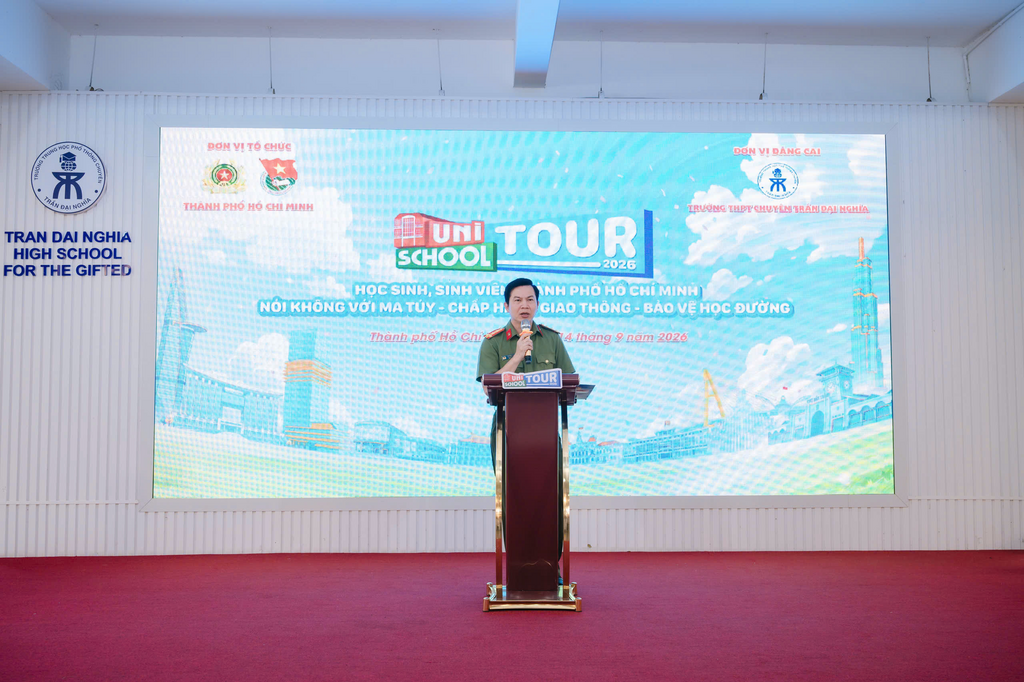 |
| Deputy Director Colonel Le Cong Anh of the Ho Chi Minh City Department of Public Security addresses the 2026 “School tour - Uni tour” programme at Tran Dai Nghia High School for the Gifted__Photo: https://congan.com.vn/ |
Emphasising this shift, Lieutenant Colonel Tran Anh Thanh, Deputy Head of the Division of Political Affairs under the Ho Chi Minh City Public Security Department, noted that given the growing trend of younger drug users and offenders, punitive enforcement alone is no longer sufficient. Instead, making local authorities, families and schools the essential “first line of defence” for young people is now the top priority.
At the ward level, local public security forces are tightening administrative controls over conditional business establishments and high-density residential quarters to realise the 2030 scheme’s goals. In Ban Co ward, the forces maintain rigorous oversight of high-risk individuals while working closely with socio-political organisations in supporting individuals who have undergone drug rehabilitation to reintegrate into the community. Similarly, Thong Tay Hoi ward has implemented an annual transformation roadmap designed to certify all residential quarters as free of drug offenders by 2029, establishing a solid foundation ahead of the 2030 target, while strictly regulating lodging facilities and boarding houses so that landlords serve as active watchdogs within the local security network.
Complementing these grassroots models, the City is advancing digital transformation within the law enforcement while expanding rehabilitation infrastructure. Narcotics investigators are broadening criminal inquiries beyond illicit drug users to trace entire trafficking rings, ensuring that ringleaders face criminal prosecution rather than merely disrupting isolated links.
Under the Law on Drug Prevention and Control, Ho Chi Minh City aims to establish voluntary home- and community-based drug rehabilitation facilities across 95 per cent of its communes, wards and special zones, ensuring that all public rehabilitation facilities meet the law-provided standards and provide regular medical care, counselling services and occupational therapy to prevent relapse and build a safe, law-abiding society.- (VLLF)