 |
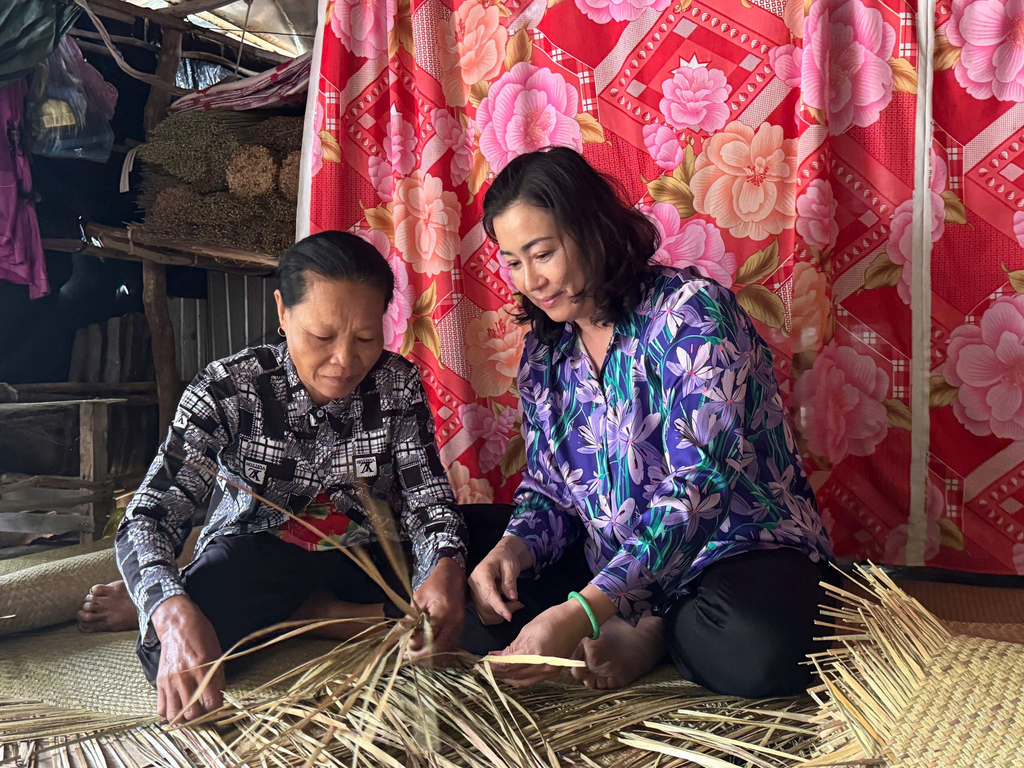
| A local official visits a woman in her home to discuss and explain essential information they need to know__Photo: vietnamnet.vn |
Authorities in An Giang province are stepping up gender equality awareness campaigns among Khmer communities to prevent child marriage and consanguineous marriage, promote women’s rights and build happier families.
Following the provincial merger, An Giang is home to more than 23,500 Khmer ethnic minority households. While many cultural traditions have been preserved, certain longstanding backward customs, including child marriage and consanguineous marriage, continue to affect women’s and girls’ educational opportunities and development.
These practices pose risks to reproductive health and call for the need to raise gender equality awareness, ensuring that women and girls have access to education, employment and opportunities to make decisions about their lives.
To address these issues, the provincial Department of Ethnic and Religious Affairs has intensified awareness campaigns on gender equality and compliance with the Law on Marriage and Family.
According to Danh Tha, Deputy Director of the Department, numerous conferences have been organised to promote law compliance, so as to gradually curb child marriage and consanguineous marriage and foster advanced and equal family relationships, focusing particularly on young people and areas with large Khmer populations.
Besides, in-person and at-home communication is especially important for women with limited literacy skills or Vietnamese language proficiency. Thi Pich, a resident of Tra Phot hamlet in Giang Thanh commune, said she could neither read nor write and had difficulty understanding Vietnamese. Home visits by local officials have helped her access information about women’s rights more easily.
Danh Hung, a respected community figure in Giang Thanh commune, said the effectiveness of awareness-raising efforts depends largely on how information is communicated. Specifically, commune officials visited households with women and girls, while Border Guard officers provided information in Khmer language to those who cannot understand Vietnamese.
“Such approaches help make legal information more accessible, covering practical issues such as the right to education, freedom to choose a marriage partner, and participation in family decisions”, he stressed.
Dao Thi Thu Huyen, Vice Chairwoman of the Hon Dat Commune People’s Committee, said the commune has recently recorded no serious incidents relating to gender inequality, attributing this partly to awareness campaigns and guidance from local authorities.
These efforts aim to bring gender equality beyond legal policies and into everyday family life.
By improving understanding of marriage, education and women’s rights, local authorities hope to gradually develop a proper understanding of marriage, remove barriers facing Khmer women and girls, and promote happier families and sustainable community development.- (VLLF)