 |
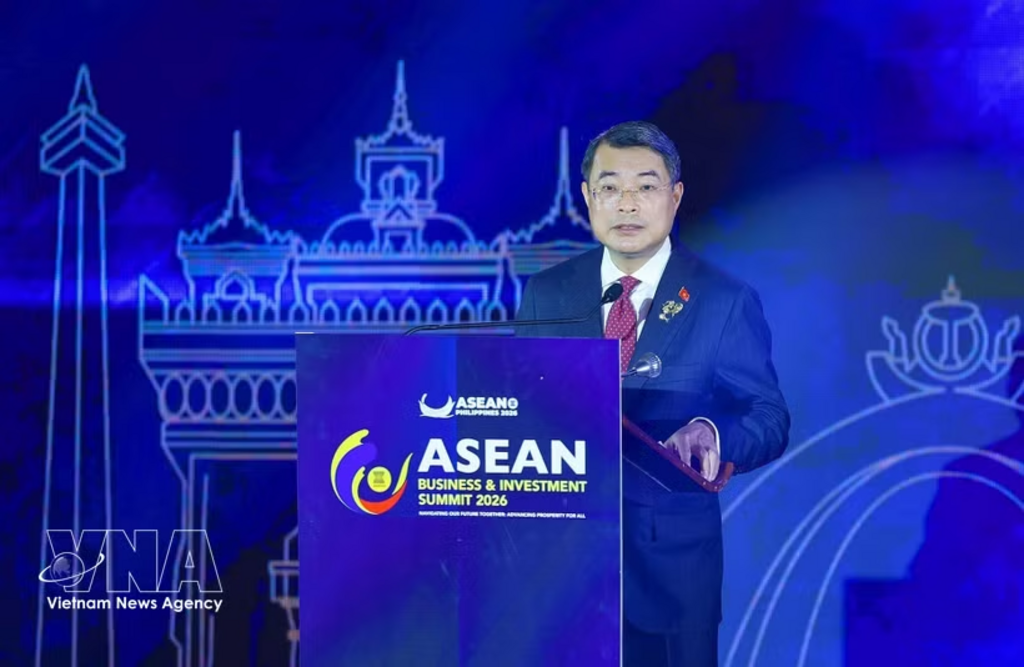
| Prime Minister Le Minh Hung addresses the ASEAN Business and Investment Summit (ABIS) 2026 in Manila, the Philippines, on November 14, 2026__Photo: VNA |
Prime Minister Le Minh Hung attended and delivered an important address at the ASEAN Business and Investment Summit (ABIS) 2026 on the afternoon of November 14, calling on ASEAN to correctly identify priorities, utilise resources efficiently, and successfully implement regional infrastructure projects.
ABIS 2026 takes place on November 14–15 on the sidelines of the 49th ASEAN Summit in Manila, the Philippines. It is the flagship annual activity of the ASEAN Business Advisory Council (ASEAN-BAC) and also the largest annual economic and trade networking event for the ASEAN business community.
Themed “ASEAN: Creating Our Shared Future in the Age of Intelligence”, ABIS 2026 focuses on economic, trade, and investment integration; energy and food security; industrial development, infrastructure, and the creative economy; digital transformation, artificial intelligence, and the digital economy; as well as inclusive growth and human resources development.
Speaking at the ninth panel discussion, PM Hung remarked that the session on building infrastructure for ASEAN's future economy reflects the bloc’s strategic imperative to forge a seamless, synchronised, modern, smart, and sustainable regional connectivity network, thereby boosting competitiveness, fostering innovation, and driving new growth engines.
He perceived that to achieve this goal, ASEAN must look beyond mobilising more capital or constructing additional facilities; more importantly, it must correctly identify priorities, utilise resources efficiently, and successfully implement regional infrastructure projects.
Given this, he suggested that the ASEAN Connectivity Strategic Plan 2026–2035 focus on four key priorities.
The first is cross-border transport and logistics connectivity. The bloc must transition from developing individual projects to establishing interconnected economic corridors that link transportation, production, logistics, trade, and smart urban networks. Concurrently, it is necessary to enhance the quality, sustainability, and resilience of infrastructure against climate change and emerging risks.
The second is energy connectivity, he noted, elaborating that regional energy infrastructure connectivity must be enhanced, supply sources diversified, and sustainable energy transition promoted. Notably, the ASEAN Power Grid (APG) will serve as a strategic infrastructure backbone to ensure regional energy security, economic stability, and sustainable development.
The third priority is digital connectivity. A secure, seamless, and inclusive regional digital ecosystem must be built. The ASEAN Digital Economy Framework Agreement (DEFA) signed at this summit will create a major breakthrough in policy harmonisation, transaction cost reduction, and empowering ASEAN enterprises to boost productivity and integrate deeper into regional and global value chains.
The fourth is institutional and people-to-people connectivity. Efforts must be stepped up to harmonise standards and simplify customs procedures, particularly by maximising the ASEAN Single Window, enhancing the efficiency of the ASEAN Customs Transit System (ACTS), and advancing the ASEAN Authorised Economic Operator Mutual Recognition Arrangement (AAMRA). Additionally, education, science and technology links, and high-quality human resource exchanges must be reinforced, according to the Vietnamese leader.
PM Hung said that to realise these priorities, ASEAN must act collectively, making a decisive transition from visions and commitments to concrete programmes and projects.
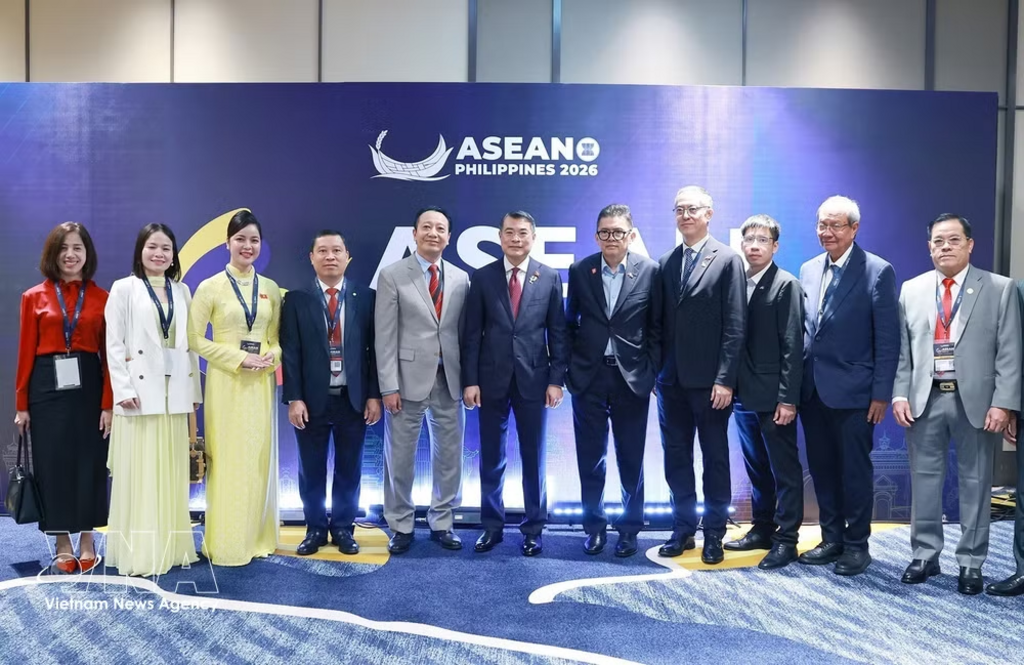 |
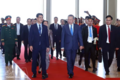
| Prime Minister Le Minh Hung and other participants in the ASEAN Business and Investment Summit (ABIS) 2026 in Manila, the Philippines__Photo: VNA |
Proposing four action directions, he said the bloc should build an ASEAN strategic infrastructure priority list to 2040. It needs to select strategic regional connectivity projects focusing on cross-border transport corridors, logistics, power grids, digital infrastructure, and sustainable smart cities. Objectives, capital, schedules, and financial plans should be clearly defined while projects categorised by implementation readiness.
He noted that it is also necessary to enhance cross-border project coordination by fostering close collaboration among member states from the planning and design stages through to execution, while harmonising technical and legal standards as well as frameworks for cost- and benefit-sharing.
Another direction is to develop a project preparation ecosystem and mobilise regional capital. ASEAN should strengthen technical support, feasibility studies, financial consulting, and risk assessments. At the same time, it needs to connect governments, development banks, investment funds, financial institutions, and the private sector.
In addition, PM Hung went on, the private sector should be treated as a substantive partner. Private enterprises should be given conditions for deeper participation, enabling them to contribute not only capital but also technology, innovation, governance capacity, and operational efficiency.
He shared that as the Vietnamese Government is making immense efforts to achieve double-digit growth in 2026 and beyond, it identifies the development of integrated and modern infrastructure as a strategic breakthrough and a critical engine for fast and sustainable growth.
Vietnam is vigorously developing its expressway network, seaports, key railway projects, international airports, and power source and transmission grid projects. It is also investing heavily in energy, logistics, and digital infrastructure, expanding the 5G coverage to over 90% of the population while proactively researching and developing 6G technology, he added.
Located at the crossroads of numerous economic corridors and regional supply chains, PM Hung stated, Vietnam is committed to developing infrastructure in tandem with strengthening ASEAN connectivity. It stands ready to accompany businesses and international partners, resolutely remove barriers and foster a stable, favourable investment and business environment.
He voiced his belief that with the spirit of substantive connectivity, efficient mobilisation, and collective action, a dynamic, resilient, and inclusive ASEAN will take shape, delivering practical, long-term benefits to people, businesses, and the entire region.- (VNA/VLLF)