 |
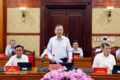
| Le Ve Quoc, Director General of the MOJ’s Department of Registration of Secured Transactions and State Compensation speaks at the working session__Photo: https://dkgd.moj.gov.vn |
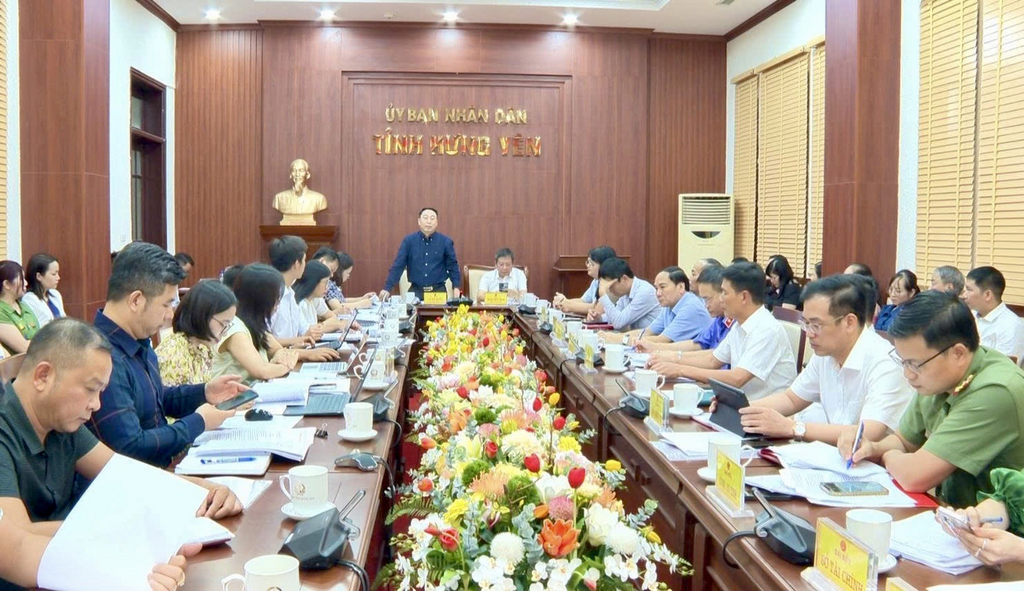
On July 30, an interdisciplinary inspection team under the Ministry of Justice (MOJ) conducted an inspection in Hung Yen province. The team was headed by Le Ve Quoc, Director General of the MOJ’s Department of Registration of Secured Transactions and State Compensation.
The inspection formed part of the MOJ’s 2026 Inspection Plan for the registration of security interests involving land use rights and land-attached assets and for the state compensation work.
The working session was participated by Tran Huu Nam, Director of the Hung Yen Department of Justice, representatives of the provincial-level People’s Court, People’s Procuracy, Civil Judgment Enforcement Department, and Inspectorate, and representatives of related departments, agencies and organisations.
Implementing the working programme, the inspection team examined the performance of state management responsibilities for security interest registration and state compensation, as well as the registration of security interests involving land use rights and land-attached assets in the province.
Regarding state compensation work, as reported by the Hung Yen Department of Justice, to ensure the synchronous implementation of the 2017 Law on State Compensation Liability throughout the province, the provincial-level People’s Committee has focused on disseminating and guiding the law and implementing regulations.
These activities have helped civil servants, public employees and the public understand the role and significance of the law, as well as the responsibilities of individuals and organisations in handling compensation claims when specific cases arise.
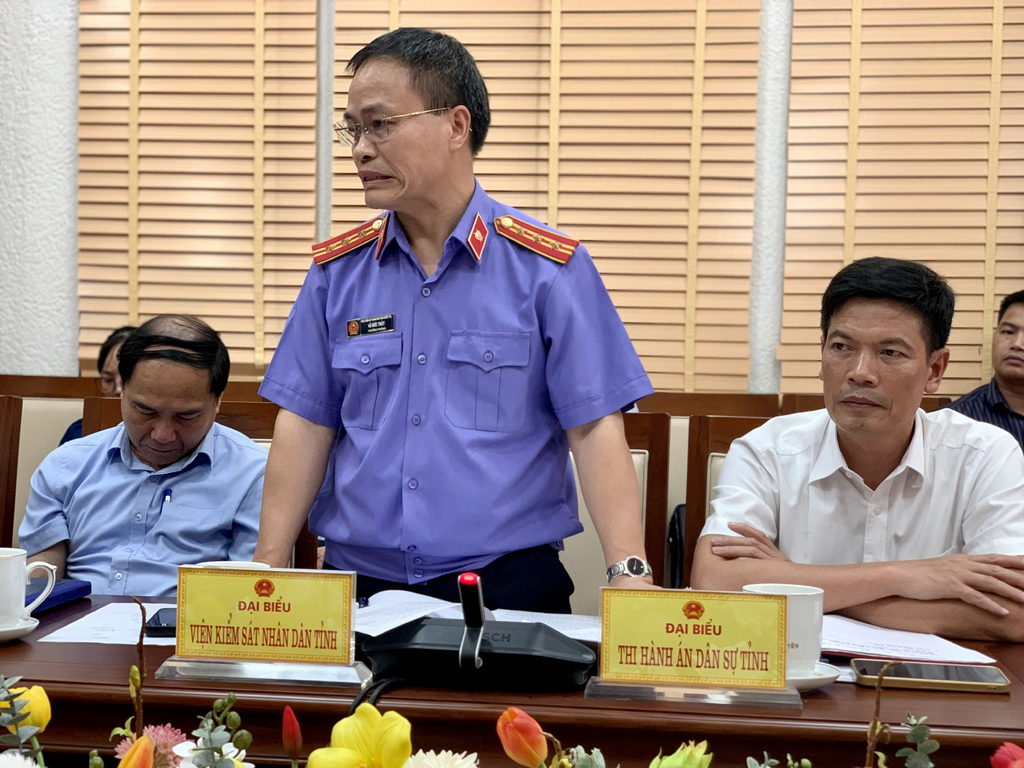 |
| A representative of the Hung Yen People’s Procuracy speaks at the working session__Photo: https://dkgd.moj.gov.vn |
The province has also assigned managerial and advisory officials to engage in state compensation work. Following the implementation of the two-tier local government model, every commune-level People’s Committee in the province has assigned one civil servant as the focal point for receiving, monitoring and resolving compensation claims.
Meanwhile, provincial-level departments and agencies, as well as the provincial-level People’s Procuracy, People’s Court and Civil Judgment Enforcement Departments have each assigned one cadre to perform the state compensation work on a part-time basis.
In practice, from 2018 through December 30, 2024, the province accepted and resolved four compensation claims, which arose in 2022 and 2024 in the former Thai Binh province.
Relevant agencies have coordinated with one another timely and effective at every stage, including identifying the authorities responsible for claim settlement, verifying damage, negotiating compensation, providing information and reporting on the settlement of claims to state management agencies. This has helped limit prolonged complaints and litigation.
At the working session, representatives of Hung Yen’s departments and sectors discussed issues of concern and submitted recommendations to the inspection team to promote a consistent approach to resolving obstacles in state compensation work.
As for the registration of security interests involving land use rights and land-attached assets, the province’s departments and sectors have performed relevant tasks, such as issuing annual plans for the state management of security interest registration activities; issuing regulations on the rates and the collection, payment, management and use of security interest registration charges; and announcing administrative procedures.
Furthermore, the law on security interest registration has been disseminated through incorporation of the law’s provisions into law dissemination conferences, posting of relevant materials on the province’s Portal, display at provincial- and commune-level public administration service centres, and compilation of materials concerning security interest registration.
The inspection team conducted direct inspections at the Hung Yen Provincial Land Registration Office and Land Registration Office Branch No. 06. The team also carried out random inspections of dossiers retained at the provincial office and its 13 branches.
The inspection found that application dossiers for the registration of security interests involving land use rights and land-attached assets in the province are received and processed partly online via the National Public Service Portal. Applicants submit electronic copies of their dossiers through the online system, while paper application dossiers are submitted directly to the registration agency.
In general, it is shown through inspections that the Land Registration Office and its branches carried out registration procedures promptly and lawfully, facilitating access for individuals and businesses. The team also identified shortcomings and required remedies.
The inspection team also noted reports from the Departments of Justice and Agriculture and Environment and other agencies and organisations. The reports showed that the number of applications remains high compared with the limited personnel available to process them, while online registration is not fast or convenient enough for applicants. Access to information in the land database also remains limited because the database is incomplete and has not been connected with the databases on notarisation, certification, tax and civil judgment enforcement.
Based on the inspection results, Director General Quoc appreciated the province’s achievements but also pointed to shortcomings in the state management of security interest registration and state compensation as well as in the registration of security interests in the locality.
In response, representatives of the Department of Justice and the inspected units committed to improving the effectiveness of activities relating to the state management of security interest registration and state compensation.- (VLLF)