 |
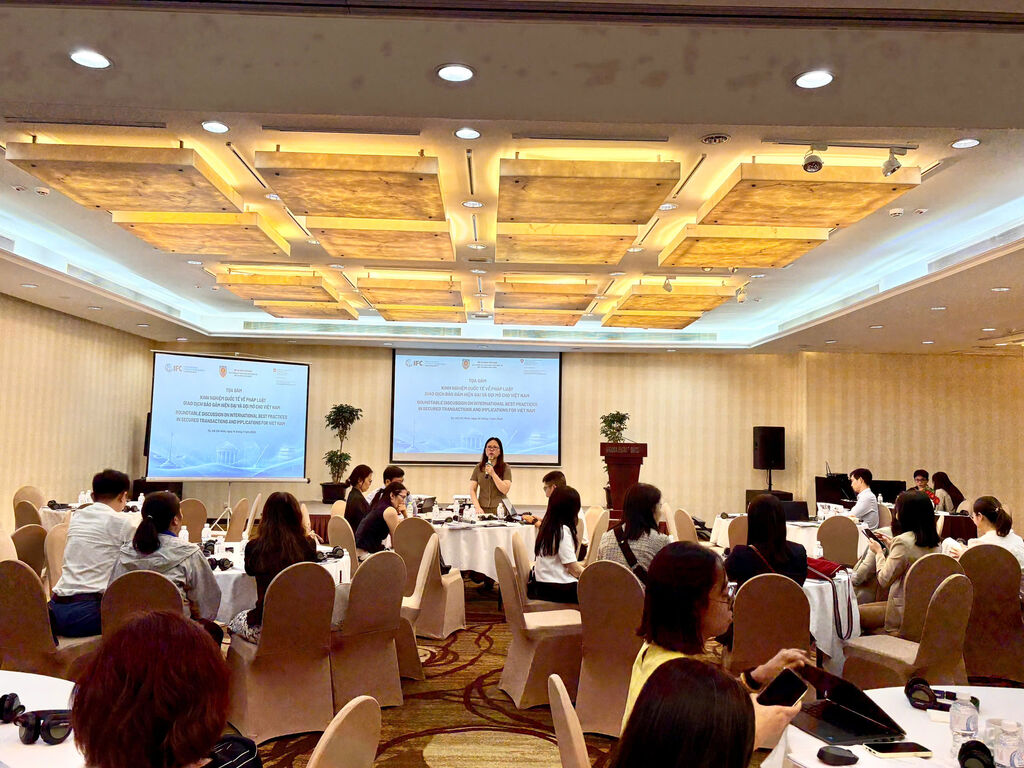
| An overview of the event__Photo: MOJ |
The Department of Secured Transactions Registration and State Compensation under the Ministry of Justice and the International Finance Corporation (IFC), a member of the World Bank Group, held a roundtable discussion in Ho Chi Minh City on July 14 to examine international best practices in secured transactions and their implications for Vietnam.
The event brought together representatives of functional agencies in Ho Chi Minh City, security interests registration agencies, credit institutions, financial leasing companies, notarial practice organisations, law schools and research institutions.
Opening the discussion, Nguyen Thi Thu Hang, Deputy Director General of the Department of Secured Transactions Registration and State Compensation, highlighted the importance of secured transactions law in broadening access to credit for production and business activities.
A sound legal framework, she said, could help strengthen the confidence of finance providers, unlock resources for development and support the effective implementation of economic policies.
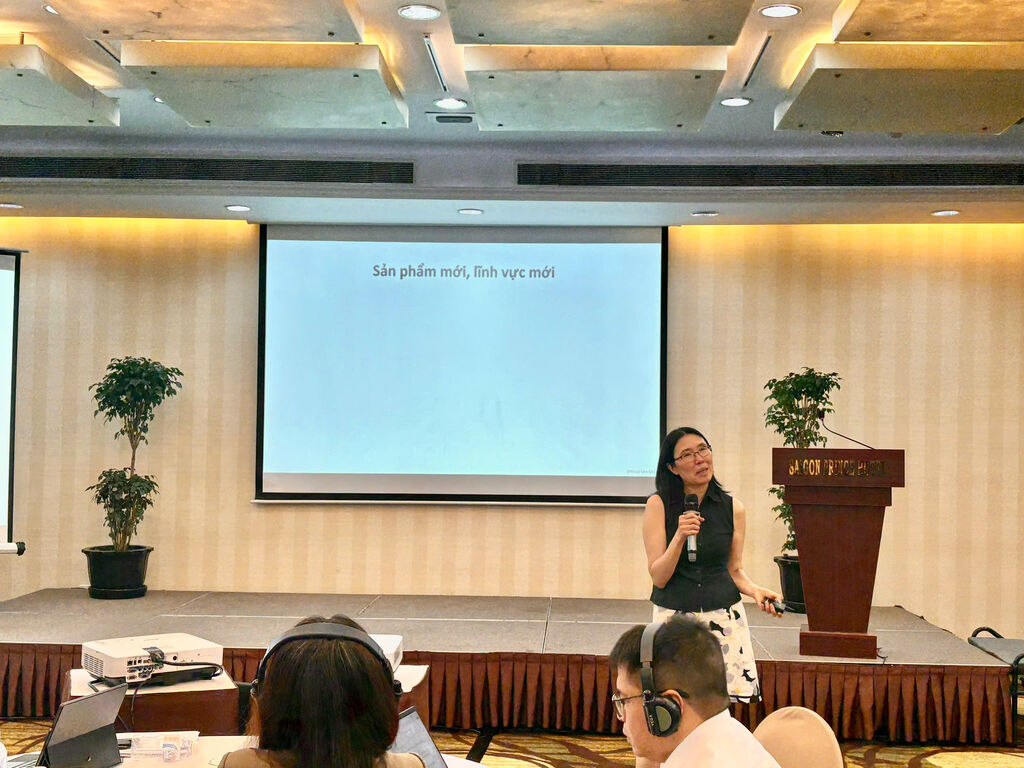 |
| IFC representative Professor Xuan-Thao Nguyen delivers a presentation at the event __ Photo: MOJ |
“Vietnam has made considerable efforts in recent years to improve its legal framework for secured transactions as manifested in the provisions of the Civil Code, relevant laws and implementing decrees,” Hang said.
However, she noted that rapid socio-economic development, deeper international integration, technological advances and innovation had created an urgent need for further research and legal reform.
Addressing the event, IFC representative Professor Xuan-Thao Nguyen, Pendleton Miller Chair in Law and Director of the Asian Law Centre at the University of Washington School of Law in the United States, outlined the key principles of secured transactions law under the UNCITRAL Model Law on Secured Transactions and Article 9 of the Uniform Commercial Code.
She explained that a modern secured transactions regime generally rests on four pillars: the creation of a security right; its attachment to collateral; its effectiveness against third parties; and the determination of priority and enforcement.
Professor Nguyen also shared the United States’ experience in using digital assets, or controllable electronic records, as collateral. She highlighted control of an electronic record as a means of making a security interest effective against third parties. Under this approach, the secured party must be able to obtain substantially all the benefits of the electronic record, prevent others from obtaining those benefits and transfer control of the record to another party.
Drawing on these principles, she offered her views on the possible development of a secured transactions law in Vietnam and made recommendations for improving the country’s existing legal framework.
Following the presentations, IFC experts and other participants discussed legal scenarios and practical issues involving new forms of assets emerging from supply chains and the digital economy, as well as intellectual property rights, inventions and patents.
They also considered approaches that Vietnam could adapt to its legal and economic conditions. These included using a control mechanism to establish the third-party effectiveness of security interests in certain specialised assets and introducing registration requirements for contracts with functions similar to secured transactions, such as receivables assignment agreements and financial leasing agreements.
The event was an opportunity for Vietnam to learn from international experience and thereby build a more coherent and predictable legal framework on secured transactions that accommodates new forms of assets and supports broader access to finance. This would also help ensure that future legislation keeps pace with the digital economy and the country’s deeper integration into global markets.- (VLLF)