 |
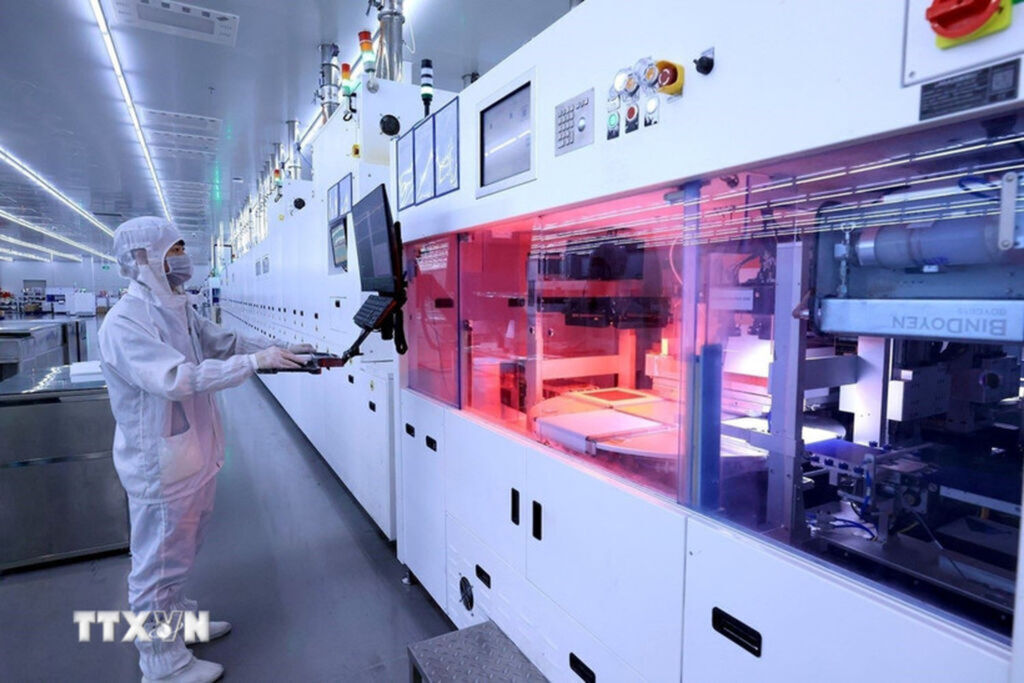
| Operating the solar panel manufacturing line at Toyo Solar Co., Ltd. in Cam Khe industrial park, Phu Tho province __Photo: VNA |
Strategic technology research and development (R&D) centres, strategic technology enterprises, hi-tech R&D centres and hi-tech enterprises are among those expected to benefit from the proposed corporate income tax (CIT) incentives.
The incentives are among the key changes proposed by the Ministry of Finance in a draft decree amending Decree 320/2025/ND-CP, which provides detailed regulations and measures for implementing the Law on Corporate Income Tax.
Stronger incentives for the hi-tech sector
Notably, the proposed incentive framework covers not only hi-tech product manufacturers but also R&D centres and enterprises operating in strategic technology fields.
The tax rates and duration of incentives would vary depending on the category of enterprises.
Strategic technology R&D centres, strategic technology enterprises, hi-tech R&D centres and group-1 hi-tech enterprises would be entitled to a preferential CIT rate of 10 per cent for 25 years, a four-year tax exemption and a 50 per cent reduction in payable tax amounts over the subsequent nine years.
Group-2 hi-tech enterprises, meanwhile, would qualify for a preferential CIT rate of 10 per cent for 15 years, together with a four-year tax exemption and a 50 per cent reduction in payable tax amounts for the next nine years.
Enterprises manufacturing hi-tech products would be eligible for a preferential CIT rate of 17 per cent for 10 years, a two-year tax exemption and a 50 per cent reduction in payable tax amounts over the subsequent four years.
Under the 2025 Law on High Technology, a hi-tech enterprise is defined as an enterprise that manufactures hi-tech products or provides hi-tech services and conducts R&D activities related to high technologies and hi-tech products.
A group-2 hi-tech enterprise is a hi-tech enterprise that owns or co-owns technology, holds lawful rights to use technology, or engages in technology transfer activities in accordance with law to develop and apply high technology and manufacture hi-tech products or provide hi-tech services. It must also satisfy criteria relating to revenue, R&D expenditure in Vietnam and employees directly engaged in R&D.
Group-1 hi-tech enterprises must meet the criteria applicable to group-2 enterprises and satisfy at least one additional condition: conducting R&D of high technologies or hi-tech products; or manufacturing hi-tech products that meet the Government-set minimum localisation rate for the relevant sector or field, with annual R&D expenditure in Vietnam accounting for at least 1 per cent of net revenue after deducting input value.
The draft also provides transitional arrangements for organisations and enterprises holding certificates for hi-tech enterprises, hi-tech agricultural enterprises, hi-tech application activities, hi-tech incubators or hi-tech enterprise incubators under the 2008 Law on High Technology.
Under the proposal, these entities would continue to enjoy CIT incentives under the regulations applicable at the time their certificates were issued until the expiry of the periods specified in those certificates.
Easing non-cash payment requirements in disadvantaged areas
Another proposed change concerns the documentation required for certain expenses to qualify as deductible when calculating CIT.
Under the draft, enterprises purchasing goods or services from individuals or households residing in areas with difficult or extremely difficult socio-economic conditions would not be required to provide proof of non-cash payment for transactions worth VND 5 million or more, provided the purchases meet the conditions for inclusion in the statement of purchases.
A similar exemption from non-cash payment documentation requirements is proposed for certain payments of salaries, wages, bonuses, allowances and subsidies to employees, as well as interest payments made by people’s credit funds or microfinance institutions to individuals in the areas covered by the proposed regulations.
The Ministry of Finance said the proposed amendments are intended to address difficulties faced by individuals and businesses in disadvantaged areas while aligning CIT regulations with the revised legal framework.- (VLLF)