 |
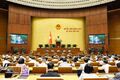
| The draft resolution stipulates that academic titles and degrees, professional titles, seniority and formal recognition as a talented individual would not be mandatory__Photo: VNA |
The Ministry of Home Affairs is seeking feedback on a draft National Assembly resolution establishing special mechanisms and policies for talent recruitment and development to support strategic tasks, key programmes and projects, and address major challenges facing the country, sectors and localities.
Removing barriers
According to the ministry, national competitiveness increasingly depends on scientific and technological capabilities, innovation, mastery of strategic technologies and the quality of governance.
Strategic tasks are often new, complex and cross-sectoral, requiring the rapid mobilisation of suitable experts. Conventional mechanisms governing recruitment by job position, professional ranks and titles, staffing quotas, spending procedures and remuneration have yet to provide sufficient flexibility to select the right people, assign them appropriate tasks, quickly assemble implementation teams and assess performance based on the value delivered.
Talented individuals from businesses, universities and research institutes, overseas Vietnamese and international experts need mechanisms to contribute to State-led tasks without necessarily moving into full-time public-sector employment, it added.
Therefore, the ministry said, mechanisms are needed to link personnel, resources and accountability to specific tasks and deliverables, while limiting incentives to defined assignments, managing conflicts of interest, and safeguarding confidential information, data and intellectual property.
Under the draft resolution, the mechanisms would apply to talented Vietnamese citizens, overseas Vietnamese and foreign nationals, while broadening participation to include agencies, organisations, public service units and businesses across all economic sectors.
The resolution aims to remove barriers related to entry criteria, staffing quotas, selection methods, professional and personnel autonomy, financial procedures, remuneration, commercialisation of results, taxation, visas and work permits. It would use deliverables and outcomes as the basis for task assignment, payment, performance evaluation and continued engagement of talent.
The new mechanisms would be accompanied by accountability, oversight and strict action against violations.
Proposal for a “Vietnam talent visa”
The draft resolution comprises 16 articles outlining key provisions and several breakthroughs compared with current legislation. One of the main breakthroughs is a shift from entry requirements to selection based on capabilities and deliverables.
The Law on Cadres and Civil Servants, the Law on Public Employees and sector-specific laws already provide policies to attract certain groups of experts, scientists, talented individuals and highly qualified workers, usually subject to specific requirements, positions or fields.
Meanwhile, the draft resolution stipulates that academic titles and degrees, professional titles, seniority and formal recognition as a talented individual would not be mandatory, except where required by law for professional practice.
In addition, the draft resolution makes strategic tasks the basis for mobilising talent and decentralises the identification of needs.
Meanwhile, existing mechanisms governing civil servants, public employees, and science and technology are administered under separate frameworks.
Other breakthroughs include allowing flexible selection methods, including direct appointment and commissioned assignments; granting genuine autonomy and allowing talented individuals to work concurrently with multiple organisations; and shifting financial management towards deliverables and outcomes.
The draft also expands remuneration, tax incentives and the commercialisation of results beyond certain specialised sectors; establishes mechanisms to attract foreign talent linked to immigration and multi-organisational employment; broadens protection against risks arising from objective circumstances, with clearly defined exclusions; and establishes a dedicated budget framework and special legal mechanisms.
The draft resolution is expected to be submitted to the 16th National Assembly for consideration and approval at its second session.- (VNA/VLLF)