|
| Family members gather to make banh chung – an indispensable part of the Lunar New Year (Tet) celebration__Photo: VNA |
Vietnam needs a unified and coordinated implementation mechanism from the central to grassroots levels to turn the national value, cultural value and family value systems and standards for Vietnamese people in the new era from policy orientation into a genuine driver of national development, Assoc. Prof. Dr. Bui Hoai Son, a full-time member of the National Assembly's Committee on Cultural and Social Affairs, has stressed.
Speaking to the Vietnam News Agency following the Prime Minister's Decision No. 1189/QD-TTg on a plan to implement these value systems, Son described the document as marking a shift from defining and promoting values to embedding them across all aspects of society.
He said previous policies had established the need to build the four value systems but remained largely strategic, without a unified implementation mechanism.
The new plan, by contrast, clarifies the relationship among these systems. The national value system sets the country's development goals and aspirations; the cultural value system fosters an environment in which these values are embraced, practised and promoted; the family value system serves as the primary foundation for character formation; while the standards of the Vietnamese people serve both as the driving force behind these values and as the ultimate goal of development.
The decision also requires these values to be translated into codes of conduct for different sectors and social groups while integrating value-based criteria into socio-economic policy-making and policy impact assessments, Son noted. As a result, values should be reflected not only in slogans but also in laws, policies, public service, education, business activities, family life and everyday behaviour.
To ensure the values take root in society, Son said they must be converted into concrete, measurable behaviours. Responsibility, honesty and compassion, for example, should be demonstrated through public service, business ethics, legal compliance, academic integrity and community solidarity.
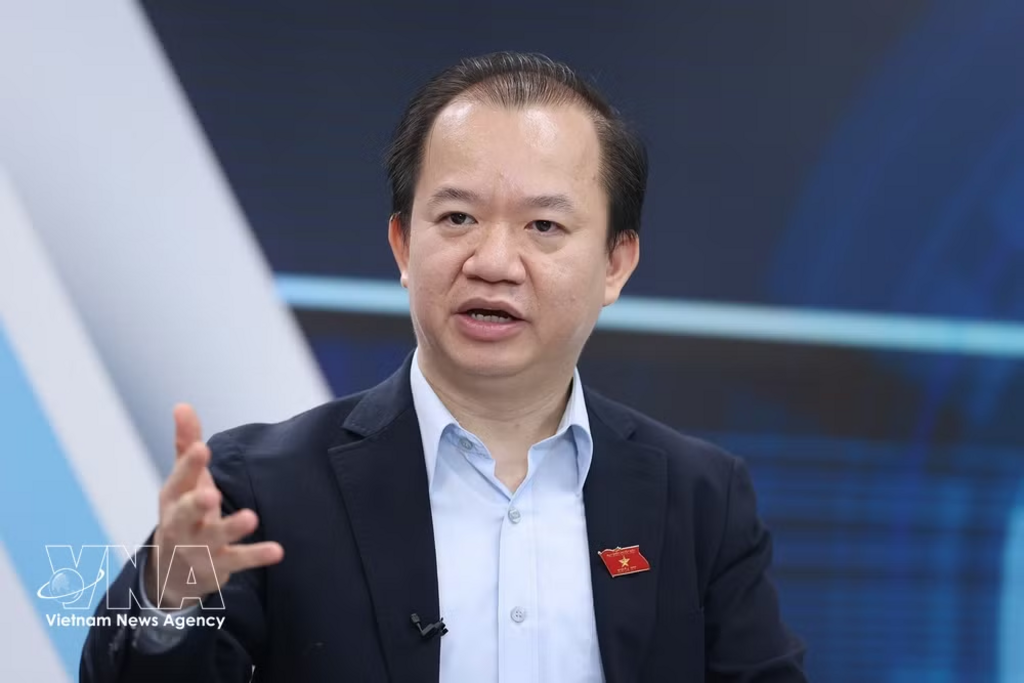 |
| Assoc. Prof. Dr. Bui Hoai Son, a full-time member of the National Assembly's Committee on Cultural and Social Affairs__Photo: VNA |
The official stressed that implementation should be tailored to different settings. Families should nurture love, equality and responsibility; schools should instil values through practical activities and school culture; public institutions should incorporate them into professional ethics and public service; while businesses should promote integrity, social responsibility and business culture and sustainable development.
A particularly important factor, he said, is the role of leading by example. Officials, Party members, leaders, educators, artists, respected public figures and other influential persons must set the most convincing examples by embodying these values in their own actions.
Values only become meaningful when they are translated into repeated actions that evolve into social norms, requiring long-term implementation backed by incentives, accountability and social recognition rather than short-term campaigns, he added.
Regarding evaluation, Son said the most important indicator is whether people's behaviour and the quality of social relationships improve, rather than the number of conferences, slogans or communication activities.
He suggested developing a unified national framework of indicators while allowing sectors and localities to adopt criteria suited to their circumstances. Possible measures include levels of legal compliance; public satisfaction and trust; standards of conduct within public institutions; integrity in education, business and the media; rates of domestic and school violence; the spirit of community solidarity and mutual support; environmental awareness; standards of civility in cyberspace; and people's capacity for innovation and social contribution.
In the digital era, Son called for building an engaging digital content ecosystem that enables young people not only to receive but also to create and spread positive values in their own language. Stories, films, music, games, podcasts and short-form videos, supported by technologies such as artificial intelligence and virtual reality, could make national values more accessible, he said.
When a value is conveyed through a genuine story, a compelling artistic work, or a deeply moving experience, it resonates far more powerfully than dry moral instruction ever could, he said.
At the same time, he urged stronger digital literacy to help young people navigate misinformation and harmful online content, while calling on families, schools, media organisations, technology companies and cross-border platforms to work together to foster a healthy digital environment. Ultimately, he said, young people should be empowered to experience, create and demonstrate these values through their own actions, allowing them to become an intrinsic force for personal growth and national development.- (VNA/VLLF)