Dr. Tran Thi Mai Hoa
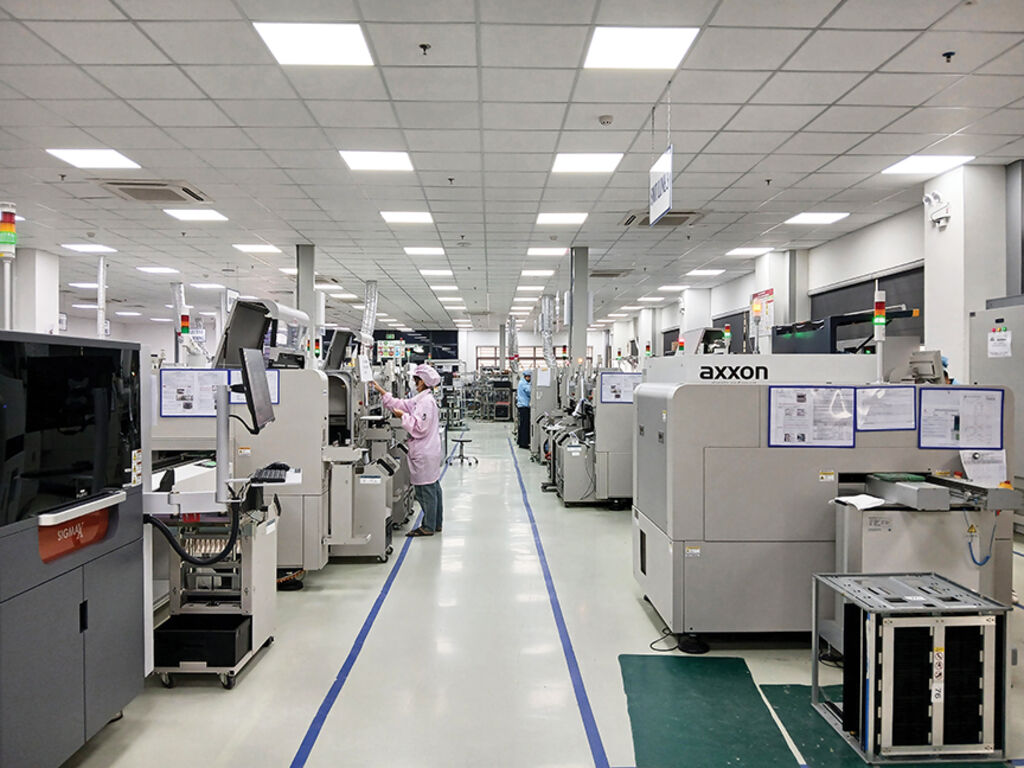 |
| An electronic equipment production line using surface mount technology (SMT) at Trung Nam Electronics Manufacturing Services Factory in Da Nang Hi-Tech Park, Da Nang city__Photo: My Ha/VNA |
Vietnam has in recent years accelerated national digital transformation as part of efforts to renew its growth model, improve labour productivity and strengthen economic competitiveness. The process has been rolled out relatively broadly, from state management and digital infrastructure to business operations and social life, creating an important foundation for the development of the digital economy and digital society.
A key policy milestone was the National Digital Transformation Programme through 2025, with orientations towards 2030, issued under Prime Minister Decision 749/QD-TTg dated June 3, 2020. The programme sets out a broad agenda to develop digital government, digital economy and digital society at the same time, while building Vietnamese digital technology firms capable of competing globally.
Progress has been visible in digital government. Ministries, sectors and localities have expanded online public services, digitised administrative data and applied digital tools in their state management tasks. National platforms such as the National Population Database, the National Public Service Portal, the electronic identification app, and digital payment systems are being upgraded to improve governance, reduce paperwork and make public administration more transparent.
Vietnam’s digital infrastructure has also improved sharply. According to statistics of the Ministry of Information and Communications, now the Ministry of Science and Technology, 4G coverage had reached about 99.8 per cent of the country by 2025, more than 82 per cent of households had fibre-optic Internet connections and around 88.7 per cent of mobile subscribers used smartphones. The Digital Vietnam 2025 report said the country had about 79.8 million Internet users at the beginning of 2025, accounting for nearly 79 per cent of the population.
This wider digital base is supporting e-commerce, digital finance, online education and technology-based services. Vietnam is also moving towards broader 5G commercialisation, with major telecoms firms rolling out services and developing a domestic 5G technology ecosystem.
At the same time, investment in data centres and cloud computing is rising as demand grows for data storage, processing and analysis. Major technology companies are developing data centres and cloud platforms to support digital transformation in both businesses and state agencies. Together, these changes are making digital infrastructure a core part of a new investment model in the country.
Investment moves towards new growth drivers
Vietnam’s investment structure is changing, with more capital flowing into high technology, innovation, startups and digital infrastructure.
The semiconductor industry is among the fastest-growing areas of interest. Vietnam is emerging as a new link in the global semiconductor value chain, helped by its geopolitical position, technical workforce and policies to attract hi-tech investment. According to information released at SEMI EXPO Vietnam 2025, the country had more than 170 FDI projects in semiconductors, with total registered capital of nearly USD 11.6 billion. These included about 60 chip-design enterprises, eight packaging and testing projects, and about 20 firms supplying materials and equipment for the industry.
Artificial intelligence (AI) is another fast-rising field. Vietnam is becoming a destination for international technology groups investing in AI and data infrastructure. Large firms have invested in AI, big data and cloud computing research centres to support digital transformation. NVIDIA, for example, has announced plans to expand AI investment and establish an AI research centre in Vietnam, while strengthening cooperation to develop the domestic AI ecosystem.
Green technology is also drawing more capital. Domestic and foreign enterprises are investing in renewable energy, green infrastructure, energy conservation technologies and smart manufacturing as they work towards net-zero emissions goals. This points to a gradual shift away from lower-value investment towards sectors that offer higher added value and stronger environmental credentials.
Vietnam’s innovation ecosystem has grown quickly, with stronger participation from the State, enterprises, universities, research institutes, investment funds and technology startups. The 2025 Global Innovation Index of the World Intellectual Property Organization showed Vietnam ranked 44th out of 139 economies and was among the countries whose innovation performance exceeded expectations for their level of development.
The country has also built a network of innovation centres and hi-tech parks, including the Vietnam National Innovation Centre, the Hoa Lac Hi-Tech Park, the Ho Chi Minh City Hi-Tech Park, and AI and data centres in Hanoi, Da Nang and Ho Chi Minh City. Major technology companies such as Samsung, Intel, NVIDIA and Qualcomm are expanding research and development (R&D) activities in Vietnam. In 2025, Qualcomm opened an AI research centre in the country to develop generative AI, agentic AI and AI applications for smartphones, IoT and smart vehicles.
The startup scene is expanding as well, especially in fintech, AI, edtech, e-commerce, logistics and green technology. Vietnam is now among Southeast Asia’s three largest startup ecosystems by growth rate, with more than 4,000 startups in 2025. As released by the Vietnam Innovation & Private Capital Report 2025, the country’s digital economy reached around USD 36 billion and continued to record double-digit growth, creating favourable conditions for technology startups.
Despite a decline in the global venture capital market, Vietnam has maintained its ability to attract startup funding. The National Startup Support Center reported that disclosed venture capital invested in Vietnamese startups reached around USD 372 million in the first nine months of 2024, with a stronger recovery expected in 2025-30.
Table 1. Investment in Vietnamese technology startups by sector in 2025
| Sector | Estimated investment (USD million) |
|---|---|
| Fintech | 180 |
| AI | 120 |
| E-commerce | 140 |
| Technological logistics | 75 |
| Edtech | 40 |
| GreenTech | 60 |
Source: Do Ventures: Vietnam Innovation and Private Capital Report 2025.
Investment in science, technology and innovation is increasing in both scale and quality, yet several weaknesses remain. R&D spending as a share of GDP is still low, the innovation ecosystem is not sufficiently connected, and domestic enterprises have limited capacity to lead in technology. Vietnam therefore needs to raise investment in R&D, strengthen the role of businesses in innovation and improve the technology ecosystem.
Together with the development of digital economy, FDI in Vietnam is also shifting towards high technology and digital infrastructure. Instead of focusing mainly on labour-intensive industries as in the past, foreign investors are giving greater priority to electronics manufacturing, semiconductors, AI, data centres and other strategic technology sectors.
Samsung, Intel, NVIDIA and Apple show how Vietnam is gaining ground in global hi-tech supply chains. Samsung has made Vietnam its largest electronics manufacturing base worldwide, contributing more than USD 306 billion to the country’s export turnover in 2018-22, while the number of Vietnamese firms in its supply chain rose from 25 in 2014 to 257 by the end of 2022. Intel is expanding cooperation in semiconductors, NVIDIA is increasing investment in AI, data and computing infrastructure, and Apple has committed around USD 17 billion through more than 70 manufacturing partners and 150 suppliers in Vietnam as it diversifies its global supply chain.
Initial gains from the new model
The new development investment model is having a positive impact on the economy. The clearest gains can be seen in labour productivity, the digital economy, innovation capacity and national competitiveness.
Digital transformation allows enterprises to apply technology to production, management, distribution and customer care, helping them cut costs, shorten processing time and improve productivity. According to the Bureau of Statistics under the Ministry of Finance, labour productivity across Vietnam’s economy in 2025, at current prices, was estimated at VND 245 million per worker, equivalent to around USD 9,809.
The digital economy is expanding quickly. More capital is flowing into digital infrastructure, digital platforms, e-commerce, digital finance, digital logistics and online services. As revealed in the e-Conomy SEA 2025 report by Google, Temasek and Bain & Company, Vietnam’s digital economy is projected to reach USD 39 billion in gross merchandise value in 2025, up 17 per cent from the previous year. This would make it the second fastest-growing digital economy in Southeast Asia. E-commerce is forecast to exceed USD 25 billion, while digital payments are expected to reach USD 178 billion in transaction value.
Innovation is gaining strength too. Investment in AI, big data, semiconductors, fintech and green technology is helping drive Vietnam’s innovation ecosystem. As ranked by WIPO, Vietnam stood at 44th out of 139 economies in the 2025 Global Innovation Index and placed second among lower-middle-income countries. The e-Conomy SEA 2025 report said Vietnam had more than 40 AI startups and attracted USD 123 million in AI from private investment over the previous year. It also said 81 per cent of Vietnamese users interact with AI every day.
Vietnam is gradually moving away from growth based mainly on capital, cheap labour and natural resources towards a model built on technology, data, skilled workers and innovation. If sustained, this could help the country improve its position in global value chains, particularly in electronics, semiconductors, AI, e-commerce and digital services.
Major challenges remain
Despite evident progress, Vietnam still faces significant barriers in renewing its development investment model.
One of the most visible is the digital infrastructure gap between urban and rural areas. According to UNESCO’s 2025 AI Readiness Assessment Report, about 96 per cent of villages and hamlets had fibre-optic internet connections and 99 per cent had mobile coverage. However, the Internet usage rate was 84.7 per cent in urban areas, compared with only about 74 per cent in rural areas.
Data centres and computing infrastructure are concentrated mainly in Hanoi, Ho Chi Minh City and Da Nang. Many remote, mountainous and disadvantaged localities still have limited access to modern digital infrastructure. This divide affects the ability of businesses and people to take part in the digital transformation.
The shortage of high-quality technology workers is another major barrier. As reported by VietnamWorks and TopDev in 2025, Vietnam faced an annual shortage of around 150,000-200,000 IT workers during the 2022-25 period, especially in AI, big data and cybersecurity. In 2025, demand for IT personnel reached about 700,000, exceeding the supply capacity. UNESCO said Vietnam had only about 5,000 AI engineers, 7,000 AI specialists and around 500 active AI startups. Only around 27.2 per cent of the workforce had received formal training, with the rate much lower in rural areas.
Table 2. Shortage of IT and AI human resources in Vietnam during 2022-25
| Year | Demand for IT human resources | Human resource shortage |
|---|---|---|
| 2022 | 530,000 | 150,000 |
| 2023 | 550,000 | 150,000 |
| 2024 | 650,000 | 170,000 |
| 2025 | 700,000 | 200,000 |
Source: TopDev: Vietnam IT Market Report 2025, Ho Chi Minh City.
Limited funding for R&D is another problem. Although investment in technology research, development and innovation has increased, Vietnam still spends far less on R&D than many countries in the region. According to UNESCO, Vietnam’s R&D spending in 2025 stood at around 0.52 per cent of GDP, far lower than the Republic of Korea, at more than 4 per cent, and China, at around 2.6 per cent.
The structure of R&D investment remains heavily dependent on the state sector. Sole proprietorships and domestic technology firms have yet to play a leading role in research, core technology development and innovation.
Table 3. Structure of R&D investment capital in Vietnam in 2025
| Investment source | Proportion (per cent) |
|---|---|
| State budget | 54 |
| Private enterprises | 34 |
| FDI | 12 |
Source: Ministry of Science and Technology: Report on Science, Technology and Innovation in Vietnam in 2025, Hanoi, 2025.
The pace of digital transformation also varies widely among localities. Major economic centres such as Hanoi, Ho Chi Minh City and Da Nang have much stronger digital infrastructure, technology talent and innovation ecosystems than mountainous, remote and disadvantaged provinces. According to UNDP and UNESCO reports in 2025, most AI infrastructure, data centres and hi-tech human resources were gathered in Hanoi and Ho Chi Minh City, with about 82 per cent of AI specialists working in the two cities.
Cybersecurity risks are rising as the economy becomes more digital. The National Cybersecurity Monitoring Centre said Vietnam recorded more than 9,500 cyberattacks in 2022, and the trend has continued to increase alongside the expansion of the digital economy. By 2025, Vietnam’s cybersecurity market had reached around USD 297 million, driven by rising demand for the protection of data, cloud systems, fintech and digital infrastructure.
Vietnam also remains heavily dependent on foreign technology groups for platforms, semiconductor chips, cloud computing and software. This creates challenges for technological self-reliance, data security and national security amid fiercer global technology competition.
What Vietnam needs to do next
Vietnam’s transition to a development investment model based on science, technology and digital transformation is still at an early stage. To make the shift more effective, the country needs coordinated action on institutions, digital infrastructure, human resources, R&D and hi-tech FDI.
First, Vietnam should continue improving its legal framework to create a more favourable environment for innovation and digital economy development. Policy mechanisms need to be stable, transparent and predictable so that businesses have stronger incentives to invest in high technology, digital transformation and R&D.
Innovation policies should also be sharpened. These include tax incentives for hi-tech enterprises, support for innovative startups, venture capital development and the commercialisation of research results. The country should also introduce a technology sandbox mechanism to allow new business models and technologies to be tested under an appropriate regulatory framework, especially in fintech, AI, blockchain, digital banking and digital platforms.
Second, a stronger national digital infrastructure is needed. The country should speed up nationwide 5G rollout to support smart industry, AI, IoT, smart logistics and the digital economy. Investment in data centres and cloud computing should also be increased to meet growing demand for data storage, processing and use. In addition, AI infrastructure, including high-performance computing systems, AI data platforms and AI research centres, should be developed.
Third, Vietnam should increase investment in science, technology and R&D. This is essential for shifting from extensive development to deeper, higher-value growth. The State should prioritise strategic technology sectors such as AI, semiconductors, big data, biotechnology, green energy and cybersecurity, while encouraging the private sector to invest more in research, innovation and commercialisation of research outcomes. National innovation funds and financial mechanisms for technology startups should be expanded to give the innovation ecosystem stronger momentum.
Fourth, developing digital human resources is essential. Training should be expanded in AI, big data, data science, cybersecurity and digital technology. Digital skills should be taught consistently across general education, vocational education and higher education, while STEM education should be prioritised to improve the long-term quality of science and technology workers. Stronger links between schools and enterprises would help ensure that training is aligned with the real needs of the digital labour market.
Fifth, links between the State, enterprises, universities and research institutes need to be strengthened. The State should provide strategic direction and policy mechanisms; enterprises should be at the centre of technology application and commercialisation; and universities and research institutes should supply skilled workers and scientific research. Innovation centres, hi-tech parks and interdisciplinary research networks can help promote technology transfer and develop higher added-value technology products.
Finally, Vietnam should make better use of the restructuring of global supply chains to attract hi-tech FDI in semiconductors, AI, green technology and the digital economy. Beyond investment incentives, the country needs to improve digital infrastructure, hi-tech talent and the broader investment environment. Policies should also encourage technology transfer, deeper links with domestic enterprises and the development of local supply chains, helping strengthen national technological capacity and reduce dependence on the FDI sector in the long run.-