 |
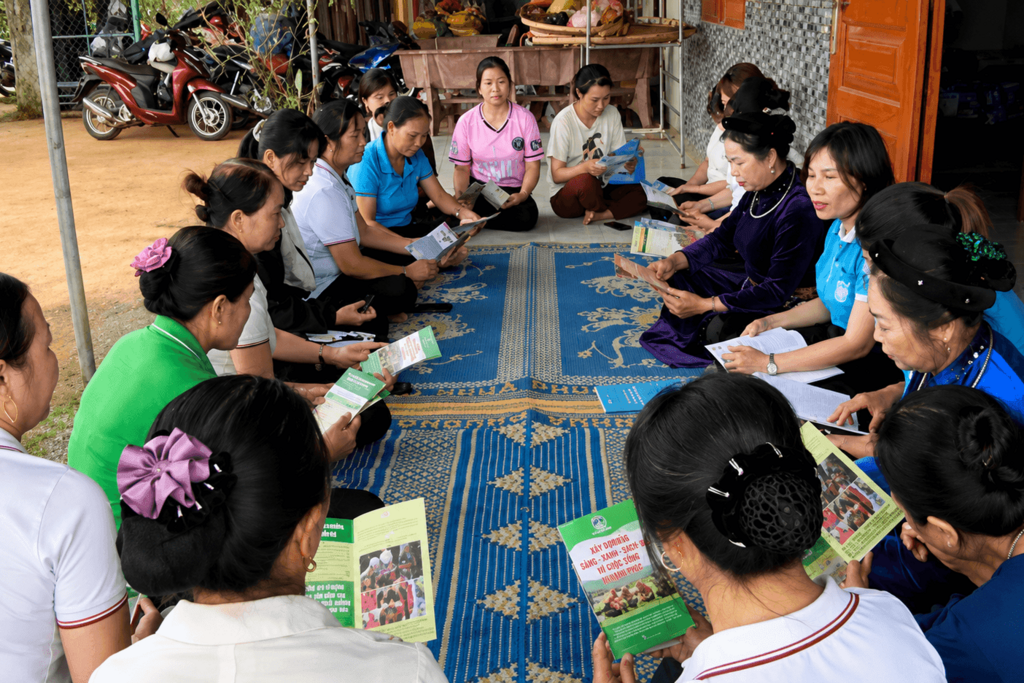
| The number of child marriages fell to 697 during the 2021-2026 period__Photo: dantocphattrien.vietnamnet.vn |
With their deep understanding of local customs and close ties with residents, reputable persons in communities in Lam Dong province are working with grassroots authorities to raise awareness of and prevent child marriage, helping boost ethnic minority children’s access to education and future opportunities.
Trusted community voices help drive down child marriage
The Dam Rong area in Lam Dong province encompasses four communes, with 22 ethnic minority groups making up over 65 per cent of the population. Since 2021, the area has recorded 37 cases of child marriage, down by 108 cases compared with the 2015-2020 period.
Noteworthily, no marriages between close relatives were recorded during the 2021-2023 period, against six cases in the preceding period.
Kră Jãn Ha Krang, a village elder in Me Ka village, Dam Rong 4 commune, said the common attitude towards under-age marriage have gradually changed.
In the past, many families believed their children should marry as soon as they were old enough. Over the recent years, child marriages have become less common, while awareness of consequences of marriage between close relatives has improved.
“We talk to parents and explain that under-age marriage forces young people to take on responsibilities before they are mature enough. I persuade parents to let their children continue their education and advise young people not to rush into marriage. They should finish school and find a job before starting a family so they can have a more secure future,” Krang said.
Like Krang, many village elders and chiefs across Lam Dong province are actively raising awareness among residents, especially young people, about harmful consequences of child marriage, helping discourage those considering marrying at an early age.
Cil Bri, Deputy Director of provincial-level Department of Ethnic and Religious Affairs, said reducing child marriage required the involvement of the entire political system. Village elders, village chiefs and reputable community members played a particularly important role because they understand local customs, have locals’ trust and can persuade people to change their mindset.
From progress in local communities to provincewide action
The progress seen in Dam Rong 4 reflects greater efforts across Lam Dong province following a decade of implementing the Scheme on reduction of child marriage and marriage between close relatives in ethnic minority communities (the Scheme).
According to the provincial-level Department of Ethnic and Religious Affairs, the number of child marriages fell from 1,164 in the 2015-2020 period to 697 in the subsequent five-year period, a decline of 40 per cent. Communities in areas where child marriage was once a serious concern, including Da Tong, Da Long, Phan Son, Phan Tien and Dak R’mang, have largely brought the problem under control.
This progress is attributable to combined efforts of various groups, particularly reputable community members who help bring the Party’s policies and the State’s regulations closer to residents by explaining them in ways that address everyday concerns of individual families.
Recognising harmful effects of child marriage on health, population quality and poverty, the provincial-level People’s Committee of Lam Dong province has directed agencies, mass organisations and local administrations to work together to raise awareness in ethnic minority areas.
During the 2015-2025 period, the Scheme was implemented in a coordinated manner, alongside Subproject 2 of Project 9 under the National Target Programme for Socio-Economic Development in Ethnic Minority and Mountainous Areas.
Efforts to prevent child marriage were also integrated into initiatives that help promote gender equality, reproductive healthcare, child protection, sustainable poverty reduction and cultural development among local communities.
In 2026, the provincial-level Department of Ethnic and Religious Affairs issued a public communication, dissemination and awareness-raising plan to this effect with a budget of over VND 2.2 billion.
The plan lays particular emphasis on the role of village elders, village chiefs, reputable community members and grassroots officials in raising awareness, monitoring risks and preventing potential cases in their own communities. They serve as an important link between public awareness campaigns and practical prevention efforts, helping protect young people’s opportunities to study and build careers. They also support improvements in population quality, sustainable poverty reduction and socio-economic development in Lam Dong’s ethnic minority areas.- (VLLF)