 |
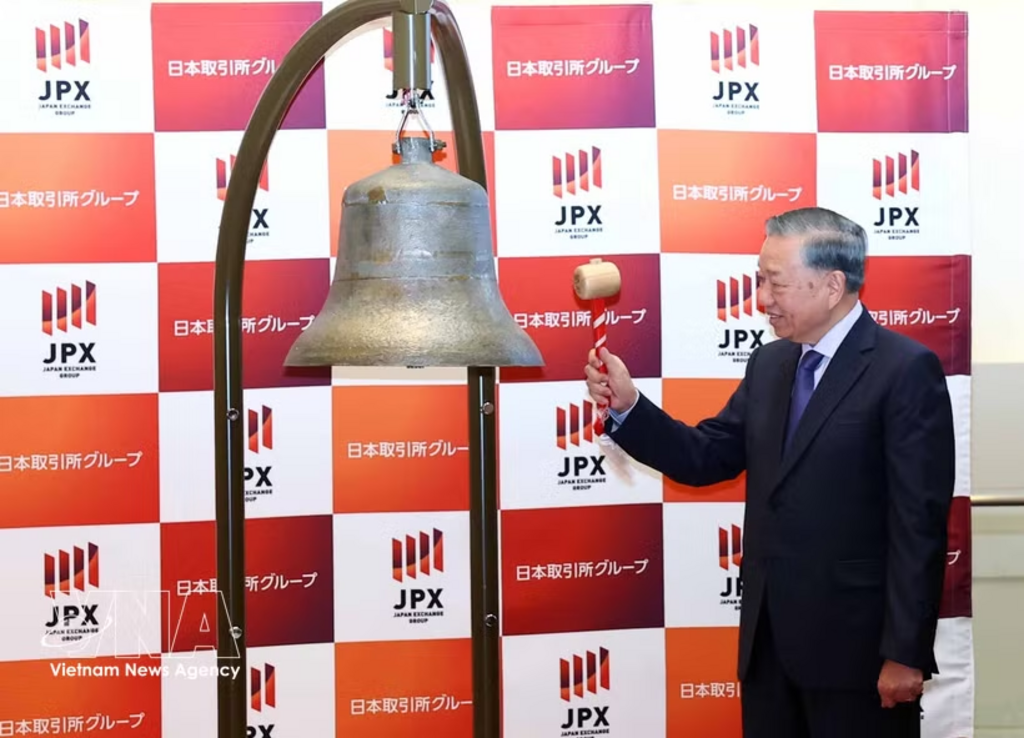
| General Secretary of the Communist Party of Vietnam Central Committee and President To Lam rings the bell at the Tokyo Stock Exchange__Photo: VNA |
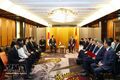
As part of their official visit to Japan, General Secretary of the Communist Party of Vietnam Central Committee and President To Lam and a high-ranking Vietnamese delegation met with representatives of leading Japanese financial institutions at the Tokyo Stock Exchange on November 11 morning, focusing on financial cooperation and capital mobilisation for strategic infrastructure development.
Opening the meeting, Vietnamese Minister of Finance Ngo Van Tuan said Vietnam is entering a new development phase with substantial investment needs in transport, energy, logistics, digital infrastructure and emerging growth drivers. With its financial resources, investment and management expertise, and international investor networks, Japan remains an important partner for Vietnam.
He stressed that capital mobilisation must go hand in hand with efficient resource allocation and sound risk management. Alongside public investment, official development assistance (ODA) and concessional financing, Vietnam aims to mobilise more private capital, promote public-private partnerships (PPPs) and develop capital market instruments tailored to individual projects, repayment capacity and financial safety requirements.
The minister called on Japanese partners to put forward concrete proposals on cooperation opportunities, implementation conditions and coordination mechanisms, affirming that his ministry and relevant agencies stand ready to consider appropriate recommendations within their mandates and in accordance with the law.
Representatives of leading Japanese financial institutions, investors and businesses shared frank and practical views, reflecting their confidence in Vietnam's prospects, while offering insights into long-term cooperation opportunities aligned with the development priorities of both countries.
Discussions focused on finance, capital markets, the International Financial Centre, and funding for strategic infrastructure. Participants explored ways to mobilise medium- and long-term capital, broaden access to international institutional investors and develop capital market instruments, including the possibility of issuing bonds on international markets when market conditions, financing costs and risks are favourable.
They also discussed viable financing models for transport and energy infrastructure and green transition projects, emphasising better project preparation, appropriate capital structures, effective mobilisation of public and private resources, and balanced risk-sharing to safeguard the interests of all parties.
Japanese financial institutions and investors also offered recommendations on developing Vietnam's capital market and International Financial Centre, strengthening governance and improving financial services, and connecting them with long-term investment opportunities in Vietnam.
Vietnamese business representatives shared views on cooperation with Japanese financial institutions in power infrastructure projects, connecting private enterprises with capital, management expertise and markets, and mobilising Vietnamese-Japanese financing for strategic infrastructure.
Addressing the meeting, General Secretary and President Lam stressed that the Comprehensive Strategic Partnership between Vietnam and Japan is opening up broader opportunities for cooperation. While financial cooperation over past decades has helped develop important infrastructure projects, the two countries should now work on modern capital mobilisation mechanisms, deliver strategic infrastructure and create new competitive capabilities for the future.
During 2026–2030 and beyond, Vietnam will prioritise high-speed railways, urban rail systems, airports, seaports, logistics, energy, digital infrastructure and strategic economic corridors. These priorities require substantial, diversified and long-term investment resources that cannot be met solely through the State budget or any single financing channel.
The Vietnamese leader expressed his wish for bilateral financial cooperation to move beyond a traditional provider-recipient relationship towards a development partnership in which the two sides jointly develop financial markets, design effective capital mobilisation solutions and invest in projects and sectors that build long-term competitiveness. Laying out key cooperation priorities, the top Vietnamese leader called on the two sides to build modern, transparent and safe financial and capital markets and sharpen the economy’s ability to raise long-term capital.
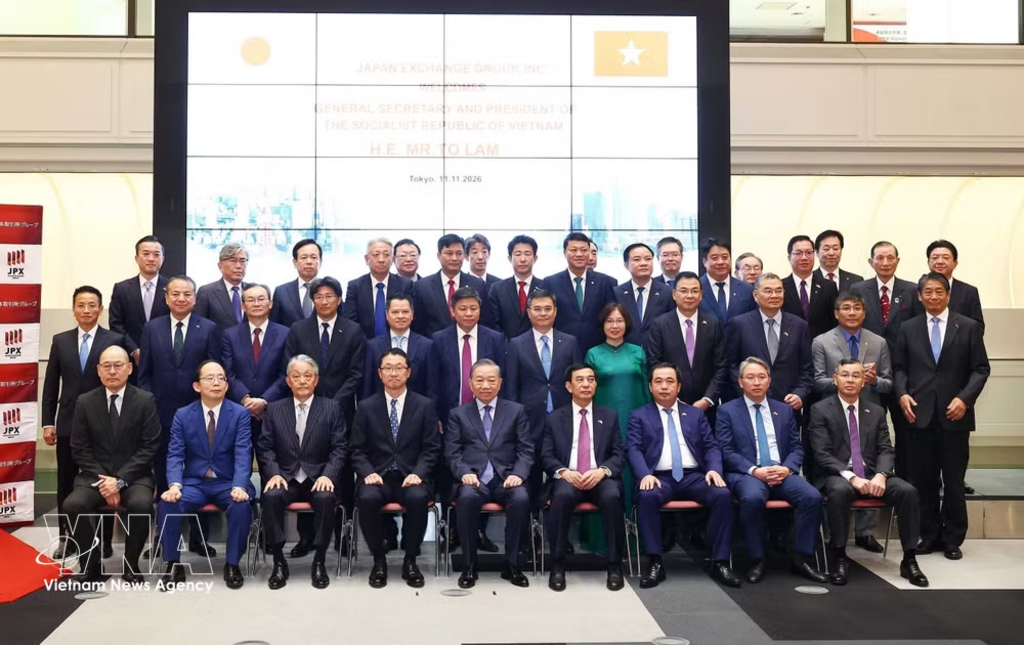 |
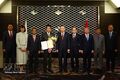
| General Secretary of the Communist Party of Vietnam Central Committee and President To Lam and the high-ranking Vietnamese delegation pose for a photo with Tokyo Stock Exchange representatives__Photo: VNA |
Vietnam wants Japanese banks, brokerages, investment funds, insurers and financial institutions to deepen cooperation in market infrastructure, modern financial instruments, long-term investment products and risk management, he said. He encouraged them to explore advisory roles and invest in suitable international fund-raising tools for the Vietnamese Government and firms.
He proposed tighter links between the two countries’ financial markets and the region, and said he wants the Vietnam International Financial Centre to serve as a platform connecting investment flows, developing financial products, spurring innovation and lifting the economy’s integration capacity. The two sides could work together in trade finance, capital markets, asset management, green finance, fintech and quality workforce training, helping channel capital from Japan and global markets into investment opportunities in Vietnam and the region.
He called for new ways to raise and structure capital for strategic infrastructure, turning cooperation opportunities into bankable projects and concrete works. Japanese banks, financial institutions and corporations should work more closely with Vietnamese partners to design investment models and financial structures tailored to each project. Public infrastructure with big socio-economic returns but limited direct cost recovery should lean on public investment, ODA and concessional loans.
Projects that can be commercially exploited and generate steady revenue should tap corporate capital, infrastructure funds, project finance and public-private partnerships. For projects with big development benefits but that are not yet attractive to commercial capital, the two sides can study blended finance models combining public and private resources, with sensible risk allocation and sharing, in line with the law and fiscal capacity.
He wished that Japanese partners would join Vietnam in scouting and selecting projects with cooperation potential, leveraging each side’s complementary strengths and aiming to build modern, efficient infrastructure that extends the symbols of cooperation built over more than half a century. He also called for expanding green and sustainable finance, accelerating energy transition and upgrading industrial value chains.
Vietnam commits to macro stability, fiscal discipline, stronger institutional mechanisms and a better business climate, and building a transparent, modern, safe and highly predictable financial market, he said, adding that Vietnam will consistently protect investors’ legitimate rights and interests and create favourable conditions for international financial institutions and companies to invest and operate effectively over the long term, based on legal compliance, fair competition and balanced interests.
The Vietnamese guest tasked the Government, the Ministry of Finance and relevant ministries, agencies and localities with proactively coordinating with Japanese agencies, financial institutions and companies, making existing cooperation mechanisms work harder and focusing on feasible areas, projects and schemes. They must clarify capital needs, investment methods, risk management and each side’s responsibilities, and shift decisively from pitching opportunities to preparing fundable projects, from sharing orientations to drafting concrete cooperation plans, and from signing agreements to executing and measuring results.
At the end of the meeting, General Secretary and President Lam rang the bell at the Tokyo Stock Exchange.- (VNA/VLLF)