 |
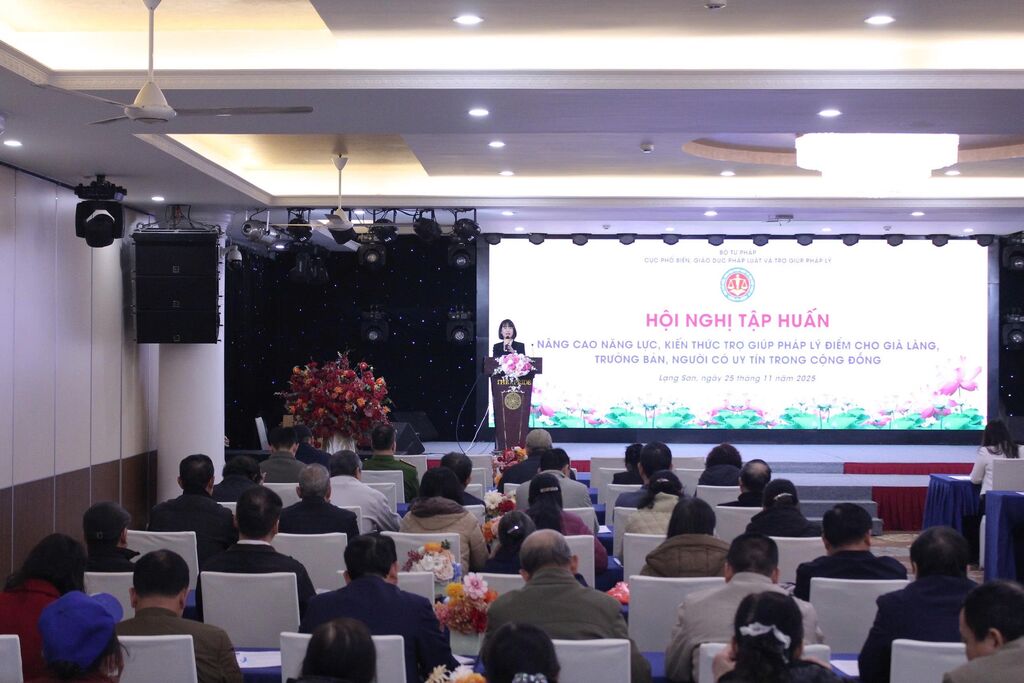
| Hoang Thi Hai, head of the Administration Department of the State Legal Aid Center of Lang Son province__Photo: Department of Law Dissemination and Education and Legal Aid |
A two-day training program was held on November 25-26 in Lang Son province to enhance the capacity for providing legal aid for village elderly chiefs, persons with reputation in communities, and grassroots officials. The program is aimed to help ethnic minority communities and residents in remote areas gain access to the State’s legal aid services in a more comprehensive and accurate manner, while building the capacity of local legal workers.
Participating in the training program were representatives from Tam Thanh, Luong Van Tri, Dong Kinh, and Ky Lua wards, as well as those who play an important role in the local administration and in consolidating the great national unity bloc, such as commune-level public security officers and civil servants in charge of judicial affairs, along with representatives of mass organizations including the Vietnam Fatherland Front, Youth Union, Women’s Union, Farmers’ Association, and Veterans’ Association.
The training course was delivered by two experienced legal aid officers from the State Legal Aid Center of Lang Son province, namely Hoang Thi Hai, head of the Administration Department, and Nong Thi Trang. It focused on core concepts of legal aid, including implementation mechanisms, operational principles, and rights and obligations of legal aid beneficiaries, as well as the important role of grassroots forces in disseminating the legal aid policy among and guiding citizens in exercising their right to access to law and justice.
Worthy of note, the speakers analyzed the consistent principle of Vietnam’s law on the legal aid policy, which is the protection of lawful rights and interests of vulnerable groups. Specifically, current regulations clearly define those entitled to free legal aid, including people with meritorious services to the revolution, members of poor households, ethnic minority people living in areas with extremely difficult socio-economic conditions, children, victims of domestic violence, individuals facing criminal charges eligible for legal aid, and other vulnerable groups.
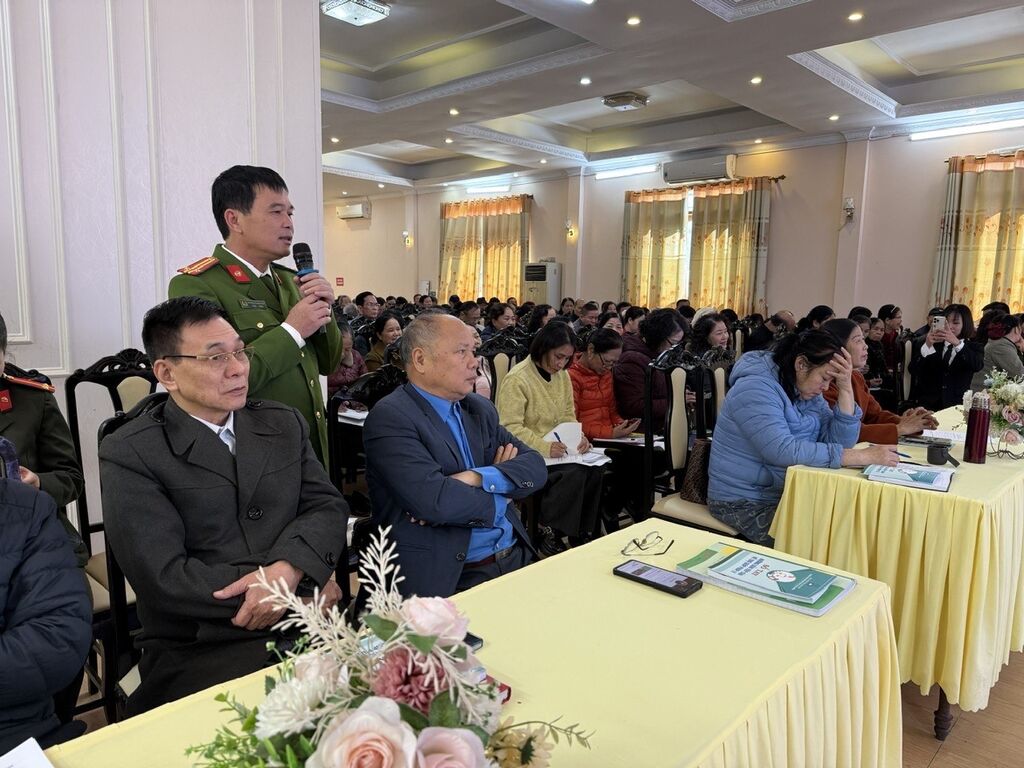 |
| A participant shares his practical experience__Photo: Department of Law Dissemination and Education and Legal Aid |
The accurate identification of these groups helps ensure the legal aid transparency and fairness while demonstrating the State’s strong commitment to guaranteeing human rights and citizens’ rights provided in the Constitution.
The speakers also noted that once citizens understand and trust the legal aid policy, they are more willing to seek official assistance when facing legal difficulties, thereby reducing risks and conflicts and better protecting their rights. This is one of the primary goals of the training, which is to empower grassroots officials and respected figures to act as effective intermediaries between laws and citizens.
The training was carried out in an open and active manner, with many real-life situations revealed by trainees during their provision of legal aid to residents, such as land disputes, domestic violence, community conflicts, and issues related to civil status, and marriage and family matters. These real stories deepened participants’ understandings of the complexity of legal issues arising in daily life and helped them identify suitable approaches to addressing them.
The training reinforced the idea that grassroots officials, mass organizations, and respected figures serve as crucial links in the community’s legal aid network. With proper knowledge and skills, they can support the State in disseminating legal policies, guiding citizens in preparing legal aid request dossiers, reducing prolonged disputes, and enhancing the rule of law at the grassroots level.- (VLLF)