 |
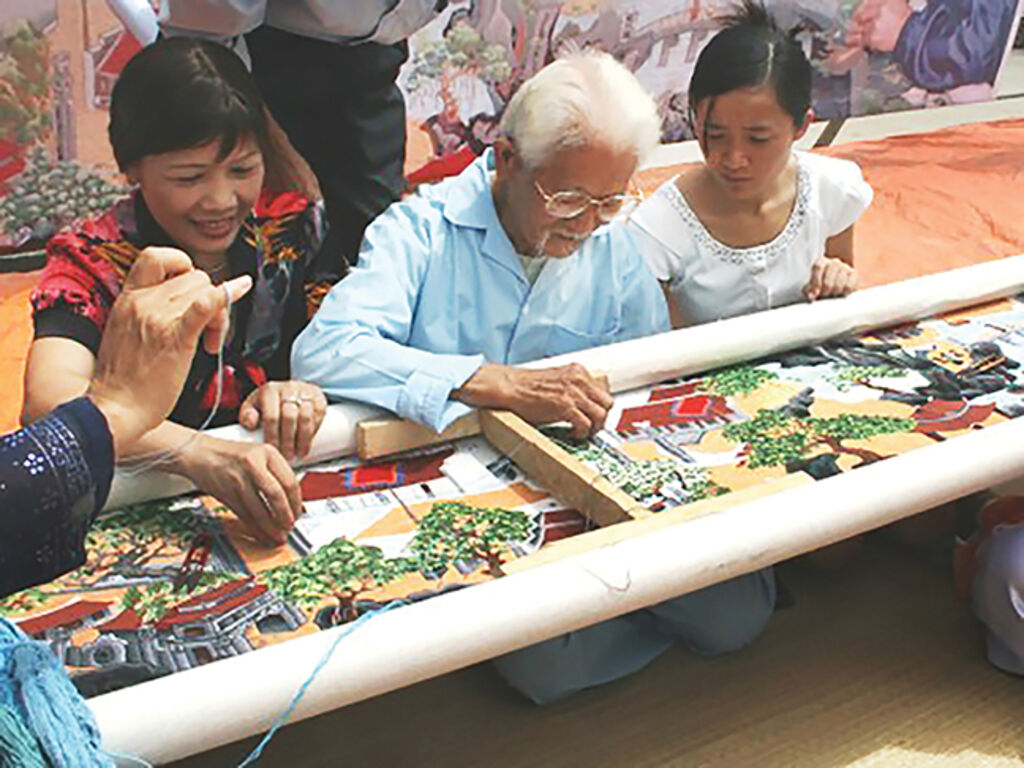
| Old and young artisans of Van Lam village__Photo: https://thethaovanhoa.vn |
Setting foot in Van Lam embroidery craft village, located in Nam Hoa Lu ward in Ninh Binh province, visitors are immediately drawn into a vibrant and lively world of colors and threads. Along every road, rows of workshops display an array of intricate hand-embroidered and handmade lace pieces, ranging from delicate handkerchiefs and elegant Vietnamese traditional long dresses (ao dai) to large needle paintings. Each piece, whether made with single-color, multi-color or drawn-thread embroidery, is a crystallization of meticulous craftsmanship, breathing life into plain fabric.
History in every thread, art in every stitch
Van Lam embroidery boasts a history spanning more than seven centuries, dating back to the Tran dynasty. Legend has it that when the imperial court moved to Ninh Binh after the Second Resistance War against the Mongol invaders in 1285, Tran Thi Dung, wife of Grand Chancellor Tran Thu Do, came to the area with other members of the Tran royal family and taught the local people the arts of silkworm rearing, silk weaving and embroidery.
In 1910, Van Lam embroidery entered a new chapter. Two villagers, Dinh Ngoc Henh and Dinh Ngoc Xoan, traveled to Hanoi to learn modern drawn-thread embroidery techniques from the French. After mastering these skills, they returned to share their knowledge with fellow villagers. This milestone sparked the strong growth and diversification of the hand-embroidered craft that continues to this day.
To show their gratitude, the villagers worship Dinh Cong Hanh and Dinh Ngoc Xoan at the communal house, alongside Le Cong Hanh, who was widely regarded as the ancestor of Vietnamese embroidery from the 17th century.
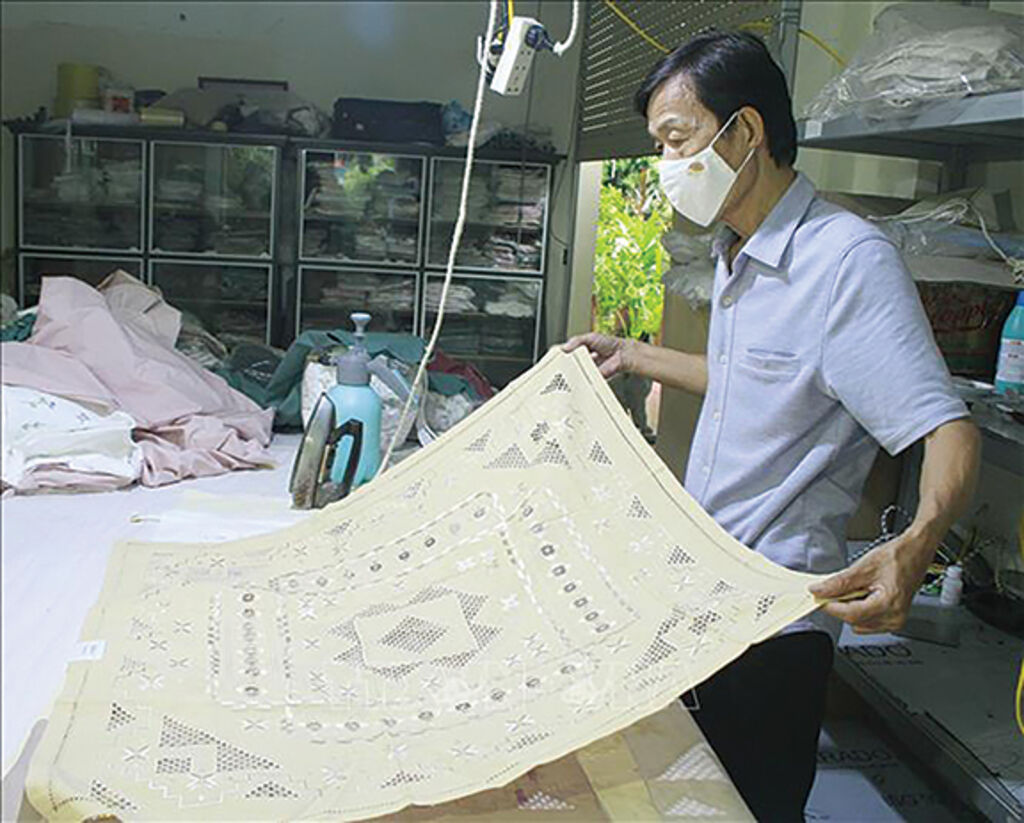 |
| A decorative drawn-thread work of Van Lam village__Photo: Thuy Dung/VNA |
Through the ups and downs of time, the people of Van Lam have remained devoted to their craft, constantly innovating designs while preserving traditional techniques. From originally creating embroidered garments for the royal court, the artisans gradually expanded their product range to include everyday items and interior decorations such as curtains, tablecloths, and pillowcases. Particularly notable are their artistic thread paintings, portraying themes like the Four Noble Trees - Pine, Chrysanthemum, Bamboo, and Apricot - and tranquil Vietnamese landscapes.
A defining hallmark of the village’s artistry is the record-breaking embroidery painting “Ancient Roots,” showcased during the 1,000th anniversary of Thang Long-Hanoi. The monumental work, over 200 meters long and nearly three meters wide, was meticulously completed by 700 skilled embroiderers. It vividly depicted the history of the ancient capital Hoa Lu through the Dinh, Early Le and Ly dynasties, culminating with King Ly Thai To’s relocation of the capital to Thang Long. The masterpiece was not only an artistic triumph but also a creative form of cultural promotion, elevating the Van Lam embroidery brand to national and international recognition.
The Van Lam embroidery craft demands dexterous hands, sharp eyes and exceptional patience. Despite being 80 years old and her eyesight dimmed by time, artisan Dinh Thi Nguyen still works nimbly on a lotus painting, a living embodiment of the craft’s enduring spirit. “A straight stitch and a subtle pattern represent the entire honor of the family,” she says with pride.
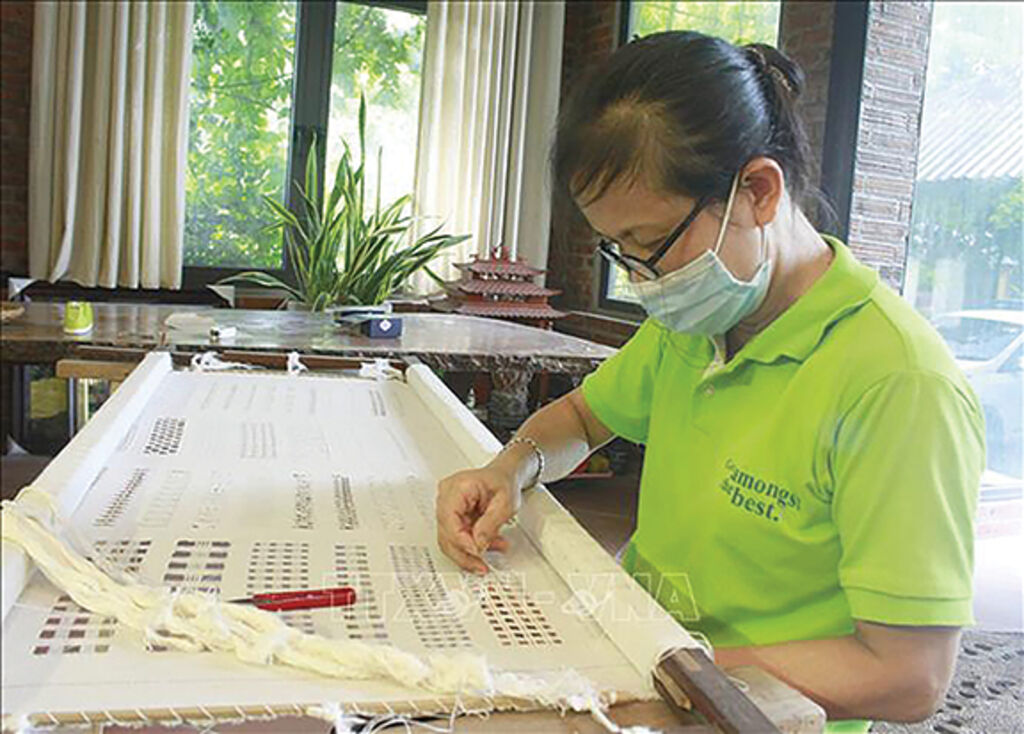 |
| Drawn-thread embroidery technique introduced in the village in the 1910s__ Photo: Thuy Dung/VNA |
The process of creating an embroidered piece involves a complex sequence of steps: sketching the design, perforating the pattern onto a mica sheet to form a template, transferring the design onto fabric, and finally embroidering along the lines with precise movements. Particularly, whitework embroidery demands the highest level of dexterity, as even the smallest flaw is immediately visible. Upon completion, each product undergoes strict inspection, careful washing and ironing, and meticulous packaging.
Heritage and the path forward
To ensure that the craft continues to flourish, Ninh Binh province is focusing on training and nurturing younger generations of artisans. Every year, local vocational centers offer free embroidery classes to pass on traditional techniques and inspire creativity. Efforts to honor master artisans also remain active. Since 2023, the Ninh Binh Department of Industry and Trade has collaborated with the Van Lam Embroidery Craft Village Management Board to organize the “Golden Hands Embroidery Contest,” celebrating outstanding local talents. The province also actively promotes the village’s products through the One Commune, One Product (OCOP) program.
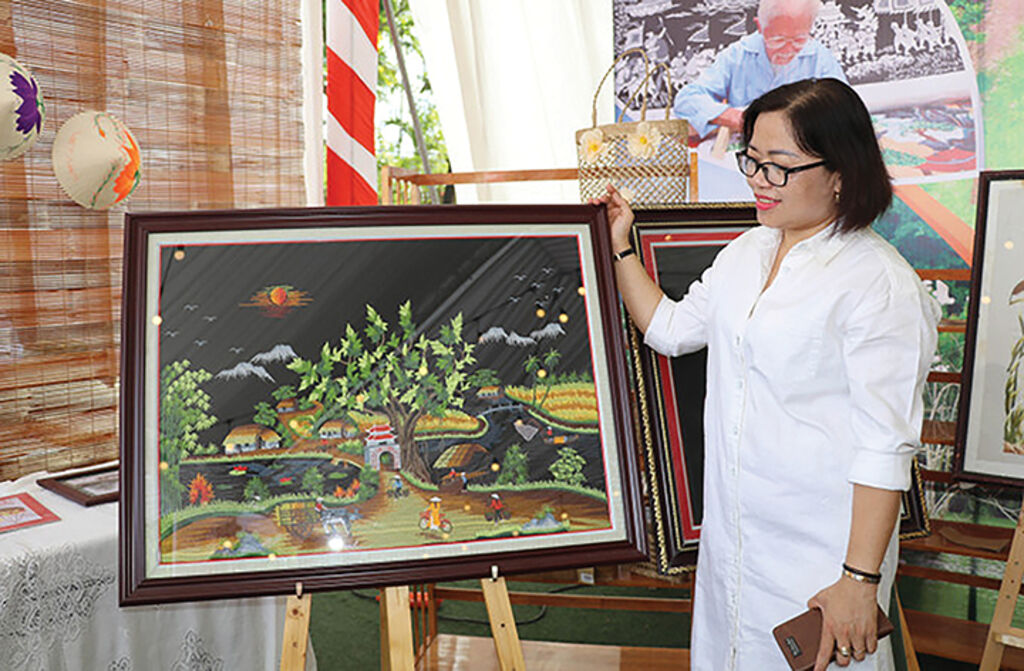 |
| A product displayed at the 2024 “Golden Hands Embroidery Contest”__Photo: Thuy Dung/VNA |
Taking advantage of its location near the renowned Tam Coc-Bich Dong scenic complex, the locality is strategically combining embroidery heritage with tourism. Plans are underway to establish a dedicated exhibition space and organize experiential tours where visitors can join artisans in creating embroidered items. This model not only creates a sustainable market for the products but also offers tourists a deeper appreciation of a time-honored Vietnamese art form.- (VLLF)