 |
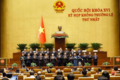
| A discussion at the forum "Vietnam-ASEAN in Global Value Chains: From Signal to Action"__Photo: VNA |
Global supply chains are shifting from a focus on cost efficiency toward greater resilience, data transparency, and responsiveness, making the ASEAN Digital Economy Framework Agreement (DEFA) an important foundation for regional digital connectivity while requiring Vietnamese businesses to strengthen their internal capabilities to participate more deeply in global value chains.
The remarks were made by experts said at a Vietnam-ASEAN dialogue forum on global value chains held in Ho Chi Minh City on August 21.
The forum, themed “From Signal to Action”, was organised by the Ho Chi Minh City Centre for the Fourth Industrial Revolution (HCMC C4IR), bringing together policymakers, experts, international organisations and businesses.
Nguyen Duc Huy, Deputy Director of HCMC C4IR, said recent geopolitical developments had pushed up input costs for manufacturers while highlighting the vulnerability of economies whose supply chains depend heavily on a limited number of key connections.
The World Economic Forum's Global Value Chain Outlook 2026 shows that most manufacturing executives worldwide are prioritising the regionalisation of supply chains based on supply readiness rather than labour costs alone, he said.
At the same time, tariff adjustments by major economies, including separate tariffs on transshipped goods, are creating additional pressure on economies that remain heavily dependent on low-value assembly operations.
According to Huy, the criteria for selecting suppliers in global value chains have changed. Businesses are no longer chosen primarily because they offer the lowest costs, but must demonstrate capabilities in data management, compliance with standards, production speed and transparency throughout their operations.
Global buyers are also increasingly seeking supply clusters rather than individual suppliers, he said. Such clusters offer the scale, reliability and mutual support needed to withstand disruptions.
Huy noted that despite Vietnam's continued export growth, domestic enterprises account for less than 30 per cent of total export value. The World Bank's Vietnam 2045 report also shows that the participation of domestic firms in global value chains has declined over many years alongside rising exports.
This indicates that the challenge lies not in export capacity, but in the position of Vietnamese enterprises within value-creating networks, he said.
Bui Thi Ninh, Deputy Director of the Vietnam Chamber of Commerce and Industry's Ho Chi Minh City branch (VCCI-HCM), said Vietnamese businesses have established leading positions in some supply chains, including seafood, wood processing, cashew and coffee processing.
However, in manufacturing and electronics, many firms remain concentrated in assembly and the supply of simple components. Data transparency, traceability and effective supply-chain management are key to helping leading businesses maintain their positions, she said.
For processing and assembly businesses, competitive prices and production capacity are no longer sufficient. Buyers increasingly require international certifications related to digital transformation, green transition and ESG practices. High-quality technical human resources are also essential for businesses seeking to move from contract manufacturing towards mastering production technologies, Ninh added.
At the ASEAN level, experts noted that despite three decades of tariff liberalisation among member states, intra-regional trade still accounts for only about one-fifth of the bloc's total trade. The main barriers are increasingly related to paperwork, standards, certifications and disconnected systems rather than tariffs.
Pradeep Singh, Vice President for Planning and Logistics, East Asia, at Schneider Electric, said differences in regulations and licensing continue to hamper the movement of electronic products across ASEAN. Better trade flows therefore require not only physical and logistics infrastructure but also interoperable digital infrastructure, integrated data systems and information sharing.
Against this backdrop, DEFA, expected to be completed in 2026, is seen as a new foundation for ASEAN's digital economic integration.
Anne-Katrin Pfister, head of Digital Trade Policy, Asia-Pacific, at the World Economic Forum, said DEFA aims to promote digital economic integration and move ASEAN towards a unified, secure, interoperable and inclusive digital market.
Under the ASEAN Digital Economy Agreement Leadership (ASEAN DEAL) project led by the WEF, DEFA could unlock market opportunities worth 1-2 trillion USD while creating fresh momentum for trade, investment, innovation and business development. It could also enable micro-, small- and medium-sized enterprises to access regional markets at lower costs and with fewer barriers.
Pfister cautioned, however, that ASEAN countries still differ significantly in digital readiness. Legal and policy frameworks remain uneven, while implementation capacity and resources at national and local levels are limited. Cybersecurity, data protection and building user trust must therefore remain priorities as the region advances digital integration.- (VNA/VLLF)