 |
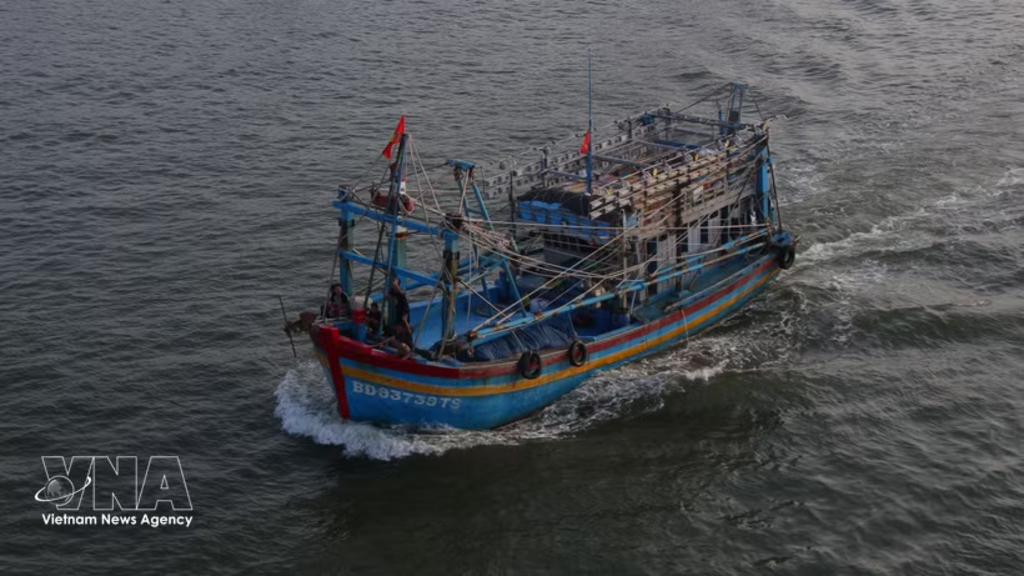
| A fishing vessel enters Song Doc port in Ca Mau province__Photo: VNA |
The southernmost province of Ca Mau is intensifying efforts to eliminate illegal, unreported and unregulated (IUU) fishing, with authorities pledging to completely end incidents involving local fishing vessels and fishermen operating illegally in foreign waters.
According to Vice Chairman of the provincial People’s Committee Le Van Su, its highest priority is to contribute to the nationwide effort to have the European Commission’s “yellow card” warning against Vietnam’s seafood removed.
To achieve this goal, local authorities have instructed all levels of government to strictly adhere to the principle of “no superficial reporting, no excuses and no avoidance of responsibility”. Every shortcoming must be fully identified, with clear remedy roadmaps tied directly to the accountability of each agency, individual and especially agency heads. One of the province’s key tasks for 2026 will be the comprehensive management of its fishing fleet. Authorities plan to review and inspect all fishing vessels in the province to verify their registration, inspection certificates, operating licences and installation of voyage monitoring systems (VMS).
Ca Mau has vowed to strictly deal with vessels that fail to meet legal operating requirements, as well as owners who deliberately fail to comply with regulations.
Meanwhile, accurate data management is central to fisheries oversight. Information relating to fishing vessels, violations and seafood traceability must meet the standards of being “accurate, complete, clean and live”, with continuous updates integrated into the national fisheries database (VNFishbase) and Vietnam electronic identification (VneID).
Particular attention will be paid to updating records of vessels whose registrations have been revoked since 2020, alongside tracing and resolving ownership transfer cases that were not officially reported.
To strengthen maritime oversight, the province has introduced round-the-clock monitoring operations and is maximising the use of vessel tracking systems to monitor boats operating near maritime boundaries or those losing signal connections.
Authorities said all violations would be investigated thoroughly and handled strictly in accordance with the law.
Ca Mau also plans to fully implement the electronic catch documentation and traceability system (eCDT) and electronic logbooks (eLogbook) to improve seafood traceability. Inspections will be strengthened throughout the entire supply chain, from fishing operations to export processing, particularly for seafood shipments destined for the European market.
Alongside stricter enforcement measures, the province is also focusing on fishermen’s livelihoods through support policies aimed at job transition and alternative income opportunities suited to local conditions.
Looking ahead to 2030, Ca Mau aims to implement fisheries conservation and resource management projects, upgrade fishing infrastructure and promote sustainable marine aquaculture development. Specialised fisheries inspection forces and management agencies will also be strengthened through additional training and improved equipment to enhance law enforcement capabilities at sea.
Ca Mau possesses more than 310km of coastline and a fishing fleet of over 5,000 vessels, making the marine economy a key pillar of local development.
The province currently has 5,158 fishing vessels, including 1,914 boats measuring 15 metres or longer, all of which have been equipped with VMS connected directly to the national fisheries management network.- (VNA/VLLF)