Nguyen Duc Hanh and Hoang Thi Hoa
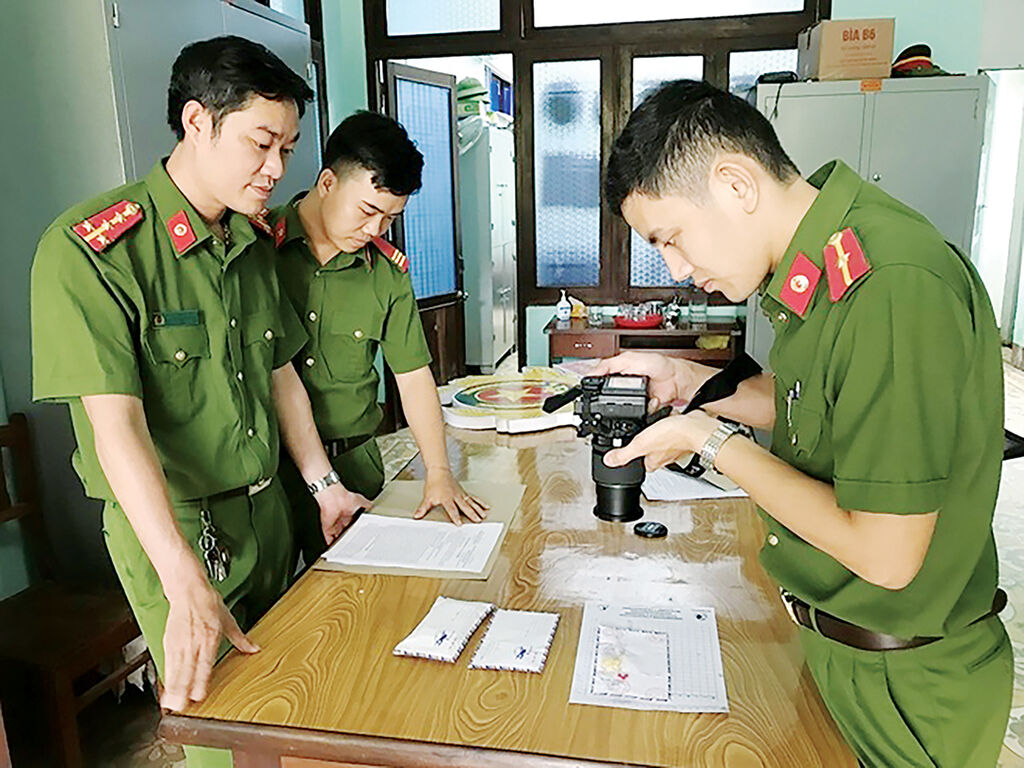 |
| Officers of the Criminalistics Division under the Department of Public Security of Quang Binh province conduct a narcotics examination__Photo https://cand.com.vn |
Judicial expert conclusions constitute one of crucial sources of evidence, helping proceedings-conducting bodies determine the factual truth of criminal cases, thereby guaranteeing the right of the accused and defendants to be presumed innocent and the right to a fair trial, and preventing unjust convictions. Based on the criminal procedure regulations and their practical application, this article outlines results and limitations in judicial expertise activities and proposes solutions to enhance the effectiveness of judicial expertise in criminal proceedings for better protecting human rights.
Role of judicial expertise activities in guaranteeing human rights
Judicial expertise plays a particularly important role in criminal proceedings, demonstrated by the fact that expert conclusions provide a source of scientific, objective and reliable evidence to help proceedings-conducting bodies carry out fact-finding activities effectively and lawfully. Based on expert conclusions, circumstances of a professional nature that are related to criminal cases and matters will be clarified to facilitate investigation, prosecution and trial activities, while guaranteeing the lawful rights and interests of individuals involved in the proceedings.
From the perspective of human rights protection, judicial expertise is especially significant in ensuring the right to a fair trial, the right to protection of life, health, honour, dignity and property, as well as other lawful rights and interests of individuals and organisations participating in proceedings. Therefore, the role of judicial expertise in guaranteeing human rights can be summarised in some aspects below.
Firstly, expert conclusions create a scientific and objective basis for investigating bodies to correctly determine the nature of alleged criminal acts. Assessing the cause of death of a victim helps establish the direct causal relationship between the act and the consequence in order to identify whether the act constitutes a crime. For instance, analysis of fingerprints and DNA and identification of the trace formation mechanism help identify the criminals, while ballistic and digital forensics assist in locating and detecting the tools, means, locations and methods of commission of the acts, as well as the damage and other legal consequences. Through this, proceedings-conducting bodies are able to apply necessary, appropriate and proportionate investigative measures, thus preventing the arbitrary application of procedural coercive measures, and ensuring the right to inviolability of the person, the right to property protection, and other lawful rights and interests of individuals. At the same time, expert conclusions are also helpful in accurately determining the extent of damage to life, health, property and the environment, and the causal relationship between acts and consequences, thereby ensuring that the determination of charges and sentencing are carried out based on objective truth and in adherence to the principle of the presumption of innocence.
Secondly, through expert conclusions, proceedings-conducting bodies have scientific grounds to clarify the age of the perpetrator or the victim in order to determine the penal liability of persons committing socially dangerous acts. Forensic psychiatry examination helps evaluate the penal liability capacity of the accused and defendants, their cognitive and behaviour control ability, as well as the cognitive and testimonial capacity of witnesses and victims. This is particularly important to secure that the right person is charged with the right crime in accordance with law, avoiding the examination of penal liability of persons who lack or have limited penal liability capacity, thereby directly protecting human rights in criminal proceedings. Incorrect expert conclusions might lead to wrongful prosecution or omission of crimes. Additionally, expert conclusions are also supportive in clarifying the causes of and conditions leading to the commission of the crimes, providing proceedings-conducting bodies with scientific bases to propose relevant agencies to apply measures to prevent and remedy violations so that people can exercise the right to live in a safe, orderly and law-ruled environment.
Thirdly, in many cases, expert conclusions play a key or even decisive role in determining whether a crime has been committed and whether the act being examined for penal liability constitutes a crime under the Penal Code.
Thus, judicial expertise is irreplaceable in criminal proceedings, for not only raising the quality and effectiveness of fact-proving activities but also serving as an important legal mechanism to guarantee human rights, particularly the right to a fair trial, the right to protection of body, honour, dignity and property during the process of settlement of criminal cases and matters in accordance with law.
Pluses and minuses in judicial expertise in criminal proceedings
Over the recent years, along with the process of judicial reform, judicial expertise activities in Vietnam have seen positive changes, gradually affirming their role as an important tool in procedural activities and guaranteeing human rights. The enactment of the 2012 Law on Judicial Expertise (as revised in 2020), along with the 2015 Criminal Procedure Code (as revised in 2021 and 2025), has created a relatively complete legal framework for soliciting, making and using expert conclusions in the course of settlement of criminal cases and matters.
Reality shows that, through judicial expertise, numerous serious and complex criminal cases have been brought to light, helping establish the factual truth, safeguarding the rights of those charged with a criminal offence to be presumed innocent and not to be unjustly convicted. According to the annual review reports of the Supreme People’s Procuracy, out of criminal cases accepted for resolution, those involving infringements upon life and health, economic crimes, corruption crimes and environmental crimes that required the solicitation of expert opinions account for a large proportion. In many instances, expert conclusions have assisted proceedings-conducting bodies in promptly altering investigative directions, discontinuing investigations, or granting penal liability exemption when the grounds for prosecution remained insufficient.
Fundamentally, judicial expertise activities have become increasingly orderly, meeting the ever-higher demands of procedural activities, particularly in fields requiring specialised judicial expertise organisations, such as forensics, forensic psychiatry and criminalistics. Expertise activities in other areas, e.g., finance, banking, construction, information and communications, land, planning and investment, though less frequent, have increased year on year in the resolution of criminal cases, especially those related to corruption and economic offences.
Whilst recording positive outcomes, the practice of judicial expertise in proceedings has also revealed certain limitations affecting the guarantee of human rights. These include delays in conducting expertise in certain fields, such as forensics, forensic psychiatry, finance and construction. This has, to some extent, led to the extension of investigation periods, or the return of case files for supplementary investigation due to the absence or late issuance of expert conclusions. In some instances, expert conclusions remain unavailable for months, or even over a year, affecting the right of persons held in custody, detainees and involved parties to have their cases resolved within a reasonable time.
The quality of judicial expertise remains unequal across fields and localities. In some cases, the files have been returned for additional investigation, or judgments have been overturned or amended due to subjective reasons. In certain instances, expert conclusions fail to cover fully the requested content or to clarify the causal relationship between acts and consequences, or contain contradictions. Not a few cases require additional expertise or re-expertise, even during the trial stage, prolonging case resolution periods and affecting the right of proceedings participants to a fair and timely trial.
Expert conclusions on the injury rate of victims are crucial in criminal cases, as the determination of the nature of injuries, the degree of health damage, or the reduction in working capacity is mandatory under Article 206 of the 2015 Penal Code (as revised in 2017 and 2025). The degree of physical injury or health damage in forensic expert conclusions on injuries constitutes one of the key sources of evidence used as a constituent element of crimes infringing upon human health, and for determining penalties for numerous offences under the Penal Code. In trial practice, some cases involving intentional infliction of injury required solicitation of multiple expert assessments, each time yielding different conclusions, thus obstacling settlement of the cases or even leading to appeals, protests, or the return of case files for additional investigation.
The current Law on Judicial Expertise and its guiding documents contain no specific provisions for determining the legal value of expert conclusions when different conclusions exist for the same content or matter. This leads to confusion in determining the bases for resolution and poses a potential risk of wrongful initiation of criminal cases, or causes difficulties for proceedings-conducting bodies in processing crime reports and information.
Furthermore, not a few expert conclusions have employed vague or general language, or have provided no final conclusions as requested by the soliciting bodies. Some have even displayed signs of responsibility shirking, particularly in financial, banking and economic fields, making it hard for proceedings-conducting bodies to settle the cases. Certain expert conclusions have exceeded the requested scope, i.e., recommending examination of penal liability for the accused or defendants at the sentencing stage, or forensic psychiatry conclusions recommending the application of extenuating circumstances for those suffering illness.
The above limitations are attributable to the following reasons.
First, the provisions on judicial expertise remain somewhat unspecific to meet the requirements of guaranteeing human rights. Current laws do neither regulate specifically the legal value of expert conclusions in case different conclusions exist for the same content or matter, nor have established a clear mechanism to protect the lawful rights of charged persons, victims and other proceedings participants in case expert conclusions are contradictory or unclear. This might increase the risk of arbitrary application, directly affecting the right to a fair trial, the right to be presumed innocent, and the right to be protected from procedural decisions lacking a scientific basis.
Second, provisions on expertise time limits and the responsibilities of expert witnesses are not closely linked to guaranteeing the right to have the cases resolved within a reasonable time. In reality, delays in issuing expert conclusions remain common, while there are no effective sanctions, leading to prolonged investigation, prosecution and trial periods. This directly infringes upon the right to personal freedom, the right not to be arbitrarily detained, and the right to a timely trial of persons held in custody and detainees, whilst also diminishing the effectiveness of protecting the lawful rights and interests of victims and other involved parties.
Third, the conditions for performing judicial expertise activities have not fully met the requirements for protecting human rights in proceedings. The shortage of human resources, physical facilities and technical equipment, especially in such key fields as forensics, forensic psychiatry, finance and construction, has reduced the quality and timeliness of expert conclusions.
Fourth, the quality and professional responsibility of some judicial expert witnesses remain low. Some expert conclusions are still incomplete or indefinitive, thereby reducing their evidential value. The use of hypothetical or suggestive terms in expert conclusions may make proceedings-conducting bodies issue decisions on unclear grounds.
Fifth, the expertise process and quality control mechanism for expert conclusions have not been systematically developed towards protecting human rights. The lack of uniformity in the expertise process and the absence of an independent inspection and supervision mechanism for expertise activities cause contradictions between different expert conclusions, necessitating supplementary expertise or re-expertise.
Solutions to improve effectiveness of judicial expertise in criminal proceedings
First and foremost, it is necessary to continue reviewing, amending and improving the criminal procedure law, and promptly and fully issue guiding documents for the 2025 Law on Judicial Expertise. The standardisation of procedures, time limits and professional standards for judicial expertise is crucial to ensure the consistency and feasibility of law, putting an end to prolongation of expertise periods, thereby guaranteeing the right of proceedings participants to have their cases resolved within a reasonable time.
Alongside statutory improvements, it is suggested to raise the awareness of proceedings-conducting bodies, expert organisations and related subjects concerning the role of judicial expertise in criminal proceedings in order to protect human rights. This will help not only reduce dependence on expert conclusions but also enhance coordination between proceedings-conducting bodies and expert organisations throughout the process of soliciting, producing and using expert conclusions.
Moreover, it is a need to provide more funding, personnel and technical equipment for judicial expertise activities. Regular training and further training of expert witnesses in expertise techniques, specialised terminology, and skills in explaining and defending expert conclusions are urgent to improve the quality of expertise and minimise errors that could lead to infringement of human rights. At the same time, the presence of expert witnesses at hearings should be increased in case expert conclusions are decisive.
Last but not least, in-depth training programmes on judicial expertise should be organised for procurators and investigators to enhance their capacity to identify, evaluate and promptly detect inadequacies in expertise activities. This is an important solution to improve the quality of supervision of judicial expertise, contributing to effectively protecting human rights and preventing miscarriages of justice from the early stages of proceedings.-
* The Vietnamese version of this article was published on Procuracy Magazine (Issue No. 04/2006).