 |
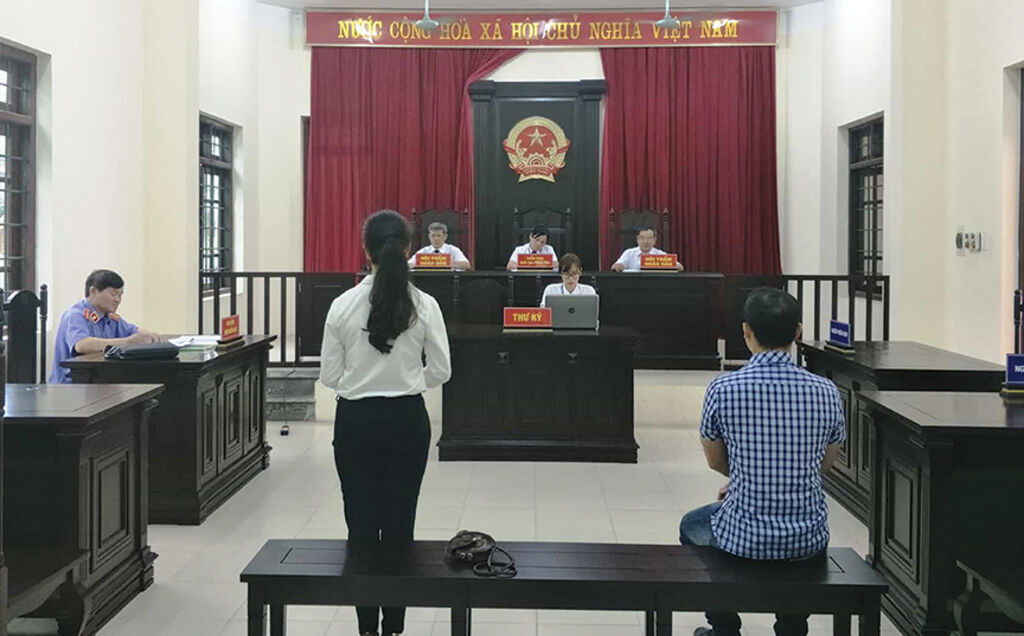
| In the absence of the agreement on which parent will directly raise a child, the court will decide on child custody based on the child’s best interests in all respects__Photo: luatvietnam.vn |
I am a foreign national married to a Vietnamese citizen. During our marriage in Vietnam, we had a child who is currently eight years old. As we are now seeking a divorce, am I entitled under Vietnam’s law to request custody of my child if I return to my home country and no longer reside in Vietnam?
Yes. Pursuant to Article 121.2 of the 2014 Law on Marriage and Family (the Law), in marriage and family relations involving Vietnamese citizens, foreigners in Vietnam enjoy the same rights and obligations as Vietnamese citizens. Accordingly, you are entitled to request custody of your child.
As your marriage is considered a marriage involving a foreign element, issues related to divorce and child custody fall within the jurisdiction of the regional court in charge of the locality where you reside.
Further, Article 81 of the Law provides that, after divorce, parents retain their rights and obligations to care for, nurture, raise, and educate their minor children. The husband and wife may reach an agreement on which parent will directly raise the child, as well as on each parent’s rights and obligations towards the child after divorce. In the absence of such agreement, the court will decide on child custody based on the child’s best interests in all respects.
Article 6.1 of Resolution 01/2024/NQ-HDTP dated May 16, 2024, of the Judicial Council of the Supreme People’s Court, further clarifies that the assessment of the “best interests of the child” is based on the following factors: (i) The conditions and capacity of each parent to care for, nurture, and educate the child, including also the ability to protect the child from abuse and exploitation; (ii) The child’s right to live with the custodial parent and to maintain a relationship with the non-custodial parent; (iii) The emotional bond between the child and each parent; (iv) The degree of care and attention shown by each parent towards the child; (v) The parent’s ability to ensure stability and minimise disruption to the child’s living and educational environment; (vi) The child’s wish to live with siblings (if any), in order to maintain emotional and psychological stability; and (vii) The child’s wish to live with either the father or the mother.
It should be noted that, where the child is seven years of age or older, as in your case, the child’s wishes must be taken into consideration by the court. Accordingly, if the court finds that you satisfy the above conditions, you may be granted the right to directly care for, nurture, and educate your child after divorce.
Under Vietnam’s law, what rights and obligations does a parent have if he/she does not directly raise the child after divorce?
According to Article 82 of the Law, a parent who does not directly raise the child has the following rights and obligations:
First, the obligation to respect the child’s right to live with the parent who directly raises him. However, the Law also provides that the custodial parent has the right to request the court to restrict the non-custodial parent’s visitation rights if that parent abuses visitation or caregiving rights in a manner that obstructs or adversely affects the child’s care, nurturing, or education.
Second, the obligation to provide child support. Article 116 of the Law stipulates that the level of child support will be agreed upon by the person having the support obligation and the supported person, based on the actual income and financial capacity of the supporting parent and the essential needs of the supported child. Where no agreement can be reached, either parent may request the court to settle the matter.
In addition, where there are plausible grounds, the level of child support may be adjusted. Any change to the support level must be agreed upon by the parents or decided by the court.
Article 7.2 of Resolution 01/2024/NQ-HDTP further explains that child support covers all expenses related to the child’s care, nurturing and education and is determined based on the parents’ agreement. In the absence of agreement, the court will determine the support level on the basis of the supporting parent’s actual income and financial capacity, as well as the essential needs of the child. However, the court-determined support level must not be lower than half of the region-based minimum monthly wage applicable at the supporting parent’s place of residence for each child.
Even where the parents agree on a child support level and request the court to recognize such agreement, the court will still have to verify and assess whether the agreed amount is consistent with the supporting parent’s income and financial capacity and whether it meets the child’s essential needs.
Finally, with regard to visitation, the Law affirms that, in order to ensure that children continue to receive care and affection from both parents after divorce, the parent who does not directly raise the child has the right and obligation to visit the child, and no one may obstruct this right. Correspondingly, the parent directly raising the child may not prevent the other parent from exercising visitation rights and fulfilling obligations to care for and educate the child.
However, where the non-custodial parent abuses visitation rights in a manner that obstructs or negatively affects the child’s care, nurturing, or education, the custodial parent has the right to request the court to restrict such visitation. Only the court is competent to decide on the restriction of visitation rights.
To avoid disruption to the child’s education, daily activities, and living environment, the parents are required to agree on the time and place of visits and to give prior notice where visits are to be conducted outside the agreed arrangements.-