Nong Duc Tai[1]
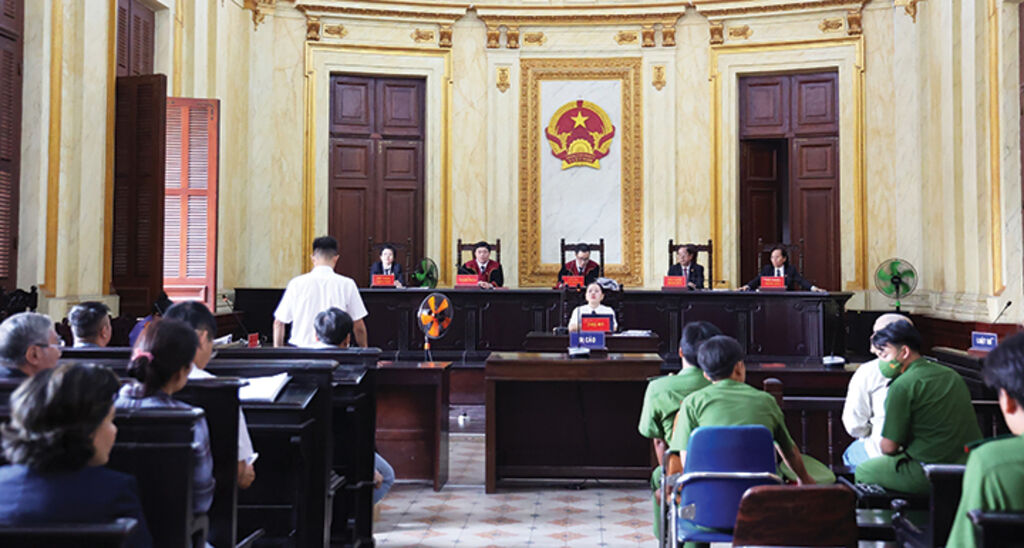 |
| A criminal trial at the Ho Chi Minh City People’s Court__Photo: Hong Dat/VNA |
Introduction
After a decade of implementation, the 2015 Penal Code has revealed certain shortcomings, most notably a punitive orientation towards economic, corruption and position-related offences that has led to the excessive “criminalisation” of economic and civil relations, fostering a climate of risk-aversion among enterprises and public officials alike. This has become an obstacle to Vietnam’s double-digit growth ambition and its broader development aspirations in the new era.
Against this backdrop, the 2026 draft (revised) Penal Code (the draft) marks a fundamental shift in legislative mindset: from a “punishment-centred” model to one “encouraging remediation of consequences and protecting those who dare to think and dare to act.” This transition constitutes a deep institutionalisation of the Party’s guidelines.
Clearly, this reform’s political foundation rests on a series of key documents. These include Politburo Resolution 49-NQ/TW adopted in 2005 on the judicial reform strategy, which calls for “reducing custodial sentences and expanding the application of fines”; Resolution 57-NQ/TW issued in 2024 on breakthroughs in science, technology, innovation and national digital transformation, which requires “a policy of criminal liability exemption for enterprises, organisations and individuals in cases of piloting new technologies or new business models”; and Resolution 68-NQ/TW released in 2025 on private sector development, stressing “resolute non-application of criminal liability” wherever alternative measures suffice. Other key documents are Conclusion 56-KL/TW of June 24, 2026, which states that criminal policy in the economic and technology domains should be revised “to reduce custodial sentences, strengthen economic sanctions and promote the investment of resources in economic development”; and Resolution 04-NQ/TW issued in April 2026 on anti-corruption work, setting a concrete requirement to “expand the scope of fines and reduce custodial sentences for economic and position-related offences.”
Legally speaking, the foundation is critically drawn from the 2013 Constitution and specialised legislations (the Criminal Procedure Code, the Law on Enterprises, the Law on Investment, the Land Law, etc.), which provides the basis for restructuring criminal policy along more humane, modern lines consistent with international practices.
The draft comprises three parts, 25 chapters and 415 articles, with 14 new articles and amendments to 301 existing articles, a change of considerable scale that marks a significant turning point for Vietnam’s criminal justice system.
Key innovations in criminal policy towards economic, corruption and position-related offences
The principle of “non-criminalisation” and priority for remedial measures
The first and most fundamental breakthrough is elevating the principle of “not criminalising economic, administrative and civil relations” to a foundational enforcement principle under Article 3. The draft adds two overarching directives, stating that where a case could plausibly be handled either through criminal or non-criminal channels, criminal liability shall resolutely not be applied, and where criminal handling is unavoidable, priority shall be given to economic remediation measures first, with the outcome of remediation serving as the basis for determining any further action.
This principle directly institutionalises the spirit of Resolution 68-NQ/TW and reflects a profound philosophical shift when criminal law is no longer the default instrument for addressing every economic violation but becomes a measure of last resort (ultima ratio), applied only when civil, administrative or economic measures prove insufficient.
The draft further extends this principle to commercial legal entities, an important innovation that ensures fairness between individuals and organisations and gives enterprises an opportunity to remediate rather than face immediate criminalisation, which could trigger chain collapses affecting large numbers of workers. The provision also promotes consistency in the understanding and application of the law across procedural bodies, addressing the previous problem of uneven enforcement over-criminalisation in some jurisdictions and under-enforcement in others.
The mechanism for temporary deferral of criminal prosecution to allow remediation
The draft’s most significant feature, and its central breakthrough, is the introduction of a mechanism for temporary deferral of criminal prosecution (Article 27a). Persons who commit offences under Chapter XVIII (offences against the management order of the economy) may have prosecution deferred to allow time for remediation, subject to three cumulative conditions:
(i) The conduct must have caused economic damage but been undertaken for socio-economic development, national defence or security, distinguishing violations arising from genuine developmental intent from deliberate profiteering;
(ii) Personal gain must be entirely absent, the decisive condition separating good-faith violations from corruption, requiring careful and objective verification to prevent corrupt conduct from being disguised as “development”; and,
(iii) The project must be ongoing and incomplete, with the harm not yet remedied due to objective causes (market volatility, disasters, epidemics, etc.), but with a feasible plan in place to produce socio-economic benefit.
The deferral period must not exceed two years, extendable once by up to one more year, a maximum of three years in total, and this period is not counted towards the statute of limitations for criminal prosecution.
The draft additionally introduces a ground for exemption from criminal liability (Article 29) where a person granted deferral has fully remedied the harm and achieved a beneficial outcome, creating a clear pathway, ranging from deferral to remediation and exemption from liability. In essence, this is not an abolition of criminal liability but a mechanism of temporary non-prosecution, as the Ministry of Public Security has explained that the elements of an offence and the offender’s liability remain present, but the State gives an opportunity to remedy the harm, cooperate with the authorities, provide compensation, and recover assets.
This mechanism is also expected to yield significant socio-economic benefits by improving asset recovery outcomes and helping “rescue” viable projects, reducing chain collapses, whereas immediate prosecution tends to stall projects and drive asset dissipation. In 2023 alone, the competent authorities recovered VND 78 trillion (approximately USD 2.98 billion) in damaged assets, illustrating the effectiveness of prioritising asset recovery. The mechanism also eases risk aversion and unlocks social resources, signalling a developmental, facilitative role of the State.
Expanded exemptions from liability and reduced custodial sentences
The draft substantially broadens the conditions for exemption from punishment (Article 59), applicable when four conditions are fully met: (i) the damage arose from a developmental purpose; (ii) no corruption was involved; (iii) the conduct produced socio-economic benefits; and (iv) the harm has been fully remedied and compensated. Even where remediation is only partial, courts may still reduce the sentence in proportion to the degree of remediation achieved, reflecting a shift in the purpose of punishment for economic offences, away from pure retribution and towards restoring the harmed interest.
In addition, the draft expands eligibility for suspended sentences from a threshold of three years’ imprisonment to five years, combined with the option of monetary payment in lieu of custody. This is particularly significant given that many economic offences carry a sentencing range of three to seven years. Previously, offenders sentenced to four or five years had no access to suspension regardless of mitigating factors or remediation efforts. The new threshold opens the possibility of community-based rehabilitation for this group of offenders.
The draft also expands the availability of non-custodial reform (community correction) to ten offences against the management order of the economy, in line with the international trend towards reducing custodial sentences for non-violent offences. At the same time, the draft allows courts to convert a non-custodial sentence into imprisonment where the offender wilfully breaches the associated obligations, a safeguard that ensures effective enforcement and prevents abuse of leniency.
The expansion of these leniency policies reflects both humaneness and practical advantages by reducing pressure on an already overburdened prison system, saving the State’s resources, and facilitating offenders’ social reintegration.
Exclusion of criminal liability for risks arising from innovation activities
The draft amends Article 25 to broaden the exclusion of criminal liability for research, trial and application of new scientific and technological advances and new business models, where the relevant procedures and standards have been properly followed and adequate preventive measures applied, and the resulting harm does not constitute a criminal offence. This provision directly institutionalises Resolution 57-NQ/TW.
In the context of the Fourth Industrial Revolution, no trial of a new technology or business model can be guaranteed to succeed on its first attempt. The provision creates a “legal safe harbour” for those who dare to think and dare to act, and break a new ground for the common good, while the application of preventive measures is designed to prevent abuse.
The draft also introduces a provision on risks arising in the performance of national defence, security, and crime prevention duties by the armed forces (Article 26a), protecting officers and personnel who must apply operational measures that inherently carry risks and unpredictable consequences.
Adjustment of fine levels and monetary thresholds
The draft proposes doubling both fine levels and monetary thresholds used to define offences, based on the statutory base salary rising from VND 1,150,000 (in 2013) to VND 2,530,000 (from July 2026).
This adjustment responds to the fact that current fine levels are disproportionately low relative to the scale of economic cases, where illicit profits may total trillions of Vietnam dong, causing criminal sanctions to be treated merely as a “cost of doing business” rather than a genuine deterrence. At the same time, raising the monetary thresholds removes from the scope of criminal law conduct whose real social danger has diminished with inflation and rising incomes, allowing such conduct to be addressed administratively or civilly instead, thereby easing pressure on the justice system and allowing it to focus on serious, large-scale economic cases.
Between 2015 and 2026, per-capita GDP rose from approximately VND 45.7 million to VND 125.5 million. Without adjustment of these thresholds, the Penal Code risks falling out of step with economic reality.
Assessment of the reform
Achievements
Firstly, the shift from “punishment” to “encouraged remediation” reflects a maturation of Vietnam’s legislative thinking, where punishment becomes an instrument for restoring harmed interests and reintegrating offenders into society, consistent with trends in modern criminal justice worldwide. This approach also better reflects the nature of economic offences, which, unlike violent crimes, typically arise from governance failures that can often be remedied through civil or economic measures if the opportunity is provided.
Secondly, protecting those who dare to think and dare to act, and shielding good-faith innovation risk from criminalisation, serve as an important psychological catalyst for unlocking social resources. This creates a “safe legal space” in which investors, enterprises, scientists and officials can experiment and innovate without fear that objectively arising harm will be criminalised a clear signal that the Party and the State support and protect those who take responsible risks for the common good.
Thirdly, asset recovery outcomes are expected to improve markedly. Immediate prosecution tends to trigger asset dissipation and concealment, making recovery difficult. Instead, the deferral mechanism creates positive pressure for offenders to cooperate, remediate and compensate. The VND 78 trillion recovered in 2023 evidences the effectiveness of prioritising recovery, with potential for even greater results under the new mechanism.
Fourthly, expanding suspended sentences and non-custodial reform eases pressure on an overcrowded prison system, saves state budget resources, and allows offenders to continue working and maintaining family and community ties, factors critical to successful reintegration.
Finally, the new provisions are expected to strengthen crime prevention in overall. Easing the climate of risk aversion and responsibility shirking encourages officials and enterprises to act and invest with greater confidence, while higher fines and stronger asset-recovery mechanisms raise the cost of offending and reinforce deterrence.
Alignment with the current context
This shift aligns with the guiding principle that “institutions must lead the way” and that institutions should become a “competitive advantage,” in the context of the 14th National Party Congress’s goal of upper-middle-income status by 2030 and high-income status by 2045. Achieving these goals requires unlocking resources and unleashing social creativity objectives that an overly punitive criminal policy would obstruct.
The transition is also consistent with international practices. Developed countries increasingly favour reduced custodial sentences and alternative measures for economic offences, and international bodies such as the United Nations, the Organisation for Economic Cooperation and Development (OECD), and the Financial Action Task Force (FATF) recommend flexible approaches that balance deterrence with human rights protection. As Vietnam works to lift the EU’s illegal, unreported and unregulated (IUU) fishing “yellow card” and exit the FATF grey list, refining criminal policy along these lines is an urgent priority. The draft was also developed through extensive practical review and broad consultation with ministries, localities and experts.
Outstanding issues
Aside from advantages, there are some drawbacks that the draft still has.
The first issue is that the line between conduct undertaken “for development purposes” and corrupt conduct can be exceedingly thin and difficult to prove in practice, risking inconsistent application or even abuse to launder corrupt conduct as legitimate development activities absent clear criteria.
Another matter is that the deferral mechanism could be exploited to delay proceedings or facilitate asset dissipation in the absence of rigorous safeguards.
Meanwhile, the draft leaves gaps in defining “socio-economic benefit” and “capacity for remediation” with sufficient precision, risking inconsistent interpretation across procedural bodies and requiring genuinely interdisciplinary expertise to assess.
Moreover, raising fine levels without a correspondingly robust enforcement mechanism risks fines going uncollected, given that assets are often dissipated or offenders lack the capacity to pay.
In addition, expanded leniency must not create inequality in enforcement, and requires clear, transparent criteria independent of financial means or personal connections.
Finally, inconsistencies remain between the Penal Code and specialised legislations (the Civil Code, the Land Law, the Law on Military Service, etc.). For example, Article 151 of the Penal Code defines a trafficking victim aged under 16 years, while the Law on Human Trafficking Prevention and Combat uses the threshold of under 18 years, a discrepancy requiring reconciliation.
Recommendations
In order to leverage the advantages of this transition, the draft should take the following recommendations into account for a better and more transparent criminal policy.
First, it is worth specifying criteria for determining whether conduct was undertaken “for development purposes”. Such criteria should include whether the decision was made through a proper collective decision-making process, supported by documented minutes, and whether there was any evidence of personal gain or group interest; whether the decision had a reasonable factual basis at the time it was made, such as impact assessment or expert advice; and whether the decision-maker had a prior record of corruption or economic offences. The Council of Justices of the Supreme People’s Court should elaborate these criteria through judicial guidance to ensure consistent application, accompanied by mechanisms for public scrutiny and institutional oversight.
Second, the draft should strengthen oversight during the deferral period. Additional safeguards should include provisional freezing of relevant assets; a travel restriction on the person granted deferral; periodical reporting on remediation progress, subject to verification by a supervising authority; and a mechanism to revoke the deferral where there is evidence of dishonesty or asset dissipation. Coordination mechanisms should also be established between judicial bodies and specialised regulatory agencies to monitor and verify remediation progress.
Third, an inter-agency mechanism should be established to assess the feasibility and effectiveness of remediation plans. An inter-agency assessment council, comprising investigative bodies, the procuracy, specialised regulatory agencies and independent experts, should evaluate the feasibility and potential socio-economic benefits of remediation plans before a deferral decision is made, thereby promoting objectivity and procedural rigor.
Fourth, the boundary between criminal fines and administrative sanctions should be clarified. Criminal fines should be calibrated as a multiple of the value of the harm caused or the illicit gain obtained (for instance, one time to three times that value), rather than set at fixed amounts, to prevent fines from falling below the value of illicit profits. Clear rules should also be established to prevent overlaps between criminal and administrative sanctions, accompanied by strengthened enforcement mechanisms, including asset seizure, account freezing, integration with tax, customs and banking data, and international cooperation on asset recovery.
Finally, law enforcement personnel should receive stronger training and capacity building. Targeted training should cover the policy rationale underlying the new framework, procedures for assessing eligibility for deferral and exemption, methods for evaluating the relevant criteria, and comparative international experience. Manuals and compilations of precedent cases should be developed to promote consistent application, alongside strengthened monitoring mechanisms to identify implementation challenges and inform further policy refinement.
Conclusion
The draft marks a historic turning point in Vietnam’s approach to criminal legislation. The shift from a philosophy of punishment to one that encourages remediation and protects those who dare to think and dare to act is not merely a technical reform but a profound shift in legal culture, consistent with the requirements of national development in the new era.
This reform rests on a coherent body of political guidance from Resolution 49-NQ/TW to Resolution 57-NQ/TW, Resolution 68-NQ/TW, and Resolution 66-NQ/TW, institutionalising the Party’s resolve to dismantle institutional bottlenecks and unlock social resources.
Through mechanisms for deferred prosecution, expanded exemptions, exclusion of liability for innovation-related risks, and strengthened economic sanctions, the draft institutionalises the Party’s guiding views comprehensively, creating an open legal pathway for the socio-economic development while preserving firm accountability for corrupt and profiteering conduct, a delicate balance between rigorous enforcement and the encouragement of innovation.
Realising this vision in practice, however, will require coordinated efforts to complete the institutional framework, build robust oversight mechanisms, and train enforcement personnel, together with continued international cooperation to draw on the experience of more advanced jurisdictions. As this remains a draft, the process of receiving and responding to input from ministries, localities and experts continues. In a spirit of openness, rigour and democratic consultation, it is hoped that the draft will soon be finalised and adopted, becoming an important legal driver for Vietnam’s development in the new era.-
[1] People’s Security Academy