 |
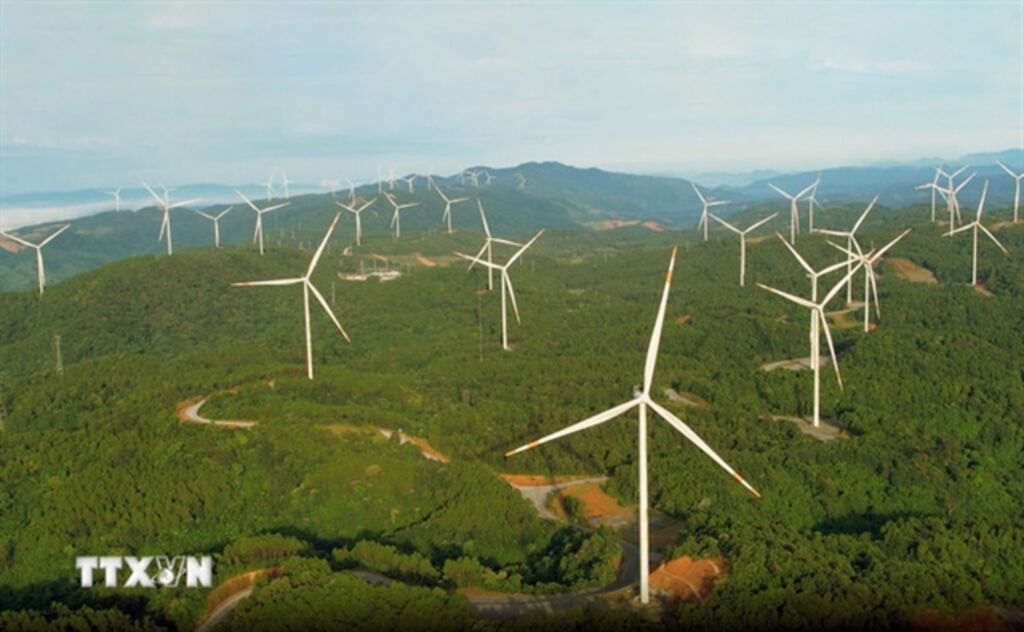
| Vietnam will create a favourable environment to attract investment and encourage the development of offshore wind power, solar power, and energy storage systems__Photo: VNA |
The Government has approved a major project to boost renewable energy as part of its commitment to the Political Declaration on establishing the Just Energy Transition Partnership (JETP Declaration).
Under Decision 458/QD-TTg, signed this week by Deputy Prime Minister Bui Thanh Son, Vietnam aims to raise the share of renewable energy to around 47 per cent of total electricity capacity by 2030. Coal-fired thermal power will be capped at 30.2 to 31.05GW, with greenhouse gas emissions from the electricity sector limited to 170 million tonnes of CO2. No new coal-fired power plants will be built, and plants over 40 years old will cease operations by 2030 if fuel conversion is not feasible.
The project also targets the establishment of two renewable energy industrial and service centres in the country by 2030. It is designed to implement the JETP Declaration alongside Resolution 70-NQ/TW and the National Power Development Plan for 2021–2030, with a vision to 2050. The initiative aims to ensure national energy security, provide sufficient electricity for socio-economic development, national defence, security and citizens’ needs, promote renewable and new energy sources, enhance energy efficiency, and achieve net-zero emissions.
To meet these goals, the project calls for completing the institutional, policy and legal frameworks by 2030 to create a favourable environment for investment and development of offshore wind, solar power and energy storage systems. National technical standards and environmental regulations for new energy technologies such as CCUS, green hydrogen and green ammonia will be studied and proposed to ensure feasibility and compliance with international standards.
Authorities will coordinate and mobilise international support to upgrade and build infrastructure for production, transmission, storage, distribution and operation of smart, advanced electricity systems capable of large-scale integration of renewable energy sources. The project will also strengthen human resources and management capacity in the energy sector to master modern technologies and advance domestic production of equipment for the renewable energy industry.
A just energy transition will link to job creation, training and retraining of workers, and social security for vulnerable groups. Measures will also encourage people and businesses to participate in programmes that use clean energy efficiently.- (VNS/VLLF)