 |
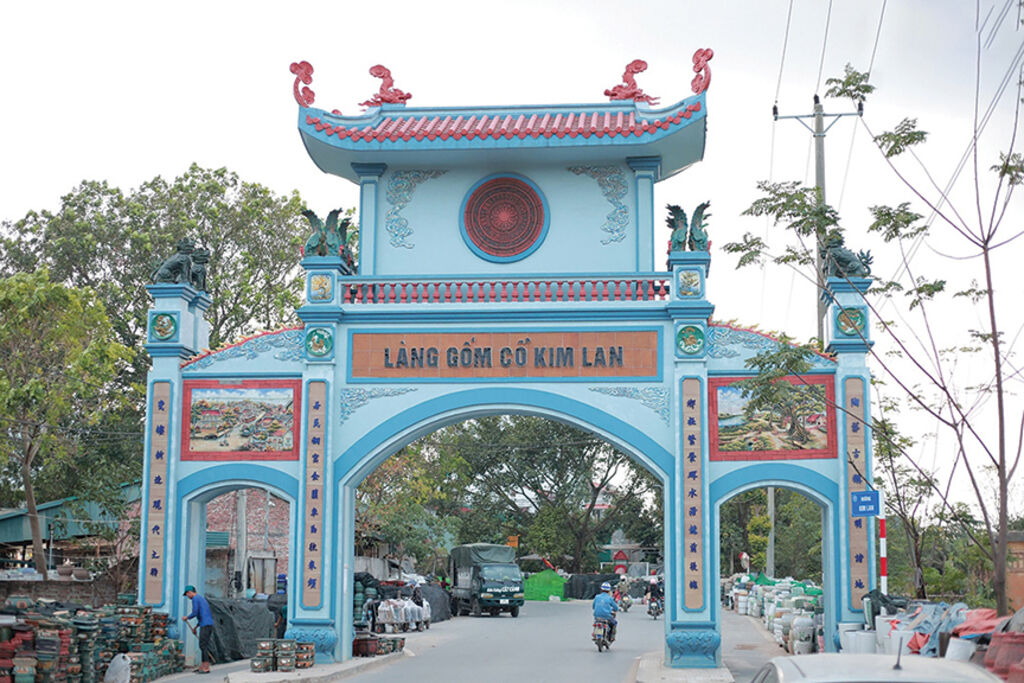
| Kim Lan ceramics village gate__Photo: https://laodong.vn |
The history of Kim Lan ceramics is not only preserved through oral accounts and family genealogies, but also authenticated by rich layers of archaeological artefacts. Excavations conducted in 2001, 2003 and 2009 by Vietnamese and Japanese scholars at the Ham Rong site, located along the edge of the Red River, uncovered tens of thousands of ceramic fragments, moulds and traces of ancient kilns dating from the 8th century to the 18th century.
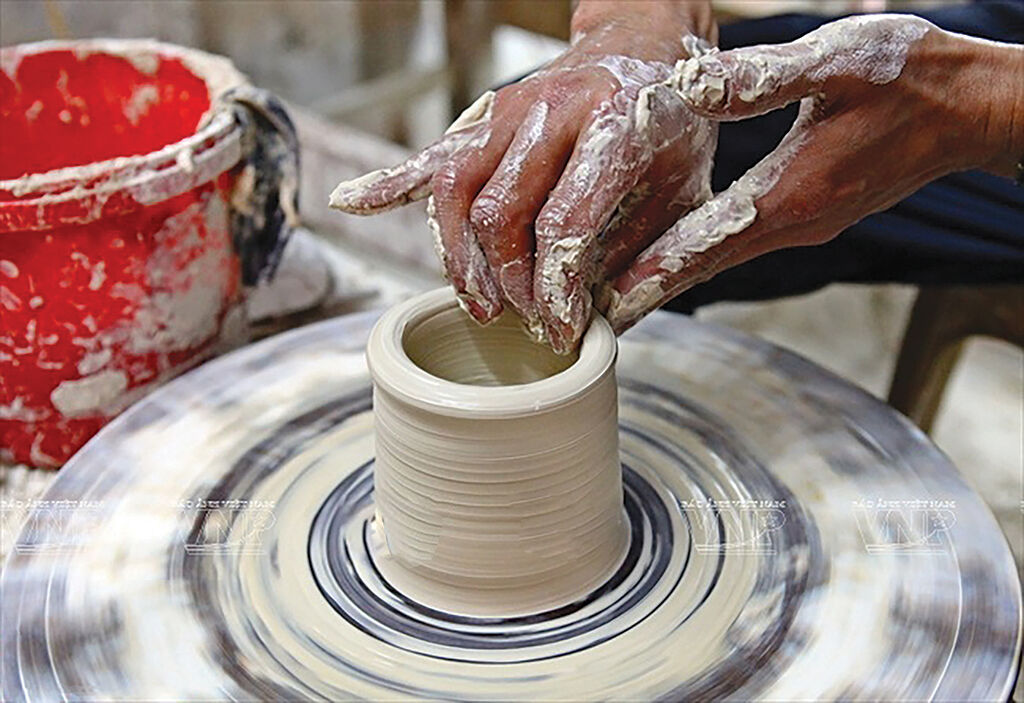 |
| Shaping a product by hand__Photo: https://vietnam.vnanet.vn |
From these findings, scholars have confirmed that Kim Lan ceramics emerged as early as the 8th century and flourished through many dynasties, particularly from the 11th to 14th centuries under the Ly and Tran dynasties. While Bat Trang was famed for its fine art ceramics, Kim Lan was regarded as the homeland of household pottery. Kim Lan products were not elaborate in detail but were characterised by simplicity, harmony and practicality.
However, from the 18th century onwards, the pottery craft in Kim Lan gradually declined. The name Kim Lan ceramics faded, and many came to assume that Hanoi was home only to Bat Trang pottery.
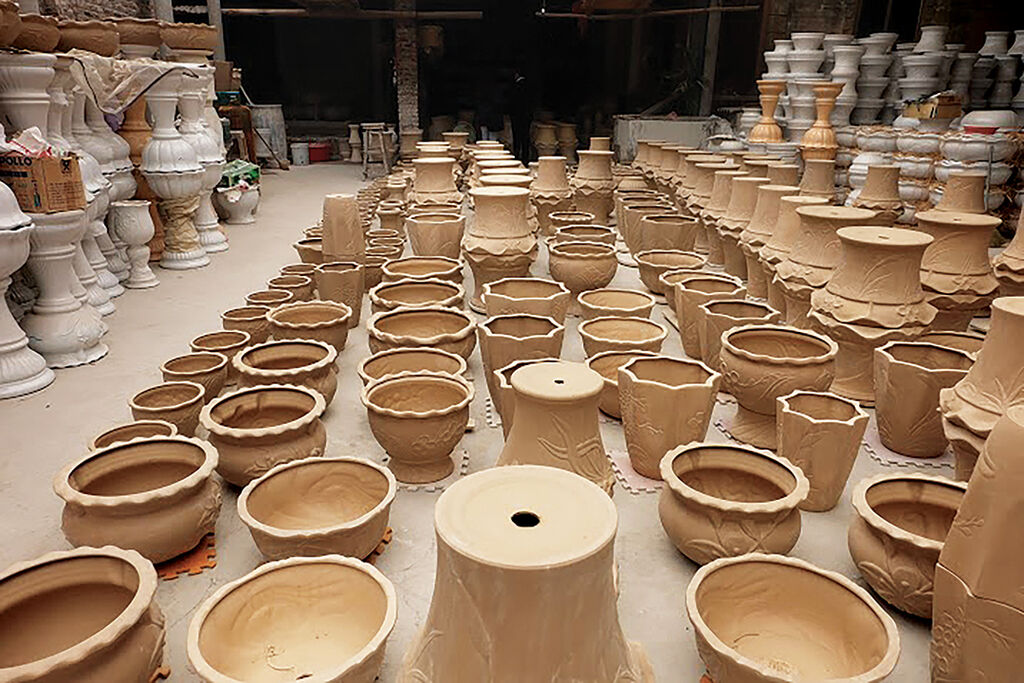 |
| Plant pots arranged and dried prior to being placed in the kiln for firing__Photo Linh Chi VNA |
The revival of Kim Lan began in the 1970s, when local artisans set out to restore the village’s heritage. By the 1990s, this resurgence had gained strong momentum, with approximately 750 kilns in operation. That enduring spirit was officially recognised on January 23, 2025, when Kim Lan ceramics was inscribed as a National Intangible Cultural Heritage. At the heart of this vitality are the village’s artisans - “living human treasures” who bridge the past and the present. In January this year, 21 artisans were honoured with prestigious titles such as Meritorious Artisan and People’s Artisan. These honours are not merely personal milestones but profound affirmations of a craft community that has endured for centuries.
The intersection of tradition and modern life
In Kim Lan village today, pottery represents a convergence of tradition and modernity. More than 350 kilns are in operation, with each workshop producing hundreds of ceramic pots and vases daily. Products made from pre-cast moulds with printed patterns have become commercially popular and are exported to international markets.
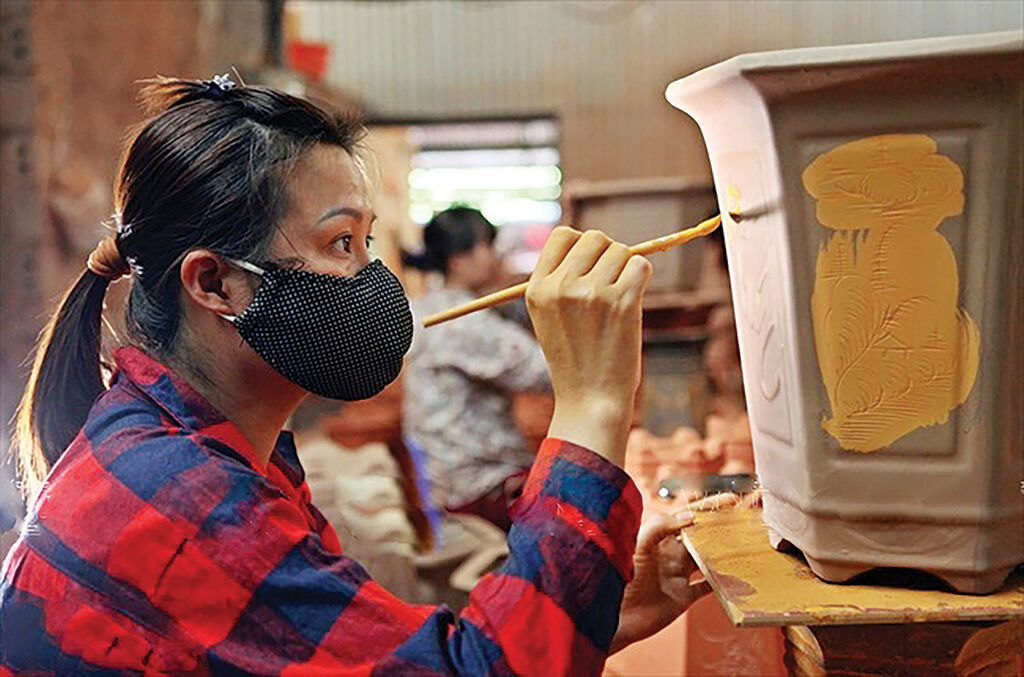 |
| Decorating ornamental pots with intricate patterns__Photo: https://vietnam.vnanet.vn |
Nevertheless, many families and young artisans remain devoted to handmade ceramics. Among them is Pham Van Nguyen, who specialises in hand-thrown pottery and focuses on unique, high-quality pieces. From a rough lump of clay, shaped by skilled hands, emerge products that are distinctive and refined. “A potter must truly love the craft, be passionate about creativity and possess perseverance and patience to create hand-thrown pieces that satisfy both the maker and the viewer,” Nguyen shared.
Kim Lan is now not only a traditional craft village but also an increasingly attractive tourist destination. Visitors can explore valuable archaeological relics at the Ham Rong site and visit cultural landmarks such as the Kim Lan Ceramics Museum - Vietnam’s first community-run archaeological museum managed by local authorities and residents - as well as the Product Design, Introduction and Promotion Centre associated with the craft village. Together, these sites form a distinctive cultural tourism ecosystem. Beyond observation and hands-on experiences, visitors can also immerse themselves in the tranquil atmosphere of Kim Lan’s ancient pagodas, communal houses and shrines, set peacefully along the Red River.
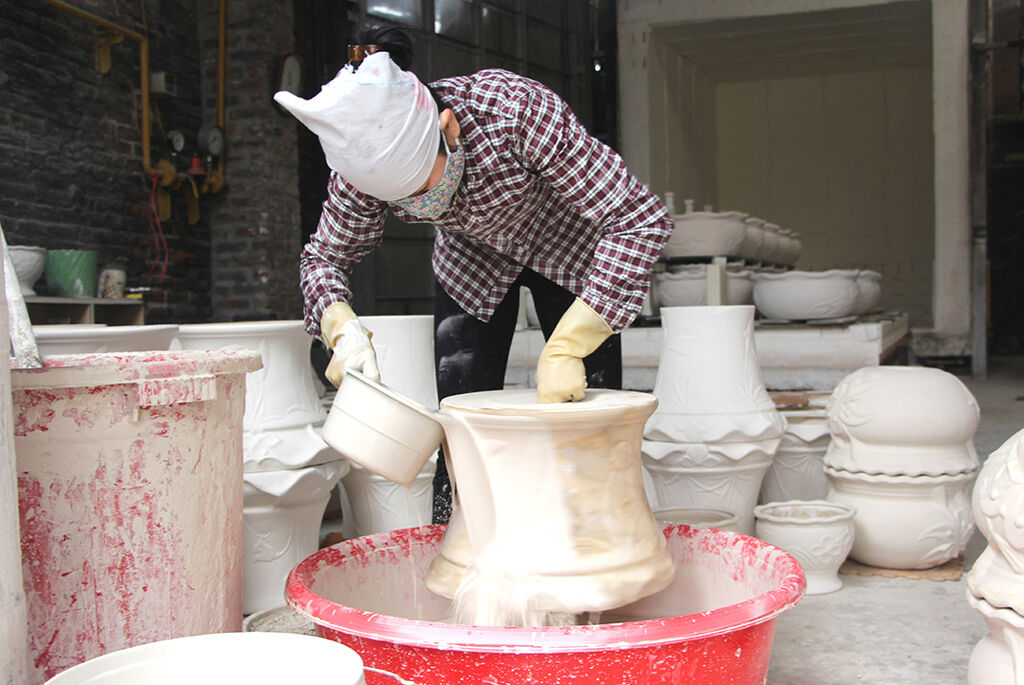 |
| Plant pots arranged and dried prior to being placed in the kiln for firing__Photo Linh Chi/VNA |
Today, as heritage preservation intertwines with innovation and tourism development, Kim Lan stands as both a guardian of centuries-old craftsmanship and a dynamic cultural destination. Its story continues to unfold - carried forward by generations of artisans and flowing, much like the Red River beside it, through time.- (VLLF)