 |
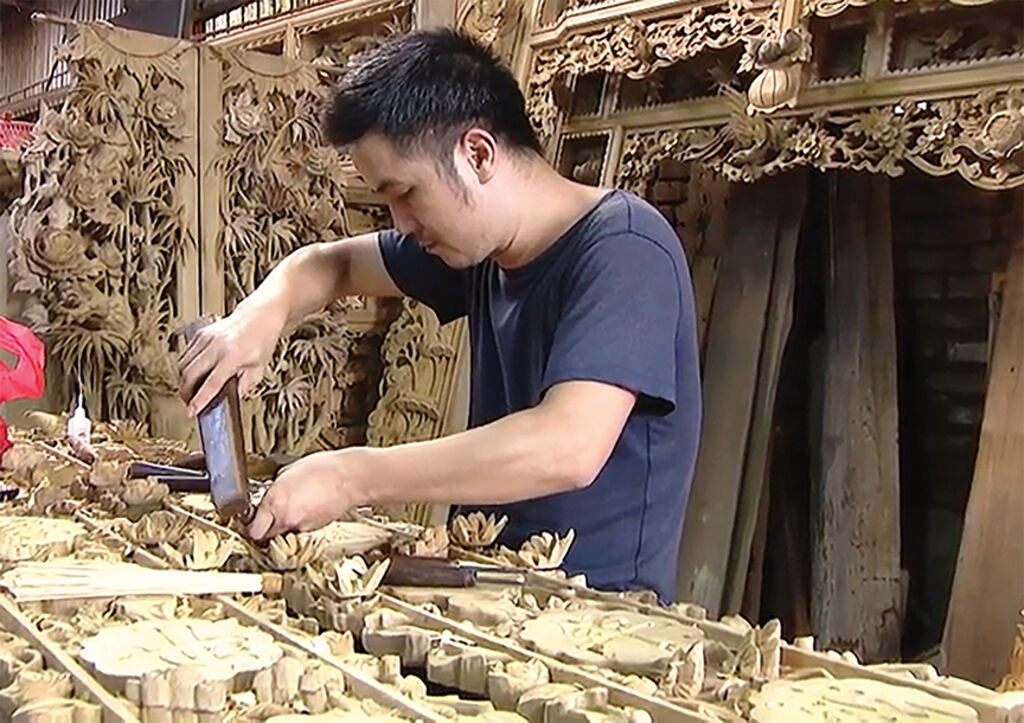
| Carving patterns on the wood surface__Photo: Photo: thuonghieuvaphapluat.vn |
Located about 20 kilometres from the centre of the capital, Son Dong sculpting village, in the commune of the same name in Hanoi, is a distinctive destination for visitors interested in traditional crafts. The village is best known for carving worship statues and producing ritual furnishings used in temples, pagodas and family altars. Walking through its lanes, it is easy to see why: figures of the Buddha and Bodhisattvas appear alongside saints, guardian figures and Arhats, while wooden components for worship furniture like hoanh phi and cau doi (horizontal boards and paired panels), an gian (altars) and cua vong (carved valances) wait to be assembled and finished.
The craft history of Son Dong is commonly traced back more than a thousand years. According to an ancient book titled Ngoc phan than tich, compiled in 1572 by scholar Nguyen Binh, during the reign of King Le Dai Hanh, General Dao Truc visited the village in 976 and is said to have passed on skills in statue carving and gold-inlaid lacquerware. To commemorate his contribution, villagers later built a temple in his honour, recognising him as the founder of the local craft.
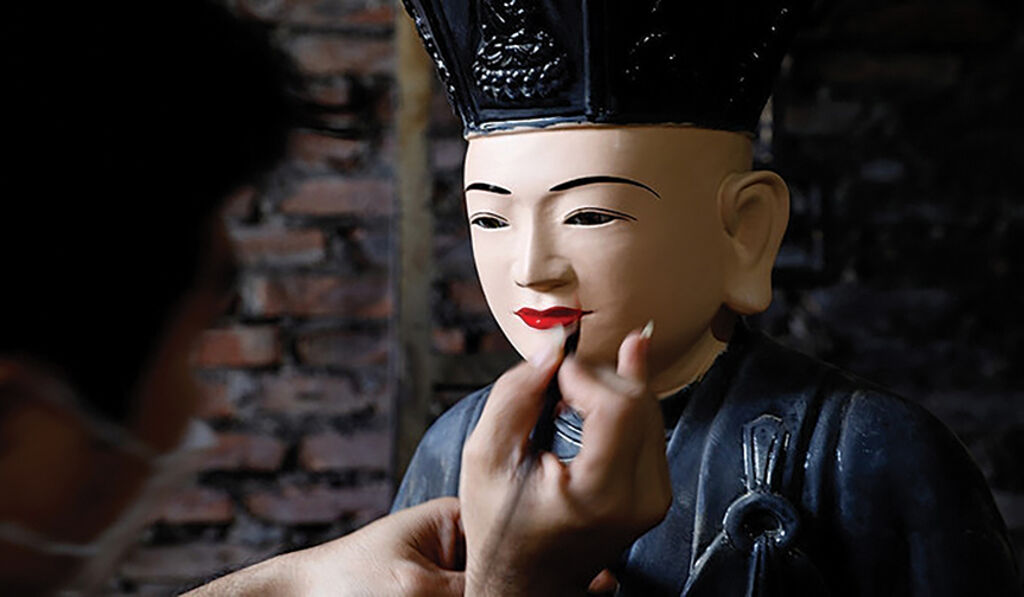 |
| Craftsman puts final touches on a statue__Photo: dantocmiennui.baotintuc.vn |
From its early beginnings, the craft of Son Dong has been shaped not only by history but also by carefully preserved techniques passed down through generations. Artisans work through a series of well-defined stages, from selecting suitable timber to carving, finishing and lacquering, with each step requiring patience, experience and close attention to detail.
In Son Dong, jackfruit wood has long been regarded as the most suitable material for carving worship statues. Artisans value it for its fine grain, moderate softness and natural stability, qualities that allow forms to be shaped with precision while reducing the risk of cracking over time. The wood is traditionally selected from healthy, living trees, a practice linked not only to technical considerations but also to long-held spiritual beliefs.
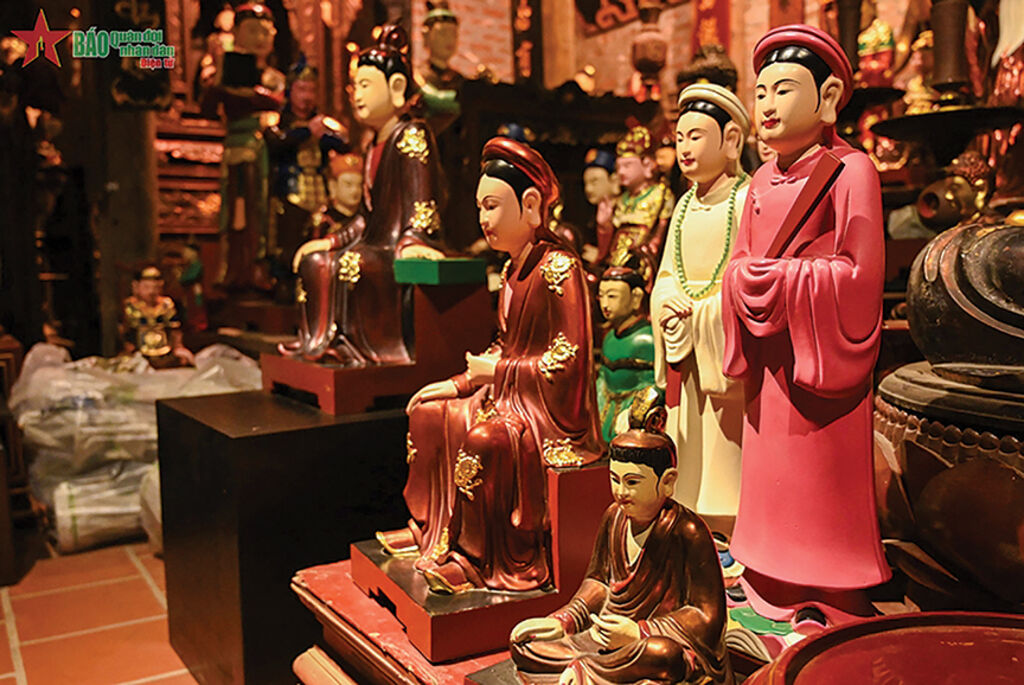 |
| Worshiping statues crafted by Son Dong villagers__Photo: www.qdnd.vn |
From there, the work moves through familiar stages: rough shaping, defining the main structure, and refining details that establish identity and expression. One feature that has contributed to Son Dong’s reputation is the ability of its artisans to carve statues without a physical model. Long-established proportion rules guide the process, helping figures remain balanced whether seated or standing. Facial expression is given particular care: a Buddha statue is shaped to convey calm and compassion, while a saint is portrayed with clarity and presence.
Finishing can take as much time as carving. Son Dong is closely associated with traditional lacquerwork, which involves repeated layering and polishing to create surfaces of depth and durability. Gold or silver leaf is applied only after the surface has been carefully prepared through many cycles of coating and smoothing. The result is not simply decorative but also protective, allowing finished objects to withstand time and continued use.
Son Dong’s products can be found at many well-known cultural and religious sites, including the One Pillar Pagoda, Ngoc Son Temple, Bai Dinh Pagoda and Phat Tich Pagoda. Beyond the domestic setting, some works have also been introduced to audiences abroad. In 2007, the Vietnam Book of Records officially recognised Son Dong as the country’s largest craft village specialising in Buddhist statue carving and ritual objects.
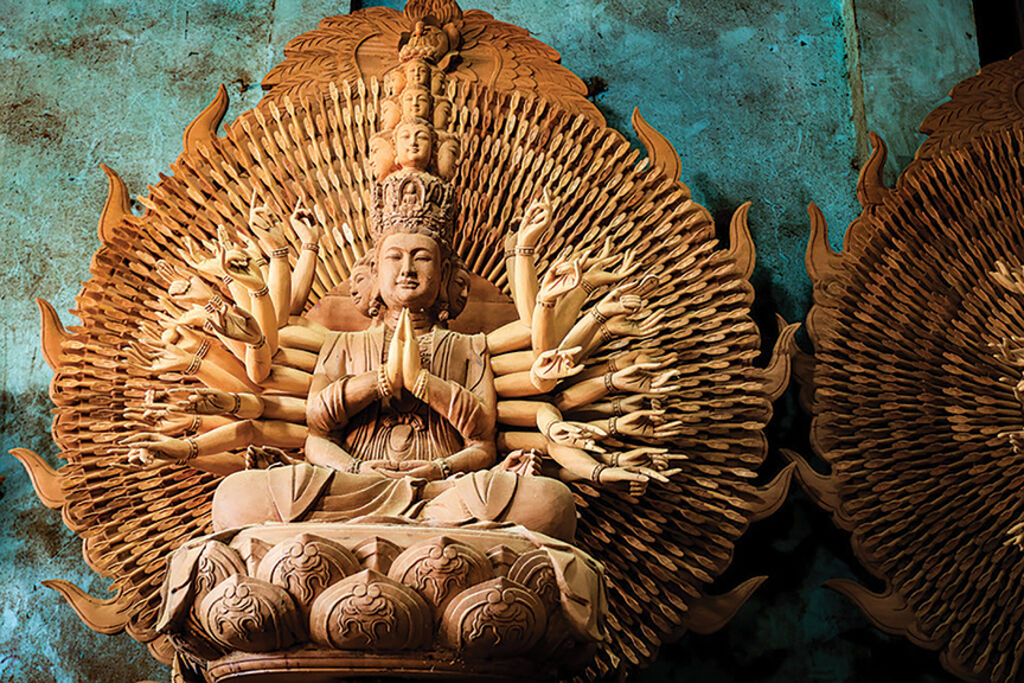 |
| Thousand-armed thousand-eyed Avalokitesvara Bodhisattva statue__Photo: Hoai Nam/Vietnam+ |
Despite the challenges facing many traditional craft villages, Son Dong has continued to sustain its workforce across generations. Younger artisans are gradually taking on the craft, learning established techniques while adapting them to contemporary needs. One example is Nguyen Viet Nhat, born in the 1990s, who has experimented with antique-style crackle lacquer in response to the technical requirements of heritage restoration projects.
Alongside these individual efforts, the village is also pursuing longer-term development goals. With support from local authorities and the commitment of its artisans, Son Dong is preparing to seek recognition as a member of the World Crafts Council’s global network of creative craft cities. Those involved note that each product is regarded not only as a crafted object but also as a cultural expression, and that the craft will continue to develop through careful workmanship, gradual innovation and the steady transmission of skills across generations.- (VLLF)