 |
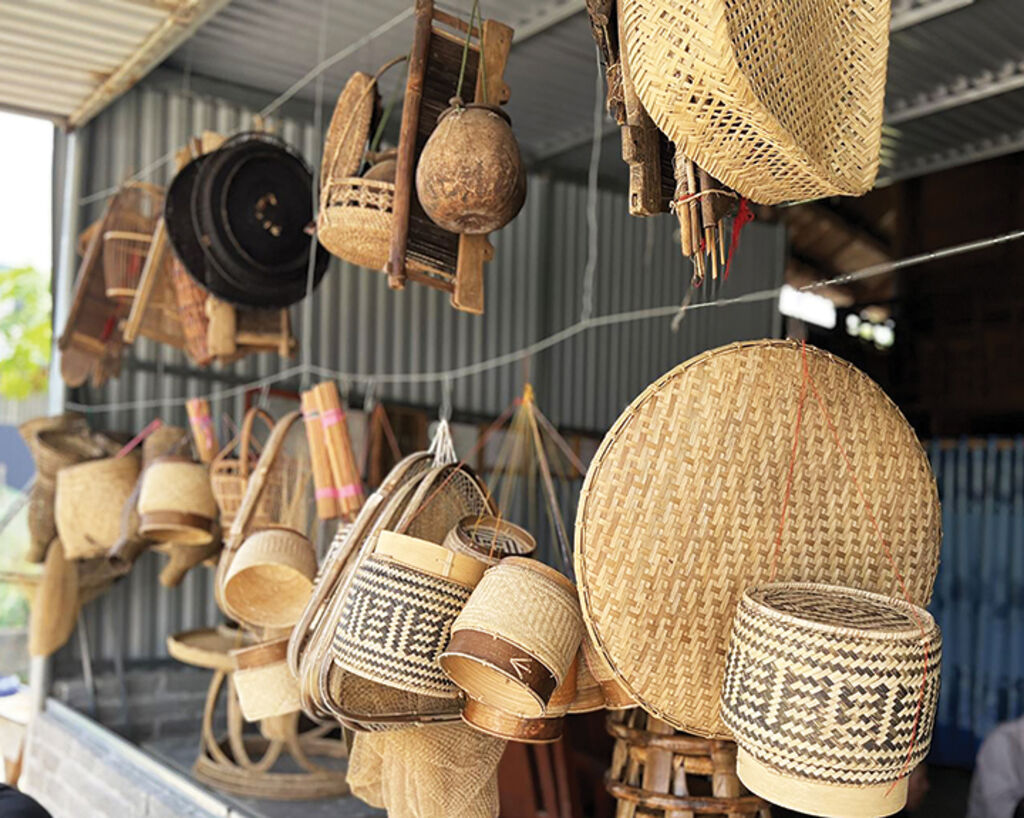
| Bamboo and rattan products of the Thai__Photo: http://vanhoanghethuat.vn |
Officially recognized as a national intangible cultural heritage in June 2025, the rattan and bamboo weaving craft of the Thai ethnic community in Dien Bien province continues to thrive as both a cultural hallmark and an enduring livelihood. Rooted in the everyday needs of mountain life, this traditional craft has evolved over generations, carrying with it the ingenuity, identity and artistic spirit of the Thai people.
The rattan and bamboo weaving craft of the Thai in the province of Dien Bien is believed to have emerged from practical necessities. For centuries, the Thai relied on sturdy bamboo and supple rattan to create essential items for daily living, agricultural production and rituals. At present, the craft is preserved mainly in Na Tau, Muong Ang, Na Sang and Muong Cha communes, where households continue to maintain weaving traditions and pass them on to younger generations. Trays, stools, sieves, baskets and miniature figurines were all shaped by the skilled hands of local artisans using time-honored techniques handed down within families.
In earlier times, households wove these items mainly for their own use, bringing any surplus to village markets to barter for daily goods or earn additional income. Over the years, however, Thai weavers have refined their craftsmanship, developing more intricate patterns, diverse designs and greater technical precision. Today, their woven trays, baskets, stools and containers are recognized as distinctive handwoven products of Vietnam’s northwestern region.
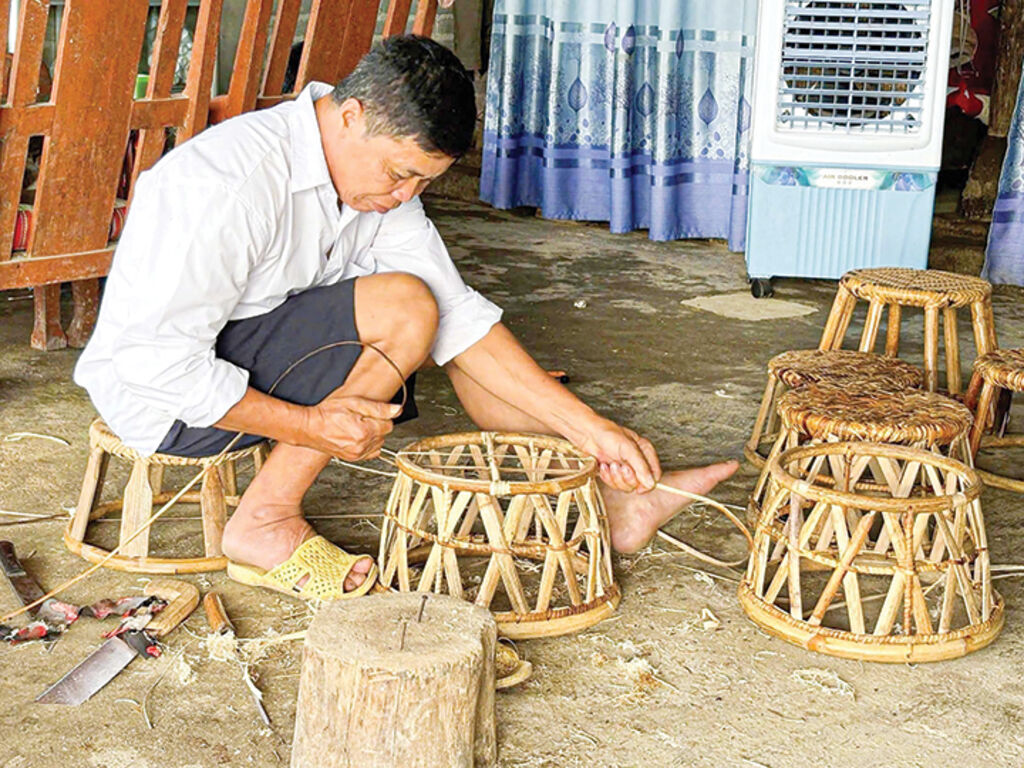 |
| Artisan Quang Van Phich weaves rattan stools__Photo: VNA |
The making of rattan and bamboo items requires meticulous work at every stage. According to seasoned weaver Quang Van Phich, who has dedicated more than five decades to the craft, the quality of raw materials is the decisive factor behind a product’s durability and beauty. Mature bamboo and aged rattan vines are preferred for their sturdiness and flexibility, while straight, long stalks are chosen to avoid making joints during weaving.
After harvesting, bamboo must be soaked for one to two months to prevent termite infestation. It is then dried and split into smooth, glossy, pliable slivers in varying lengths and sizes.
The weaving process begins with arranging bamboo splints longitudinally to form the basic frame, followed by under-and-over or cross-weave techniques depending on the design.
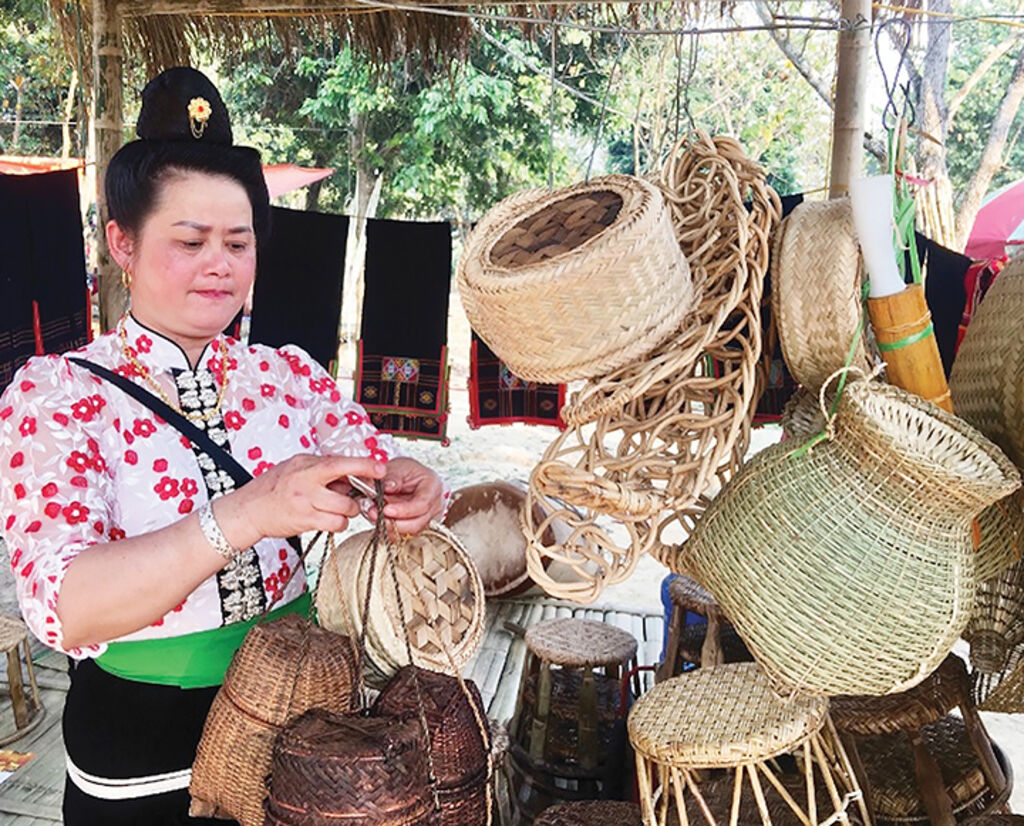 |
| Bamboo and rattan products of the Thai__Photo: https://vnbusiness.vn |
A simple rattan stool may take two to five hours to complete, depending on its size and level of intricacy. The process includes shaping the circular frame, creating rims, and finishing the seat weave, a step requiring exceptional precision to ensure a firm, even surface. Though the motions appear simple, artisans say the greatest challenge lies in maintaining patience and concentration. “Only a calm, steady mind can create tight, durable interlocks,” Phich shared.
Toward sustainable development through community tourism
The craft’s national recognition has opened new opportunities for Dien Bien province to connect cultural preservation with community-based tourism. Local authorities are encouraging artisans to experiment with designs that blend traditional patterns with modern aesthetics, helping transform heritage craft into distinctive souvenirs for visitors.
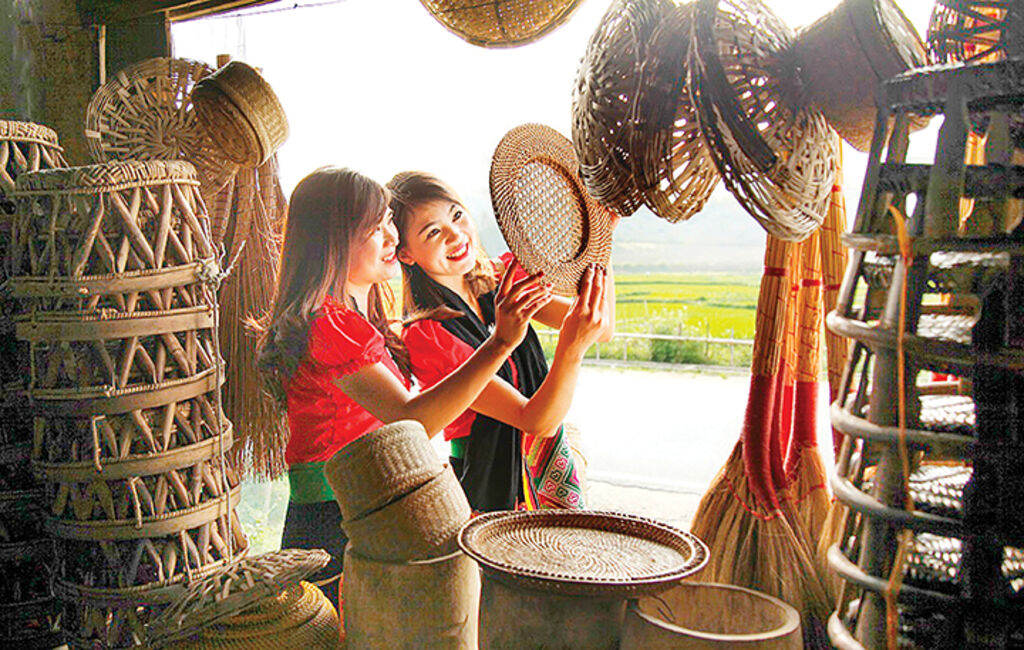 |
| The rattan and bamboo weaving craft of the Thai ethnic community in Dien Bien province was recognized as a national intangible cultural heritage in June 2025__Photo: https://dulichtaybac.vn |
According to Tran Hai Ha, Deputy Director of the Dien Bien Department of Culture, Sports and Tourism, the province will continue supporting communities and businesses in safeguarding the craft and diversifying tourism products. Efforts include raising awareness of the craft’s cultural value, promoting sustainable tourism development, and fostering a civilized, welcoming tourism environment.
At the commune level, Tran Quang Trung, Chairman of the Na Tau Commune People’s Committee, emphasized that bamboo and rattan weaving remains both a source of income and a vital expression of Thai cultural identity. The commune plans to open training classes, support product promotion, and strengthen links between weaving activities and community tourism.- (VLLF)