 |
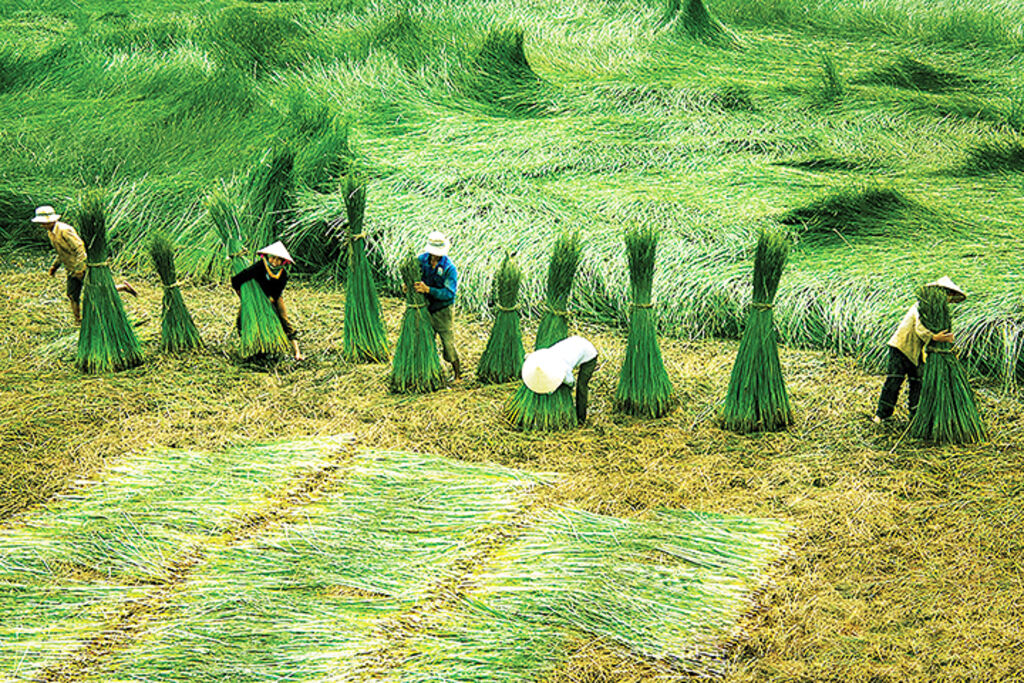
| A sedge field in coastal alluvial land of Kim Son area__Photo: https://baoninhbinh.org.vn |
According to local elders, the history of Kim Son sedge-weaving began nearly 200 years ago in 1829, when Nguyen Cong Tru (1778–1858), a prominent mandarin under the reign of King Minh Mang, led a massive land-reclamation campaign in Ninh Binh province. Vast stretches of wild coastal marshland between the Can and Day rivers were transformed into fertile ground, forming what is now the Kim Son area. Recognising the potential of the saline alluvial soil, Nguyen Cong Tru introduced sedge cultivation as a strategic livelihood for newly settled communities. Following their ancestors’ footsteps, generations of Kim Son residents gradually pushed the coastline outward, creating hundreds of hectares of rich alluvial land dedicated to growing high-quality carex.
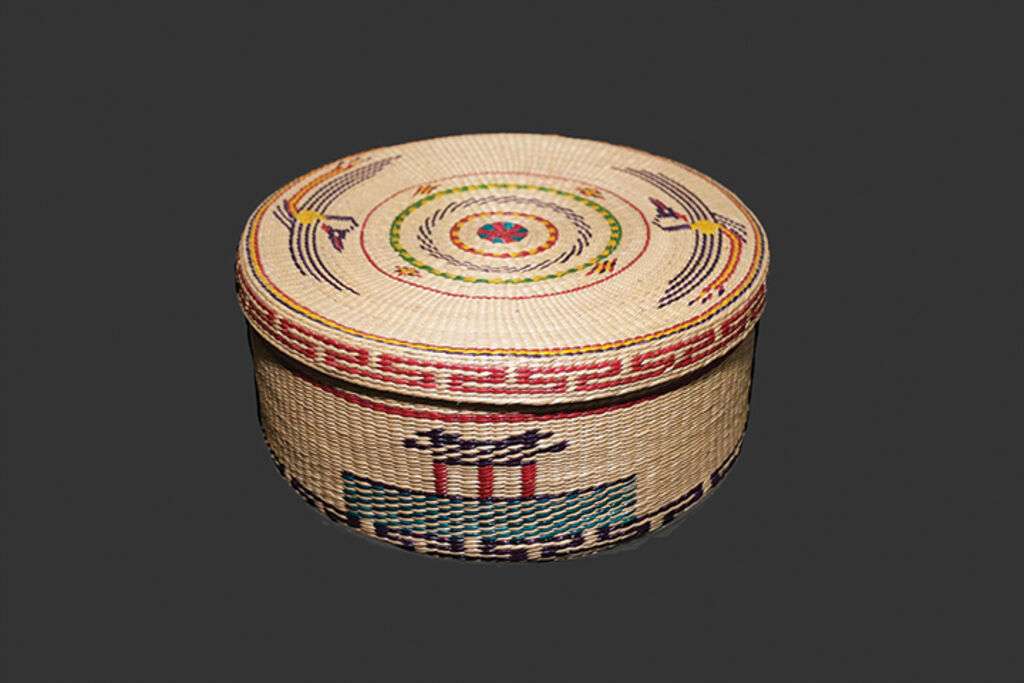 |
| Crane-patterned sedge box woven by Meritorious Artisan Nguyen Ngoc Thach__Photo: https://baotangtinh.ninhbinh.gov.vn |
In its early days, Kim Son sedge weaving focused on durable household items such as mats and baskets. Over time, the craft has evolved into a refined art form. Today, artisans produce a wide range of contemporary items, ranging from lanterns and decorative trays to fashion handbags, hats and even children’s toys. Whether functional or decorative, each product retains the durability and natural beauty of sedge. Kim Son sedge-weaving craft was officially listed as a National Intangible Cultural Heritage in 2024, an award for artisans’ sustained efforts to preserve and innovate their craft.
From raw sedge to refined craft
The journey of a Kim Son sedge product begins with meticulous material preparation. Fresh sedge stems are sorted by length, then split and dried. According to techniques passed down through generations, the stems must be dried under “three suns” and exposed to dew for about a week until they turn a creamy white from root to tip, becoming both supple and resilient. The sedge is then soaked in water for one to two days to prevent mould before being carefully selected for specific uses. Thick, long strands are reserved for mats, while finer, smoother fibres are used for baskets, vases and decorative items – choices that ultimately determine both durability and aesthetic quality.
 |
| Sedge mats__Photo: https://vovworld.vn |
The soul of the craft lies in dyeing. Rather than colouring finished products, Kim Son artisans weave together pre-dyed fibres, making colour treatment a decisive skill. Master weavers must understand how different fibres absorb pigment, and closely monitor weather and temperature during each batch.
Offering a glimpse into these closely guarded techniques, Meritorious Artisan Nguyen Ngoc Thach, a third-generation weaver from Phat Diem commune, shares his family’s traditional method for fixing colours. Rusted iron tools are cleaned and boiled to create a solution, into which natural dyes are added before sedge fibres are cooked. Iron oxide helps lock in pigment, giving his family’s products a vibrancy that stands out from the rest.
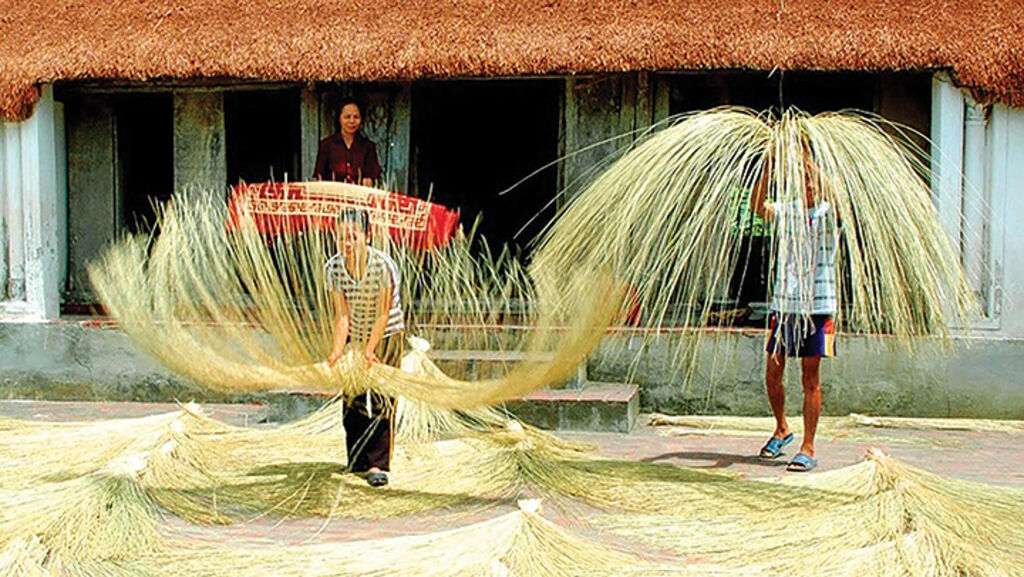 |
| Sedge stems are sun-dried before being woven__Photo: https://baoninhbinh.org.vn |
Beyond technique, craftsmanship depends on patience and experience. Having learned to weave at the age of six and with five decades in the trade, Thach notes that every detail matters, from placing the smoother side of the sedge inward to shaving the thicker root end so that fibres remain uniform. Techniques such as hidden joins ensure that connections are both strong and invisible.
The richness of the craft is further expressed through a diverse vocabulary of weaving styles. Artisans employ wavy, rice-grain, herringbone and eyelet patterns to create bags, boxes and decorative rugs. While plain weaving offers solidity and smoothness, eyelet techniques add breathability and visual interest, and twisted weaves bring a contemporary edge, demonstrating how a centuries-old craft continues to adapt without losing its roots.
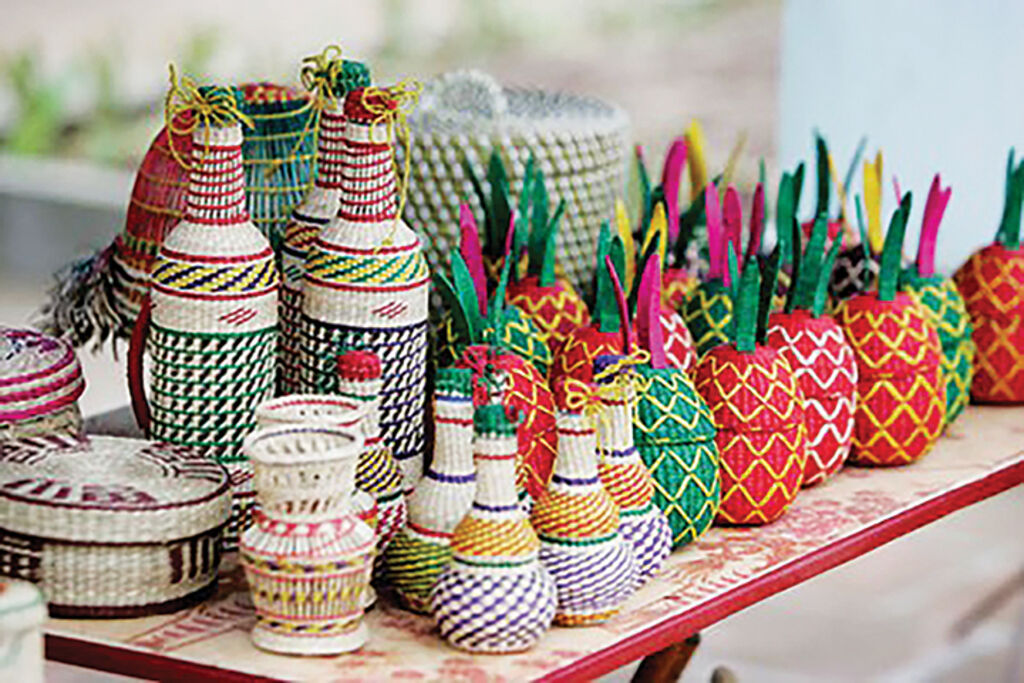 |
| Diversified products made from sedge__Photo: https://vovworld.vn |
From land reclaimed from the sea, Kim Son’s sedge weaving has grown into a living heritage, rooted in ancestral skills, sustained by patient craftsmanship, and continually renewed to meet the demands of a changing world. – (VLLF)